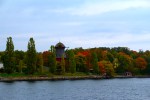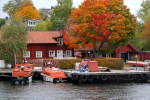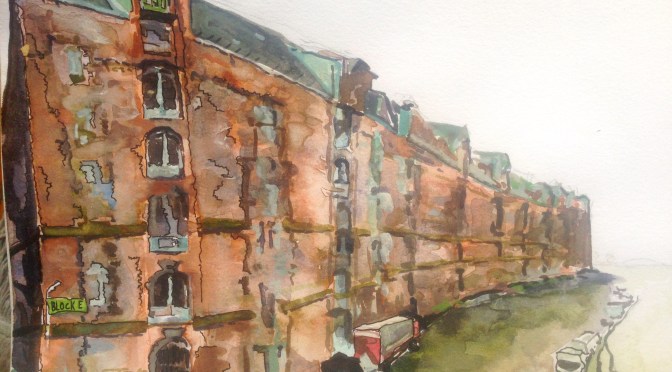
Hamburg

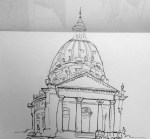
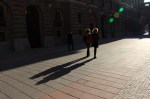
I was by myself  in the drizzling rain in front of Hamburg’s state house eating a döner kabab for dinner. The people watching was supreme. Just about as good as it gets. The World Wildlife Foundation had a fundraiser for panda’s. They had about 1,600 plastic terrier sized panda bears strewn all across the plaza. They were selling them in order to raise money for conservation. I saw couples awkwardly taking pictures of each other, but in order to get the whole state house in the picture frame, you would need to back up about 20 yards. So I’d see men or women just standing there with a half-smile, awkardly shifting their weight from one leg to the other, while the other would back up and take a shot. Then they’d switch. That happened about eight times. It was magic. There were some asian solo travelers who would creep around, scanning to make sure nobody was looking and flick off a Ben-Bruce style selfie (peace sign included, though).

The clock struck 7pm.

I had one of those google map moments in my head where I zoomed out from where I was sitting to see the cityscape of Hamburg, then Europe, then roll across the Atlantic to Maine then down onto Brunswick, then right to the Bowdoin Rugby field where the boys were kicking off at that exact moment against the University of Maine Farmington.

Saturdays with the Bowdoin Rugby Team were my fondest memories of Bowdoin. Envisioning them taking the field put shivers down my spine.

I realized how far away I was–in more ways than just geographic distance–but at the same time I felt very content to be where I was, with my kebab, and with my thoughts and an awesome gothic statehouse to engage with.

Today was a day that I felt the magic of traveling, discovering new places, popping into unknown places, and finding unexpectedly brilliant results. The magic comes from the unplanned.

I only had one full day in Hamburg, so I really wanted to learn as much as possible about what the city is doing in terms of climate adaptation and flood resiliency. I’d been told by various people in the Netherlands and by an architect back in the United States that Hamburg is on the forefront of integrating coastal defenses into urban design. I didn’t really know where to start looking, but I knew, from my experiences in the Netherlands, to walk towards the water then start looking there.

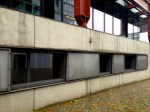
I had a faint conception of what to look for. I’d heard of elevated promenades, watertight garage doors, and a large-scale riverfront development project. Google led me towards the ‘Hafen City’ development project and signposts on the street led me to the ‘Hafen City information center.’

Hafen City is the largest development project in Europe. Hamburg is trying to revitalize the city center and replace old warehouses, factories, and dock space with a mix of offices, residential apartments, and shopping. The centerpiece of the project will include an aquarium and a big symphony orchestra concert hall.

The inner city of Hamburg has struggled since the World War II when 50% of the city was bombed and destroyed. In the 80s, 0.8% of Hamburg’s workforce lived outside of the city and commuted in. Most of the residents of the city center were on social welfare benefits. It was not a pleasant place to be.

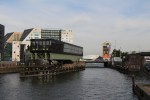
Hamburg is located on the Elbe River, but the city has never has been integrated into the waterfront. The riverfront of the city ended with large red brick industrial warehouses that were built out of the riverbanks.

Citizens of Hamburg thought of the city limits as the warehouses, they never interacted with the river, even though the River was brought Hamburg’s economy to life in the first place. Hamburg is the second biggest port in Europe. (After Rotterdam).

The Hafen City development project extends the city beyond the thick curtain of the red brick industrial warehouses. The developers of Hafen City are charged with the project of making a new city center. How do you make a place from scratch. They seem to have very successful projects to bring art and culture to the new development. The impressive concert hall (I only saw the model) should also really help. The developers are integrating a new waterfront into the urban fabric in a way that has never been done in 150 years of Hamburg’s history.

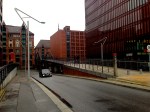
Building in the river comes with risk, however, even though the city is miles inland from the North Sea, the Elbe River has huge tidal swings and storm surges travel up the river. The tides swing about 8m each way. The most recent floods in Hamburg were in 2007. Hafen City has built up with flood defense in mind. It is built on three different levels, and there is a public promenade up on the 1st floor, one floor above street level, so that people can move around if the water slips onto the streets. Offices have 1st flood entrances and can seal their ground floor entrances water tight to prevent damage from occurring.

What I found interesting was that the city split the cost of flood protection with the private property owners in each place. The paid for the civil engineering to build the two separate levels, while the private property owners pay for the rest of it, watertight seals and proper foundations and so on. It’s a project that can handle water. So bring it on.

I was pretty impressed with myself for learning all this in one day, one morning at that. Here’s how I did it:

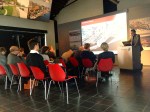
As soon as I walked into the Hafen City information center, I saw a sign welcoming the Danish Society of Architects for their presentation ‘Hafen City: Sustainable Development for Europe’s Coastal Cities.’ I thought I came from Copenhagen so I’m almost Danish and I like to draw pictures of buildings, so I’m almost an architect. I saw the big group gathered around the small models of the islands. Almost five minutes after I walked in, someone in a suit gathered them all and directed them towards a room. I slipped in the back and sat down. I didn’t say a word, scribbled some notes in my moleskin notebook and blended right in. I slipped out before the last question was asked and nobody noticed.
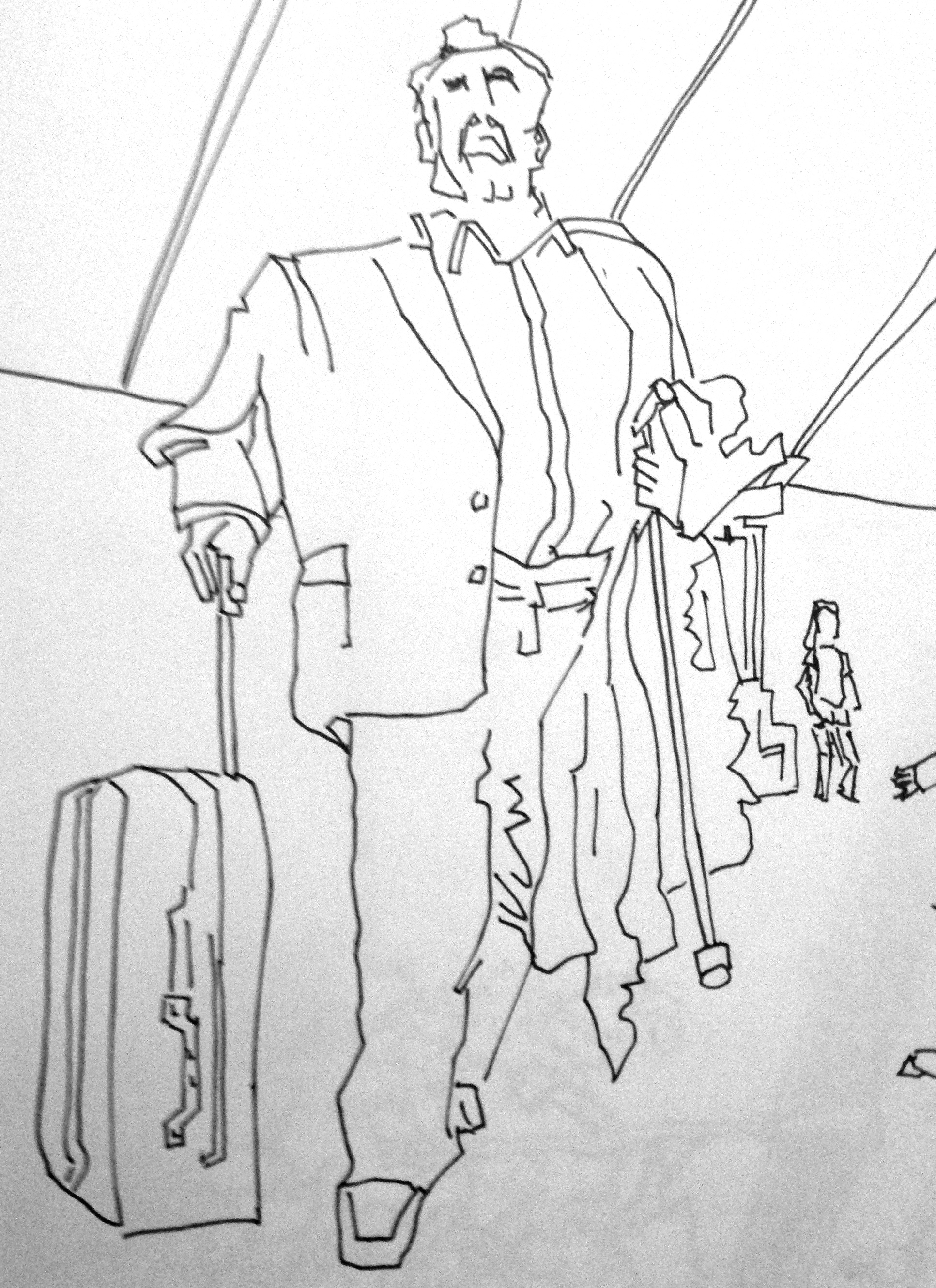
In the afternoon I went to the Hamburger Kunsthalle Museum. I had a blast drawing cartoons of painted portraits. I’ll post them up later. Some are pretty funny. Lots of things in Hamburg are called ‘Hamburger ____.’ I’m not going to lie, I went into one of them and asked if I could get a hamburger there. The guy looked at me for a couple puzzled seconds thinking this idiotic American and told me this was not a burger joint, it was a museum of artifacts collected by Hamburg’s sailors over the past 300 years. Many europeans think Americans are all fat and stupid. I am responsible for converting one more.

Some city’s are quite dreary with all the common global brand chains. Traveling makes me reminisce and dream about what traveling might have been like 30 years ago when places seemed so much more ‘authentic.’

Ben and Jerry’s is all over the Netherlands. To me B&Js is a mark of true Vermont. It’s a symbol of the states and represents northern New England the place I identify with. The ice cream is all over the Netherlands because Unilever, an Anglo-Dutch consumer goods company owns a majority stake of the ice cream.

7/11s are on every other street corner in Sweden.

McDonalds has continued its quest to take over the world and Burger King is following close behind.
It’s quite a dreary sight walking out of a city’s central station and into the downtown and find nothing unique or definitive about the place you walk into. Global branding takes its toll on the character of these cities.

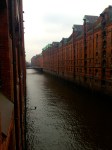
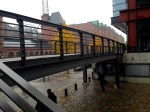
It takes time to dig deeper and discover what makes a place what it is. I felt pretty happy once I wandered off the beaten path and found the old red brick buildings by the waterfront. The bricks were beautifully stained over a century and a half of weathering and in contrast of the green copper roofs they were really quite brilliant. So much nicer to wander through than alleys of fast food chains.

Thats just the reality of our time: Information. Digital connectivity. Global brands. iPhones. In another 50 years someone will be traveling, or teleporting around the world on reminisce on my era of traveling. As Woody Allen points out in Midnight in Paris, it’s easy to romanticize about a bygone era. Just find the meat of what you have in front of you.

Speaking of Paris. I’ll be there next weekend to see Sarah Diamond, who I haven’t seen since Milton and maybe meet up with my dude Stanton Plummer Cambridge.

I’m hopping on a bus to Berlin tomorrow.
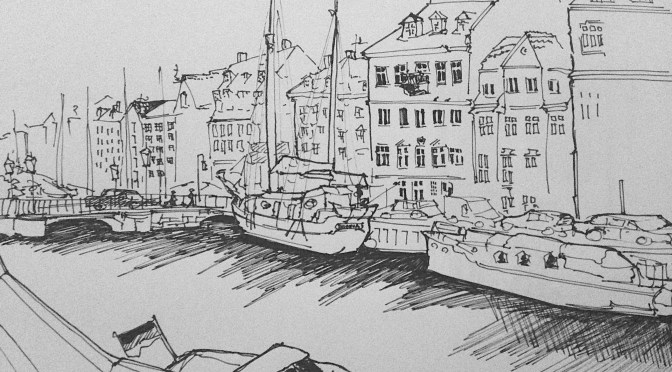
Copenhagen

In the summer of 2011, 6 inches of rain fell on Copenhagen in less than three hours. The deluge flooded city streets, parks, and seeped into the city’s basements and cellars. The rain cost the city 6 billion Danish kroner, a little more than 1 billion dollars.

Copenhagen has a Climate Adaptation Plan, which was developed that same year. The plan takes initiatives to prevent damage from climate change. Constructing dikes, limiting building developments in low-lying regions, and expanding the capacity of sewers and managing rainwater are a few things the city hopes to accomplish in the coming years to become more resilient to the threats of climate change.

I’ve come to realize that often times it take a disaster to wake a city up, to make politicians and decisions makers aware that these threats are very real. We saw this in New Orleans after Katrina, in New York after Sandy, and again here in Copenhagen after these floods. As Jos Besteman in the Netherlands told me, North Holland tax payers are getting frustrated by the cost of flood protection paid to the Water Board, they said a storm would change public opinion–protection is something worth paying for.

Copenhagen’s sewer systems are not fit to handle the predicted increase in precipitation. The Copenhagen Climate Adaptation Plan describes a plan of attack for preventing another costly flood from uncontrolled storm water. By expanding its sewers, creating underground basins and improving pumping stations, Copenhagen would be able to increase the capacity of its drainage network. Making large scale manipulations to the sewers would be very costly, though. The city hopes to implement techniques to manage water locally. If individuals make small scale changes all over the city by replacing impermeable surfaces with porous material that lets water percolate naturally into the ground, the city could see large scale results. Finally, the city has plans to direct water away from buildings, cellars, and roadways and towards parks, sports fields, or parking lots where excess water would do minimal damage.

Copenhagen’s Climate Adaptation Plan also mentions preparing for rising seas. The study notes that Copenhageners should expect a 1m rise in the next century. If the city did nothing, this rise in sea level would cause the city considerable damage.

Honestly nothing cool or noteworthy happened in Copenhagen. I went to a museum to see some paintings I learned about in Professor Docherty’s European Art class at the NY Carlsberg Glyptotek but all the famous paintings were out in other countries on tour. I went to the Opera house to admire the architecture but it was closed. I got lost and rained on. I just figured that Copenhagen wasn’t too jazzed to have me. Whatever Copenhagen.

I met Christa Villari, a Bowdoin junior who is studying abroad in Denmark and also caught up with Dennis Liu, another Bowdoin guy who played rugby with us last spring. It was cool just to walk around and take some pictures and draw some drawings. But really, nothing notable whatsoever.

IMG_4767

I am in Hamburg, Germany right now. I found a hostel next to the Central Station. The hostel is called ‘The Generator’ and is basically just like a dog kennel for young people. There are 10 floors of 30 rooms with six bunk beds. Its flocked with groups of Germans out and about on ‘stag’ weekends. The place is made for groups of people traveling together and looking for a cheap place to sleep, since they’ll be out all night at bars anyways. It’s a tough environment for me, riding solo. I just laughed it off to prevent myself from thinking about how horrifically depressing it really is. Either way a bed is a bed. This is better than the alternative, which is staying in central station with Hamburg’s homeless. They smiled at me with rotting teeth as if I was a piece of delicious prime rib as I wandered around in circles trying to remember who I was, where I was going, and why I was in Germany.

Hamburg has some really interesting sea level adaptation projects. Near the river, Hamburg has developed to allow the ground floor to flood. Storefronts are prepared to take water in, rather than block it out. I should learn more as the weekend goes on so I’ll keep you posted.

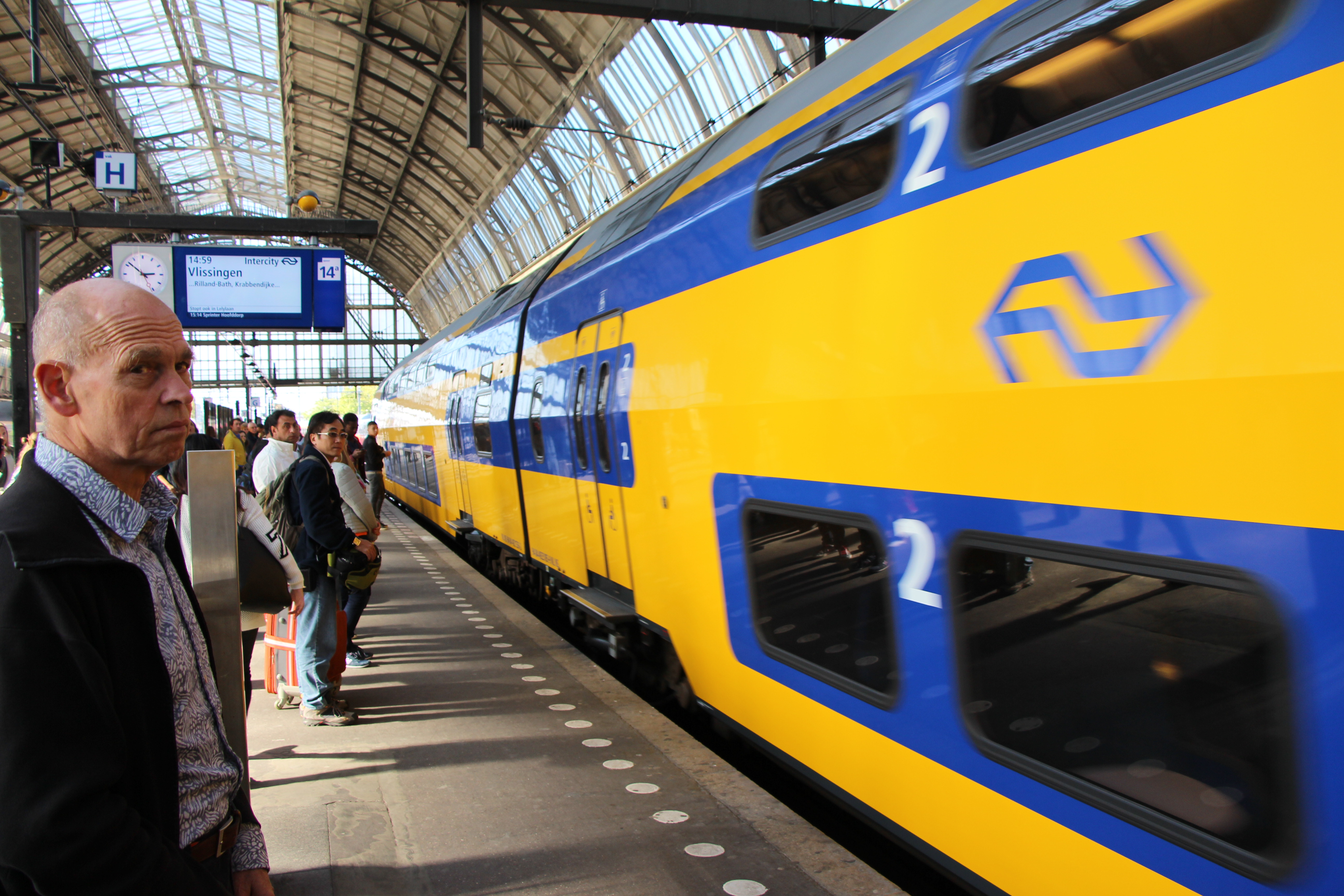
Had some pretty odd experiences on the train which I’ll tell you about soon. But…crossing from Denmark to Germany the train got on a boat!! Each country has its own

IMG_4735


Malmö

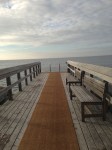
The Kallbadhus is a public bath where you jump into the ocean then get roasty toasty a sauna. The real champions go in February when you dive through a hole in the ice, swim to Denmark and back underwater, fight off polar bears, then go warm up.

The water isn’t terribly cold yet so it wasn’t too bad to hop in, but it wasn’t so warm that you would want to leisurely swim around. It was a solid 10 seconds in then out after a brisk walk to the sauna.

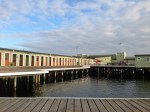
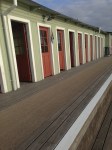
I was there at 3 o’clock on a monday. So most normal people around my age are either at work, or at school. The majority of the other fellows relaxing Viking style were elderly men, all at least 40 years older than me. I realized right away as soon as I walked in that this activity is something that takes place naked. I figured, hey. Never thought I’d go skinny dipping with some Swedish grandpas. Check that off the bucket list. Grandspa. The building was really beautiful, though. It was out on the water and had a beautiful wooden deck with brilliantly colored green changing rooms. The whole place looked like a small slice of paradise. The throngs of naked old-timers brought me back to reality though. Overall it was a great traditional swedish experience.

Today I met Tyke Tykesson, a planner in the strategic department of Malmö’s city planning office. Malmö has a pretty interesting history and has developed–if you distill it as much as possible–from a ship building town to a university city that designs video games and records Sweden’s major artists.

Sweden isn’t too threatened by sea level rise but its southernmost tip, Malmö’s surrounding area, is quite low-lying. Tyke has done some initial studies in the planning office to gauge the vulnerability of the city. But he was pretty interested to hear what I had learned so far during my two month stay in the Netherlands.

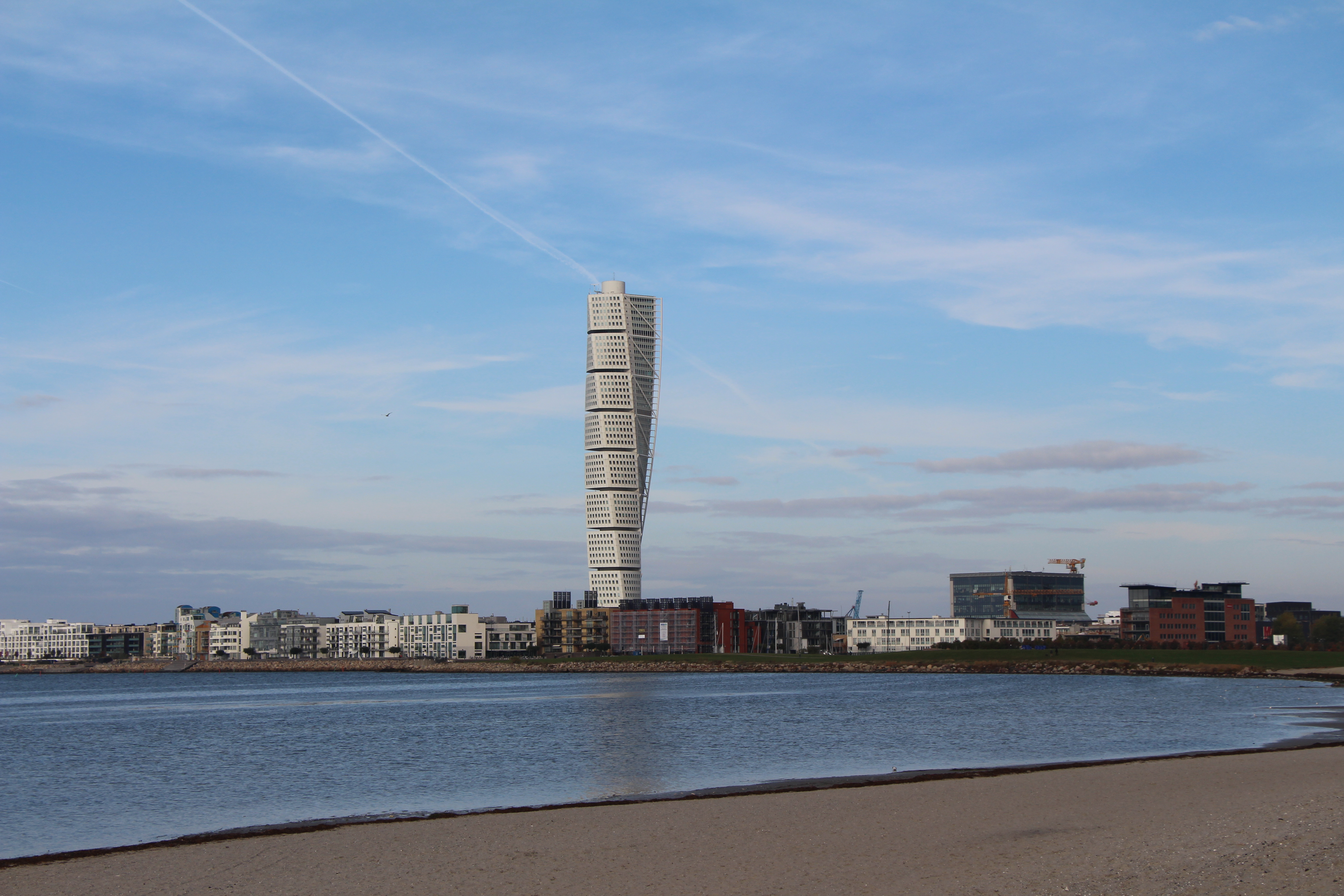
Malmö is quite an impressive city that has grown a lot in recent years. The city developed its western harbor from a stagnant industrial port to a very hip environmentally progressive neighborhood. The western harbor is an extremely attractive place for people to live. Danes even commute over from Copenhagen! It’s quite remarkable that Malmö was able to transform an industrial wasteland into a trendy, modern, environmentally friendly place to live. The neighborhood is defined by this building:

IMG_4713

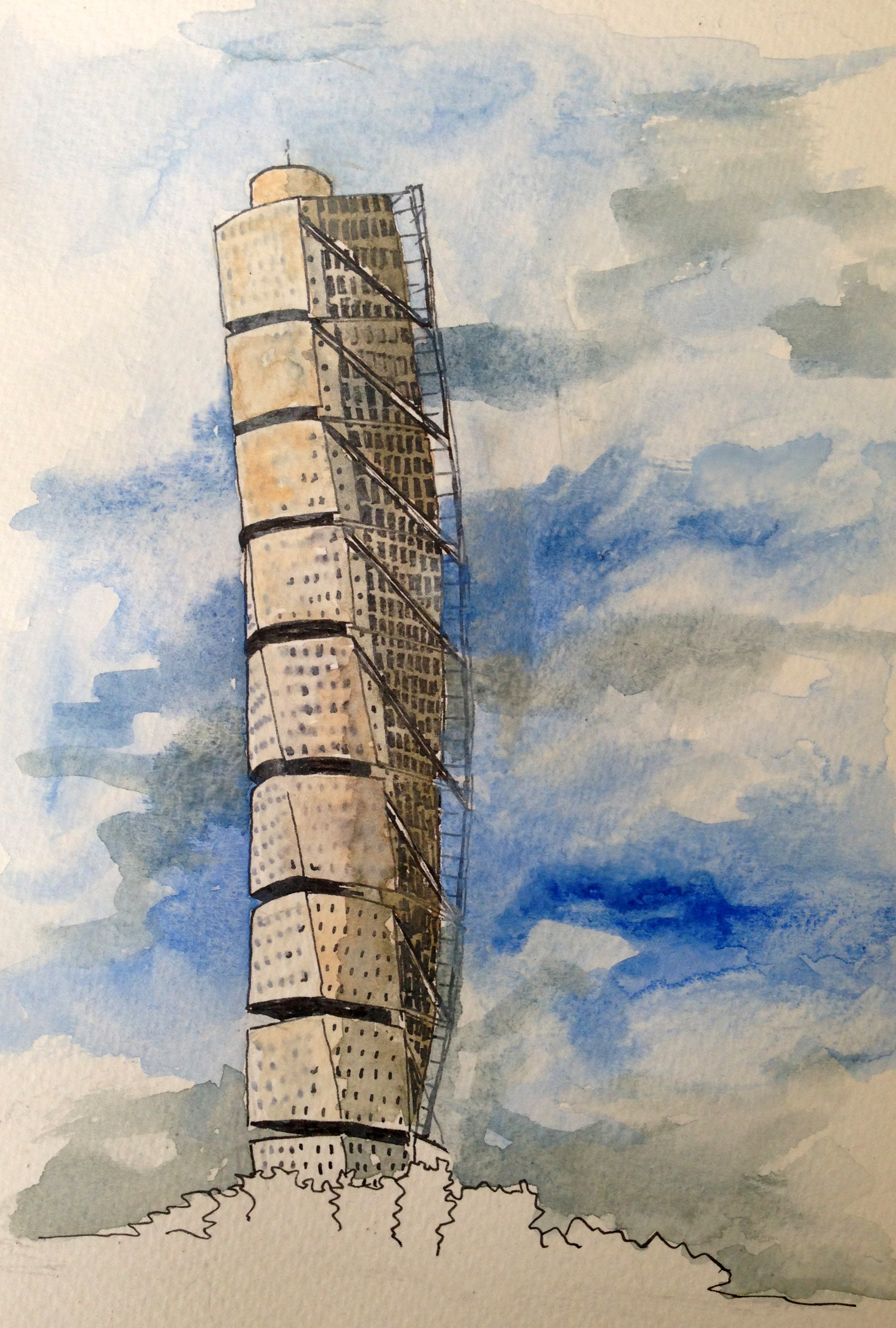
The Turning Torso, designed by Spanish architect Santiago Calatrava is the tallest building in Sweden.

Here’s my watercolor painting of it:

IMG_4665

Malmö is getting wind of the bike craze! Good to see.

Here are a few blasts from the pasts:

I wrote a letter to the King of the Netherlands a few weeks ago… why not!

Screen Shot 2013-10-08 at 10.27.35 PM

Today I got wind of a response:IMG_4668

No hard feelings, your Majesty. But hey, can I now tell people that I had an official correspondence with the King of the Netherlands?

Righteous.

Here are some nice photos from Rotterdam Rugby Practice:

It was such a great experience playing with these guys. I’ll look back fondly.

And here’s a treat…the real blast from the past. Malena has a few photo albums with pictures from when she lived with my family from 1995 to 96. And a few from some years later.

This evening Malena and I met up with Malena’s mom, Mona who lives right outside Malmö near the bridge over to Denmark. Mona offered to cook me Swedish meatballs. She made them for me for my 14th birthday. They tasted exactly the same 9 years later! It was so nice to see Mona.

IMG_4763

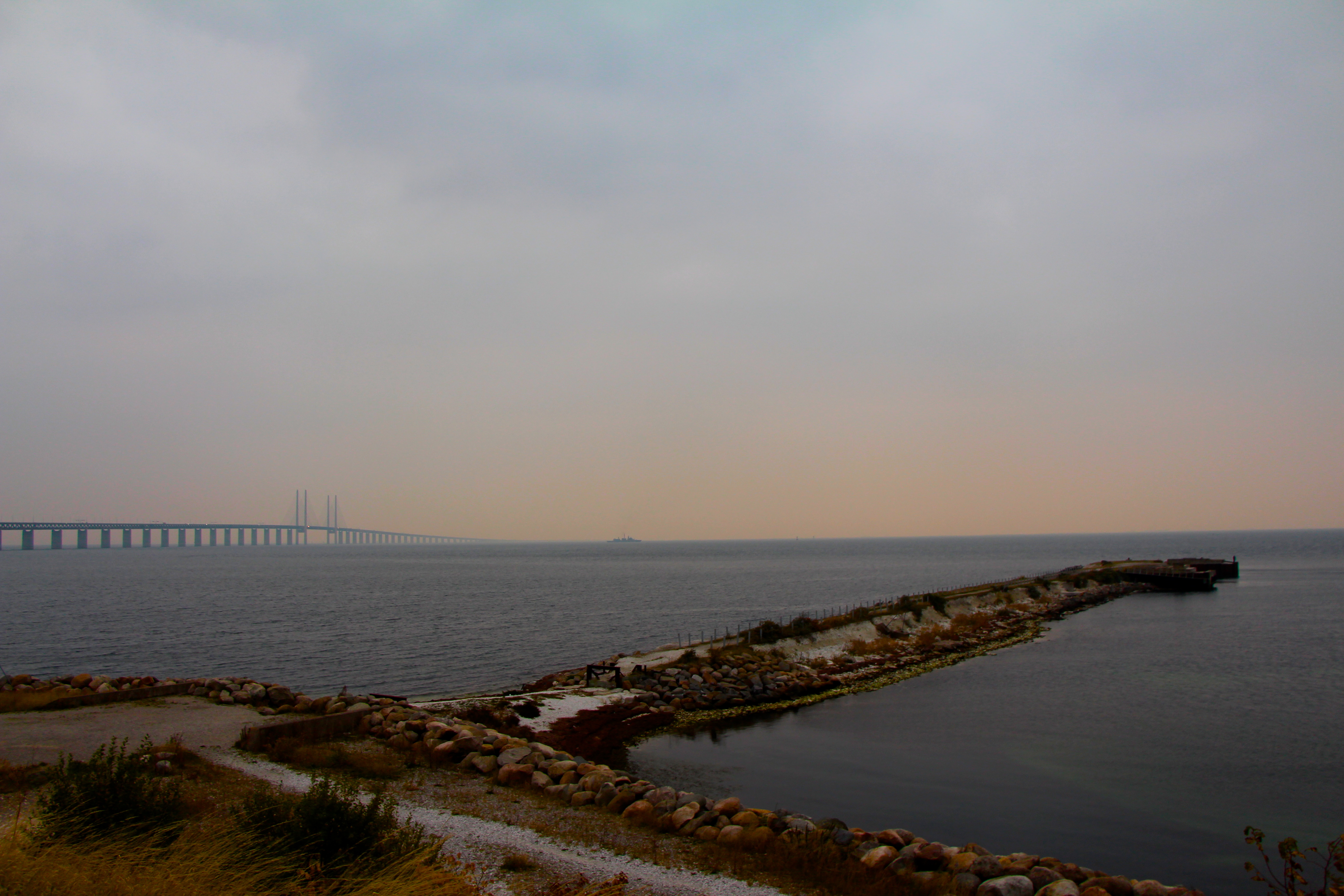
We also stopped by a gigantic open pit limestone mine and went to take a look at the bay between Denmark and Sweden.

The view of Denmark–c’est bon.

IMG_4751

Tomorrow and Friday I’m going to go and explore Copenhagen. It only takes half an hour to get over there from Malmö so I’m going to spend the nights here with my nanny. She has been treating me like just way back when I was baby Davey.

IMG_1046

Lost in the Stockholm Archepelago

The loudest and most obnoxious people at the gate of the Norwegian Air flight from Amsterdam to Stockholm were a group of Americans studying abroad in Amsterdam. In passing, I made some small-talk remark, identifying myself as a fellow blue passport holder. I’ve generally tried to keep a lower profile than these guys. Traveling alone, I generally find it easy and logical to just blend in to the masses–something that won’t be possible during my second half of the year in India and Southeast Asia. At that moment, I thought it would be nice to mess around with some college kids and joined them. It turned out that one of the girls was from Lebanon, NH (the town next to me) and was Brady Casper’s (one of my homies’)ski teammates at Brown.

I got plopped in Stockholm at half past midnight. Three months ago, I think I would have been quite petrified arriving so late to a cold, dark city having to shun off preying taxi drivers and deflecting the piercing stares of the central station ‘thugs.’ I was constantly looking over my shoulder for Viking attackers.

I had booked a room in a hostel using an application on my iPhone in the airport so I got a notification email with the address and night time access code when I arrived in Sweden. Arrived in Sweden. Cool. I also had an inadequately small paper map that I ripped out of a magazine on the airport shuttle. It wasn’t detailed, but it worked well to get me oriented once I got outside of the station. The map led me in the right direction. It was so small that I would have to stop in the spotlight of street lamps and squint to be able to read the road signs. At one corner, a couple of fellow travelers returning from a pub emerged out of the darkness and asked, “you looking for a hostel.” Getting intimately nose to nose with my little map and my double back-front backpacks absolutely gave me away as a tourist. As it turned out, we were all headed to the same place and I was guided to my weekend home. 

I went right to bed. Lights out.

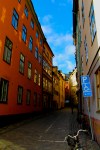
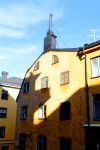
Stockholm looks like an Edward Hopper painting. Even in early October, the sun never gets higher than 45 degrees above the horizon. It just creeps along the southern sky all day and casts off beautiful long cast shadows.  All the buildings are painting warm pastel colors. The contrast between the colors in light and the colors in shadow is just great. I don’t know if it’s true or not, but the warm colors perhaps trigger a psychological response making people feel warmer in the depths of their cold northern winter. The average building is 5 or 6 stories tall, so most of the streets are in hidden in shadow, but every once in a while there is pockets of light that creeps through. I walked around for hours soaking it up.

conference-at-night

I stumbled upon the Alfred Nobel Foundation Museum about the Nobel Prize.

I had no idea that Nobel invented dynamite–quite ironic for a man who willed the world the Nobel Peace Prize. I learned that Nobel believed that investing in weapons and developing more and more powerful means of annihilation was a means of achieving world peace. That’s a mindblowingly radical idea. However, according to John von Nuemann’s work in Game theory it kind of checks out. The doomsday model, highlighted in the movie Dr. Strangelove, incentivizes world peace, which would be better than the alternative which is global destruction. We talked about it in Prof. Stone’s Strategic Behavior class last fall.

Lets say, for a hypothetical example, that the U.S. buries a gigantic payload of explosives someplace in the Rockies. If the U.S. gets bombed, the store in the rockies would trigger and blow up and destroy life on the planet. Knowing this, it is not a rational strategy for any country to bomb the U.S. Life on earth as we know it is a more pleasant scenario than a planet of ashes and rubble. So if a U.S. enemy thinks ahead and works backwards, they won’t attack. Yes, it’s a Lofty example, but I was just trying to understand Nobel’s rationale. That’s what I came up with. What an irony! This, from the guy behind the Nobel Peace Prize. 

On Friday night, I went out on the town with a couple of Australians I met and a Belgian girl who lives in Stockholm and works at the hostel. She knew some cool spots so we went bar hopping around town. My favorite place was a club that was in the back of a fancy restaurant. You would have to walk through all these different parts of the building, through the kitchen, dining area, bathroom hallway, then up there stairs where you got to a packed club. It came out of nowhere but very cool. I was reminded of this commercial.

Saturday was an adventure to say the least. The day stretched my boundaries of loneliness and fear. After this experience I will tell you about, I absolutely strengthened my ability to dream of horror stories. I’ve had nightmares for 2 straight nights. I played a lot of what’s the worst possible thing that could happen? game. Never. Ever. Play that game. Ever.

After a nice sleep in on Saturday morning, I got a realization that I was in Sweden and should not be wasting time snoozing that could be spent exploring. I hopped out of bed and rushed to the ferry dock, missing a boat that was going on a tour of the Stockholm Archipelago by a couple minutes. I came up with a backup plan after consulting a street coffee vendor. I told her that I wanted to get out and go on a hike someplace nice. She recommended going to Grinda– there was a ferry out there at 3 and on that came back at 730.

The ferry ride was excellent. Seeing the country from the water was exactly what I wanted to do. It felt great getting the chills from the ocean air and seeing the stunning Swedish landscape. The coastal area looked a lot like Maine but had fall foliage to add some haberño hot sauce. On the ferry I met a British rugby player who was in Sweden staying with his girlfriend. He’s clearly doing something right chasing an attactive blue eyed blonde around awesome island chains. We got to talking. It just so happens that last year he did a world-wide trip that was surprisingly similar to mine. He spent 3 months in Argentina, 2 in India, and 2 around SE Asia, where he met the Swede.

I arrived on on Grinda. The ferry ride ended up taking an hour and 40 minutes, about twice as along as I was told. That got me thinking. When I was one of only 3 people getting off at that stop, I my nervous thoughts turned into real nerves. As soon as I got off, the ferry took over to its next destination in the archipelago. I never got a chance to think twice. The other people who got off on my stop seemed to evaporate into the woods immediately. I went to read a sign, then turned around and they were all gone. Okay, that was odd.

I found a hiking trail and walked around the western fringe of the island. Besides the rustle of the trees in the wind and the soft crashes of the ocean in the background it was quiet. But almost eerily so. Fog started rolling in off the ocean and eventually I felt very very alone and lost walking along the trail. I came to one corner where up on a hill there was a chair with nobody in it. Just a chair in the middle of the woods. Huh?.

Walked a little further, through some trees to find the ocean and sit on the rocks for a bit. Next to me there was a lost winter hat. Why was this hat there? Was somebody running away at an instant? Were they captured by a yeti? Looking back on it, it was very clearly just a lost hat, but when you play the what’s the worst possible thing that can happen game, your imagination takes control.

Nevertheless, I got my zen on in a beautiful place. No doubt about it.

I stumbled upon a sign warning about snakes. Big ones. Oh boy.

I walked around for a couple hours fighting to just let myself enjoy the isolation and stop letting my imagination dictate the experience. I was just very glad that I wasn’t poisoned by any sort of hallucinogenic mushroom.

The whole island is a nature reserve so when I stumbled upon a very nice house that’s now a hotel I thought, Okay that’s scary stuff. I built up the courage to open the door and found a really nice hotel reception with a fireplace burning and one employee preparing a bar for the five guest’s dinner. The guy at the bar was super friendly and prodded at what I could possibly be doing as a young American tourist stranded on a remote Swedish island. I  agreed. I had no idea either.

I enjoyed a cup of coffee by the fire and just rested and relaxed for an hour. I can’t tell you how nice that felt.

The island is a summertime community. There is always an eeriness to being in a summer place in the winter. I was wearing a fleece, a sweater, a vest, a scarf, and gloves. So seeing summer campsites in that setting is off-putting. The whole time I had the feeling that something is not quite right.

The sun fell below the horizon and the already ominous island was cloaked in darkness. Then it started raining. I threw on my layers and started the hike in the darkness back to the ferry dock where I was dropped off. I tiptoed the whole way listening carefully through the sounds of wind and rain for hissing or slithering. I tried to think happy thoughts about golden retriever puppies but the characters from every single horror movies I’ve ever seen kept on appearing behind trees in front of me. 

I really didn’t want to miss my 7:30 ferry home, so I got to the dock about 20 minutes early and just stood there in the rain. every minutes felt like 5. At 7:25, each minute felt like an hour until 7:30 came around the bend. The darkness I got used to looking out over the past 20 minutes remained unchanged. 7:31, 7:35, 7:42. I started pacing. My heart was pumping in my throat. Anxiety made my whole body shake. My phone was inoperable. I’d have to stay stranded on that island. There was clearly a nice hotel to stay at though. But I’d have to spend the money and everyone in the hostel will think the Swedish Yeti got ahold of me and was holding me captive. Perhaps the hotel called the ferry and said there was nobody to pick up in order to make some extra cash? Oh no. I’m doomed. I imagined the rest of the travelers in the hostel picking through my bags the way vultures argue over the meat of a carcass in the African jungle.

IMG_4608

I got very used to this sight during the longest hour of my trip.

At 7:52, the concrete slab of darkness was pierced by a light that emerged around the corner of the island. I recognized the blue and yellow paint of the ferry and my heartbeat started making its way back to its proper location.

As soon as I hopped aboard, it was so easy to laugh about all my worries. But just a minute before, they were so overwhelmingly real. I can’t tell you how good it felt to arrive back in Stockholm. But as someone very astutely pointed out later on that night. Most likely I was much safer on that island than I was in Stockholm.

IMG_4628

Phew! Felt damn good to be back!

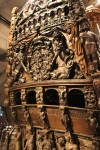
Yesterday I went to the Vasamuseum, an exhibit of a 17th century warship that keeled over and sank 20 minutes into it’s maiden voyage towards Poland. The Vasa was hauled out of the bottom of the Stockholm harbor, where it rotted under the sea for almost 300 years. Since the 60s, archaeologists and ship builders reconstructed the ship like a gigantic jigsaw puzzle. From over 40,000 pieces, the boat was completely reconstructed. 95% of it is original. You can’t walk on board, but you can walk all around it and inspect it from four different floors. It is the most impressive restoration project in the world.

IMG_4654

Right now I’m in Malmö, Sweden. I’m staying with Malena, my nanny in London was I was 5 and 6 years old. To me, she’s the exact same, but it must be weird for her to seeing me traveling around the world. She cooked me tacos! So great to have a motherly figure after 3 months of wandering! I’m heading out later today to go and explore the town (Sweden’s 4th largest city). One stop that is absolutely on my agenda is the Nordic sauna. You can jump into the sea then warm back up in a sauna.

IMG_4625

“Once a nanny, always a nanny.”

Here’s a drawing of a construction site on the Stockholm waterfront:


I haven’t found Pipi Longstocking yet. But I’m looking! Off to jump in the sea.


IJburg

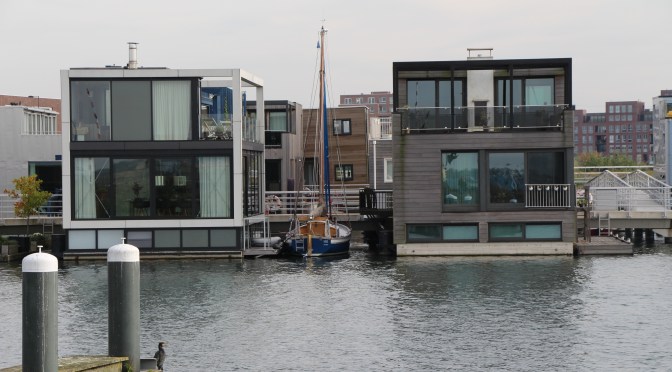
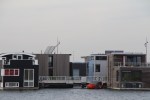
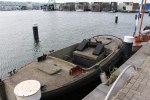
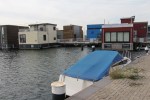
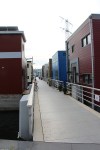
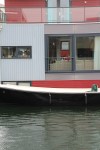
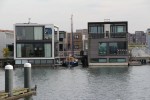
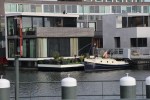
IJburg is a brand new neighborhood constructed on artificial islands in the IJ Lake. There are 6 islands. I went there today to investigate a neighborhood of floating houses. There were about 70 or so floating houses. Half of them were individually designed, quite modern, and chic. The rest were clearly all made in a series by the same designer in a project by one developer. Many houses had large floor to ceiling windows to take full advantage of the nautical ambiance.

You know that feeling you get when you look at gorillas through the glass at the zoo and feel sorry for them? I felt very intrusive walking around the docks of these houses and peering inside. I just snapped off a couple pictures very quickly then moved on out.  It felt a little bit to me like I was looking at some of zoo animal–houseboat-dwelling-human. This neighborhood has gotten a lot of media attention since these houses were towed into their permanent moorings. I got the sense these aqua-humans were fed up with the curious visitor after being on the receiving end of their a few chilling glares.

I spent the rest of the day soaking up Amsterdam.

IMG_4146

Tomorrow, I have a plane ticket to Stockholm. My mission is to get to Rome before my flight to Argentina takes off on the 28th of October. I’m planning to stop by some other cities that face huge problems with water that will only be exacerbated as seas rise–Copenhagen, Hamburg, and Venice all have some very interesting projects related to what I’m investigating. But, I wouldn’t be opposed to being swept off my feet by a Swedish girl and just row her all around Scandinavia like a viking. I’ll let you know what happens.

I’ve spent 66 days in the Netherlands. 1/6th of the year! (What?!–I feel like I’ve been here a long time, but as soon as I leave I’m sure it will feel very short. Time is a funny thing, eh?)

I need to give a special thanks to Berend, Marco, and these hooligans for putting me up with places to live, pretending to be my friends (as hard as it might have been), and making me more than at home during my time here. It’s been wonderful.

IMG_4054

With the 1st XV Rotterdam Student Rugby Club.

Before I left, RSRC gave me a club tie as a departure gift. I left them with my USA bandana. I drew the Bowdoin Rugby crest on it and signed it. They put it on the club bear and put the bear up on their memorabilia shelf.

IMG_4065Dirk and Vasco with the BRFC ‘murica bear.

Image 1 Image 2 Image 4

Tracy Metz, Amsterdam Framer, and Koen Olthuis

Here’s an excerpt of the match report Archie, my roommate from Glasgow wrote. I didn’t play because of the egg sized mound I grew on my forehead after getting knee’d in the head last weekend. I’m traveling quite a lot in October and I want to keep the limited mental capabilities I have working in ship shape. But still I got a shout-out!

The game started brightly for the Rotterdammers, within 5 minutes putting pressure on the men from Utrecht. The ball was snapped out inside the 22 from captain Mikey ‘12:30 SHARP’ Hornby to stand-off ‘Uncle’ Archie Pollock, pop-passing to new boy Sander Korel, who bashed his way through 3 defenders to crash down for 5 points. It was the first showing of a strong game from the young upstart Korel, who was to finish as joint man of the match. More points soon followed, as Dirk ‘here comes the hot stepper’ de Raaff ghosted by the Panther defense, breaking his side stepping virginity past one player in a particularly strong solo run. The step was so powerful however, that it damaged his tendons, and de Raaff will now be sidelined for several months, along with other notable injuries Pieter ‘we score more points, we win de game’ Joosse, Frank ‘crabhand’ Nijenhuis, ‘Bram the tram’ van den Pasch, and ‘so good they named him thrice’ Samuel David Bruce, who expertly donned the club bear mascot outfit and added at least 10 points to the score line.

Proof:

1369418_10200715011617834_723542677_o

On friday I took the train up to Amsterdam to meet Tracy Metz, a journalist who recently published a book called ‘Sweet and Salt: Water and the Dutch.’ The book is a beautiful artifact. It explains how the Netherlands’ manages its complex and dynamic relationship with water and points out what the rest of the world can learn from the Dutch. Alongside co-author Maartje van den Heuvel, Metz’s writing and use of photography, art-historical analysis, and architectural design shows how the Netherlands’ battle with both sweet (fresh) and salt water has evolved over the centuries.

Image 1

Her book has put her into the global spotlight. She’s the spokesperson at water management conferences, a lecturer all over universities in the U.S., and a go-to for journalists and writers investigating these issues. Although she described herself as “no expert,” she certainly is.

1353964_10200702587987251_1417710445_o (1)

Here is one of my drawings featured on Metz’s twitter:

Screen Shot 2013-10-01 at 3.49.37 PM

Ms. Metz told me that she is shell-shocked about the success she’s had on her book. She hears her name called all over the place, but automatically thinks ‘who? me?’ We talked for an hour about the research I’ve done so far. She seemed to enjoy flipping through my sketchbook. Her lunch date at the end of my hour with her was with the Consul General of the United States in Amsterdam, Randy Berry. From the State Department: Mr. Berry’s career with the State Department has also taken him to postings in Bangladesh, Egypt, Uganda (twice), and South Africa, as well as Washington DC.  Mr. Berry holds a State Department Superior Honor Award, and is a nine-time Meritorious Honor Award recipient.  He speaks Spanish and Arabic. It was very cool to get to shake his hand and tell him about my Watson project. He told me he could connect me with some people in places I’m heading out to later on in the year.

Later on that Friday afternoon, I stumbled by a print shop. Reproductions of old maps of Amsterdam caught my eye. I went inside and started chatting with the shop owner, an Amsterdammer who has lived in the city his whole life. I never caught his name, but he started telling me some pretty interesting things–his hypotheses about why the Dutch are the way they are. Growing up, his Dad was a collector, so thats how he starting getting into collecting maps, prints, etchings, and other artworks that he now sells in his tiny little underground shop. He sells original works and reproductions. The shop owner seemed to be very knowledgable about Dutch history–probably because he knows a lot about the background behind the images he sells. These three things from our conversation stuck out–

1. Because of the North Sea fishery there was always a great abundance of fatty, fresh herring. The Dutch never had to worry about feeding themselves and could focus on other issues, like patching up and draining their deltaic landscape, building ships, making trading routes, and inventing technology. The fish set Dutch up on a platform for success.

2. Because of the nature of the delta landscape, survival required co-operation. The Dutch needed to work together, look each other in the eye, make compromises, quell their individual egos and work together to create a landscape that was habitable. They needed to use their collective talents. This essentially explains how the water boards began. Dikes were built by the farmers who would directly benefit from them. But as the systems for water management became more complex, they needed an overseeing body to govern. Nothing could be accomplished alone.

3. Because of the work required on the land, the Dutch were naturally tall and built…during the Roman ages, Cesar’s royal guards were often from the Netherlands because of their beastly stature.

It was a fun experience, getting some Dutch cultural history from a guy in a printshop.

1372341_10200702585667193_431682846_o

Today I traveled to a suburb in between the Hague and Delft to meet an architect, Koen Olthius who exclusively builds on water. In 2007 he was #121 on Time’s list of the world’s most influential people. He was such a friendly, outgoing guy and instantly made me feel as though he was as interested to talk to me as I was to talk to him. Besides all the fascinating things he taught me about his work and how it has developed over time, I saw first hand how important it is to treat people you’re with with interest and kindness. My hour with Koen Olthius reminded me of this article here, where the author talks about his encounter with Wolverine (Hugh Jackman). In short, the author meets Hugh Jackman on the street and has a great first impression. Here’s the short of it:

In three minutes, Hugh Jackman turned me into a fan for life–but he didn’t sell me. He didn’t glad-hand me. He just gave me his full attention. He just acted as if, for those three minutes, I was the most important person in the world–even though he didn’t know me and has certainly forgotten me.

Just like a CEO, as an entertainer he is his “company,” and even though I’m sure it wasn’t his intention, I now see his “products” in a different, more positive light. 

That feeling totally occurred after my meeting with Mr. Olthius. When I got there, one of his colleagues gave me a free copy of his book, ‘Float!’ We sat down and talked, the whole time he explained things, he’d diagram what he was saying on architecture tracing paper so I have this long 8 foot string of tracing paper with a visual transcription of our conversation. It’s very cool.

I’ll say more about our conversation in the next post. But this is a fantastic overview of his vision. Great for anybody interested in urban issues and/or architecture!

His main point is to make cities more dynamic by opening up space up inside the city by building on a floating foundation. In doing so, he can combat a number of problems that arise from urban growth and climate change.

It was an absolute treat to talk to him!

IMG_4045

Tomorrow, I’m back up to Amsterdam to meet a professor at the University of Amsterdam. Prof. Dr. Jeroen Aerts works at the Institute for Environmental Studies. He is a professor in the area of risk management, climate change, and water resources management.

I have a painting in the works of Tracy Metz, but I unfortunately ran out of paint and don’t think it’s worth it to spend money on more because I don’t to lug it around as I travel around Europe in October.

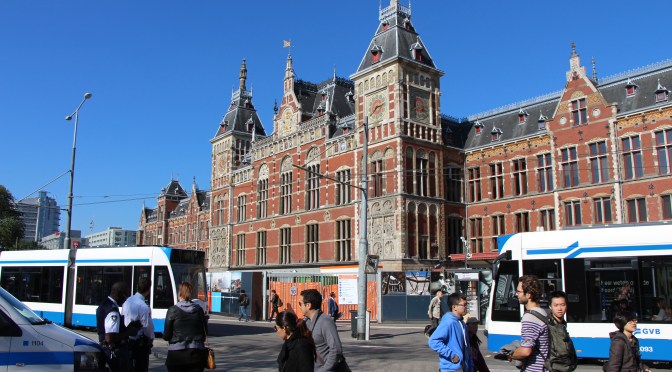
Amsterdam Centraal:

IMG_4023

IMG_4043

Benthemplein

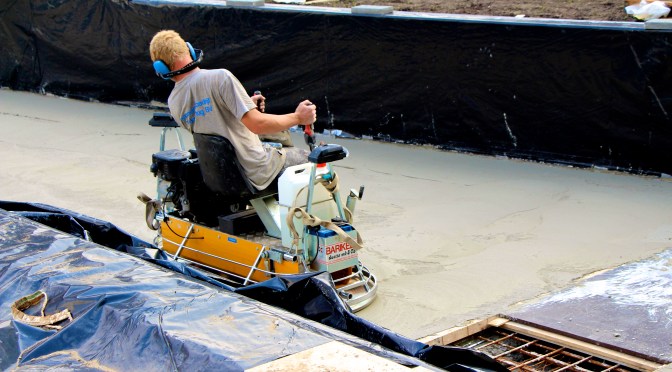
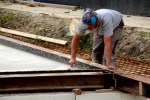
I stuck my nose suspiciously through the metal gates of the construction site, enthralled by the lawn-mower like machines that were hovering over the wet concrete to make it as flat as slate. I was looking at the mid-stages of the construction of a waterplein, a public square that doubles as a water storage basin during heavy rains.

It must of been a combination between backwards baseball and my shorts that gave me away. Only foreigners expose their calves in late September. I was being noticed by three men behind me. Two of them in construction garb, taking a cigarette break, the other looked older and slightly more distinguished. They acknowledged me in Dutch, as if they’ve gotten used to strangers taking interest in this unique construction project. The project has been highlighted all over the press in such things as Tracy Metz’s book ‘Sweet and Salt’ and a small documentary on NBC.

I gave my puzzled, ‘I don’t understand Dutch,’ look. I’ve gotten so good at casting that simple eyebrow raise that reveals so much in a useful instant. One guy transitioned to English. We chatted some small talk for a bit–the weather, the good looking blonde that just rode by–until I got the confidence to ask him if I could walk around the construction site and take some pictures:

It turned out that guy I was talking to was the construction manager of the project.

IMG_3903

After I walked around for a bit, I asked him some questions about the waterplein. The parks is essentially three ‘containers’ dug into the ground. When dry, they are dressed with areas for shrubs, trees, and other greenery, as well as sports fields and amphitheater seating areas. During the dry season the park is a public square, but when there is an abundance of rain, the park fills up and relieves the sewer system. Runoff from the buildings, sidewalks, and roads flows towards the three basins where it can be stored. Rotterdam is already in a precariously low lying area and therefore extremely vulnerable to flooding. This structure mitigates the risk.

The park is part of Rotterdam’s climate adaptation strategy put forward by the Rotterdam Climate Initiative. The strategy has six simple objectives:

  1. The city and the port are protected against flooding.
  2. Rotterdam a livable, attractive city to reside in.
  3. The port is accessible with minimal risk of disruption.
  4. Residents are minimally affected by a lack or a surplus of precipitation.
  5. Residents are aware of the consequences of climate change and what they can do themselves to adapt.
  6. Climate adaptation strengthens the city economically and enhances its strong ‘delta city’ image. ]

A key to the climate adaptation plan is to merge water management with urban development. The water plaza is a great example of this plan being put into action.

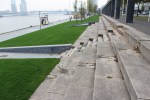
After reading about the city’s climate adaptation plan, I realized that the waterfront dike along the Maas River is another brilliant example of a multi-functional flood defense. I’ve biked, skateboarded, and jogged along the riverfront park dozens of times, but finally realized the smart landscape architecture in play.

Image 5

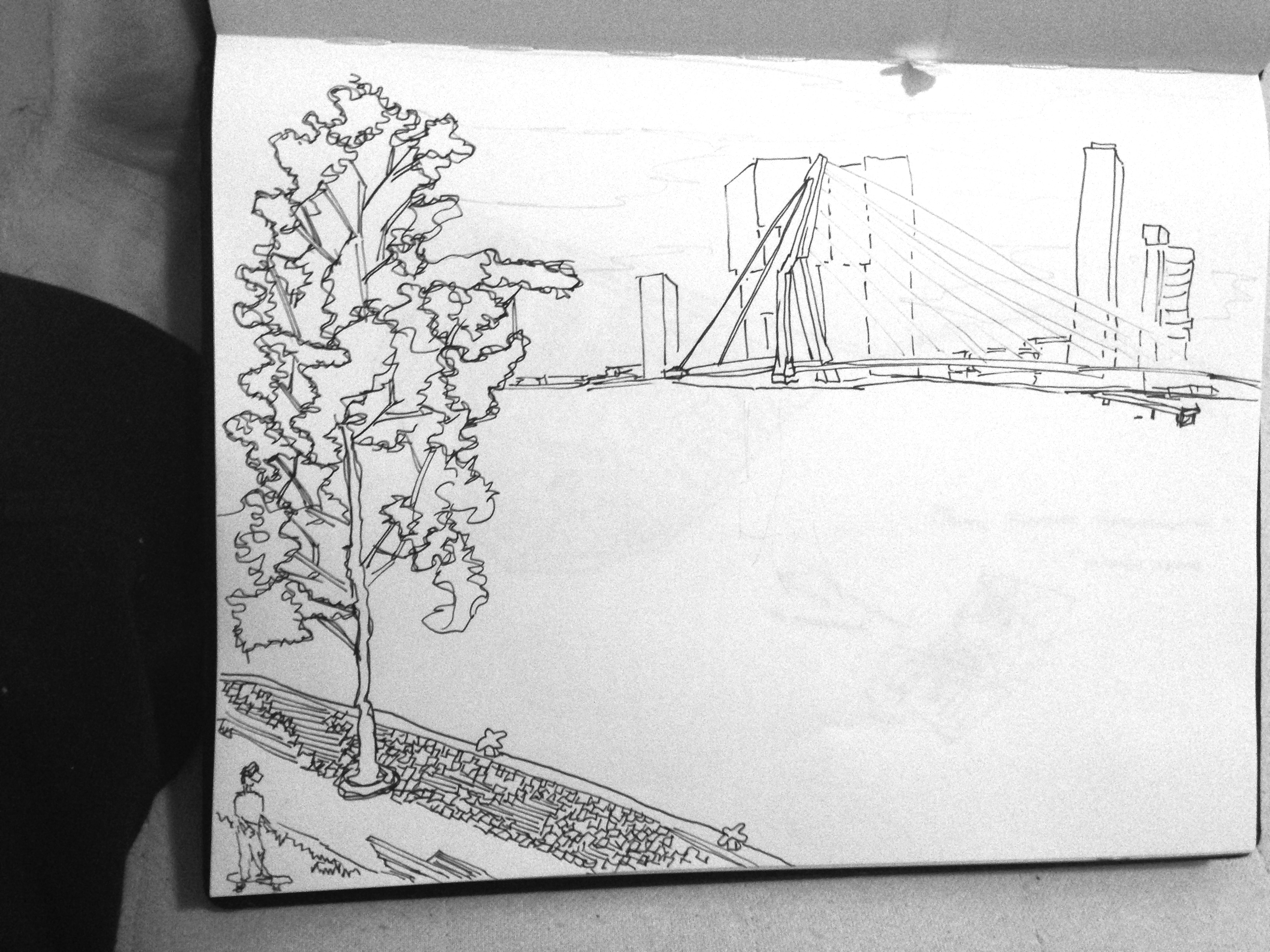
Here I drew it in plan and section. It has a running track, grassy seating, steps, trees. It provides a great place to kick a ball around, have a picnic, read, or just enjoy the views of the city. At the same time, it’s shaped like a dike and allows room for water when there are high river levels. It keeps the river away from the business district behind it.

I miss my friend Gus so I drew his picture:

Image 6

Here are some other nice photos of my walk around the city:

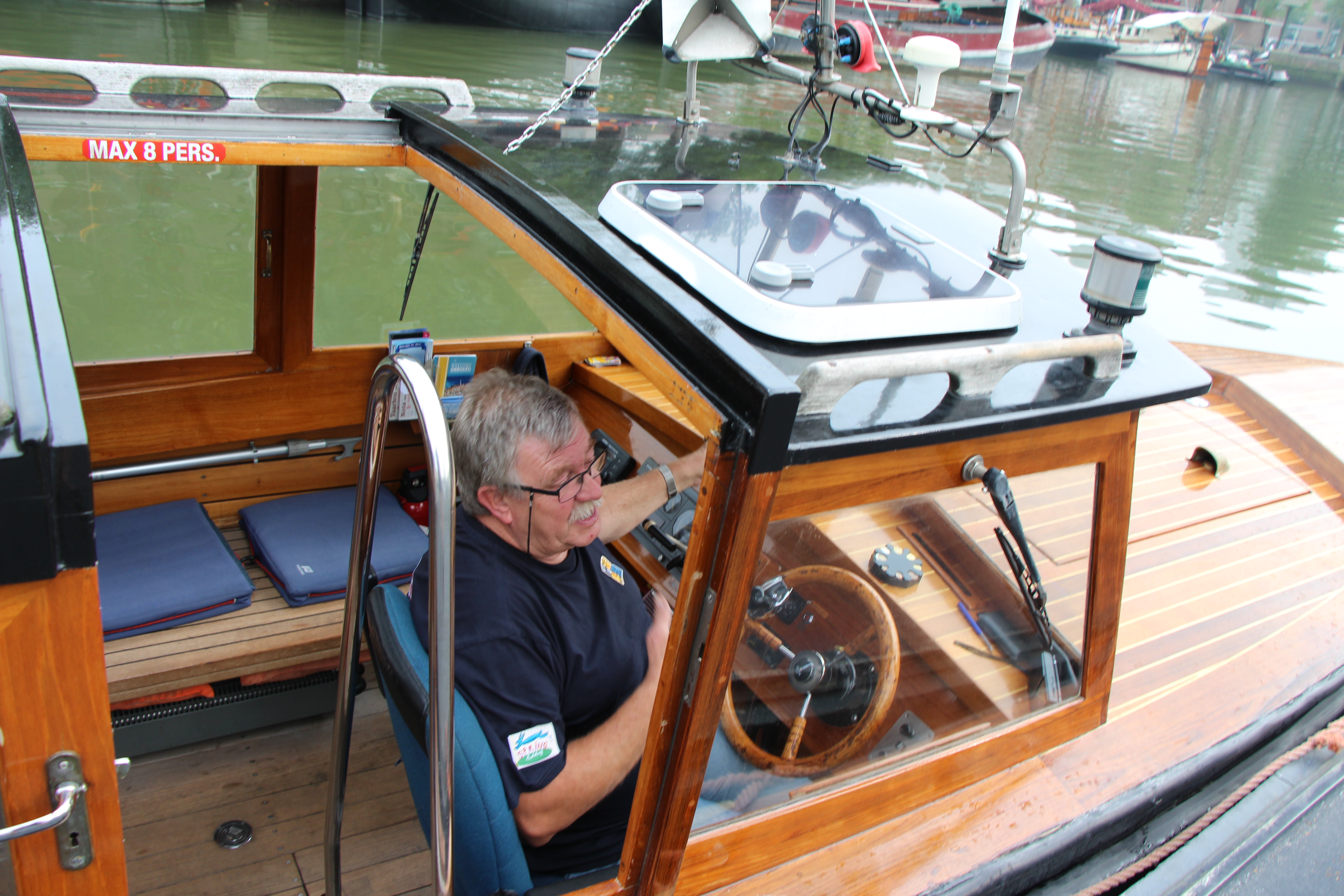
Also had a nice chat with this cabby:

IMG_3955

He’s a captain for a watertaxi. If there’s water everywhere, then it’s quite an efficient way to get around. Because Rotterdam is bisected by the river, the water taxi fleet is perfect for high-speed, jam-free and spectacularly fun rides to destinations around the city. A ride is quite expensive so the target customers are mostly tourists, mayors, secretaries, celebrities, the kings and queens, but they don’t discriminate and will always take an average Joe trying to impress their lady-friend, Jane. He told me on average he gives about sixteen rides a day.