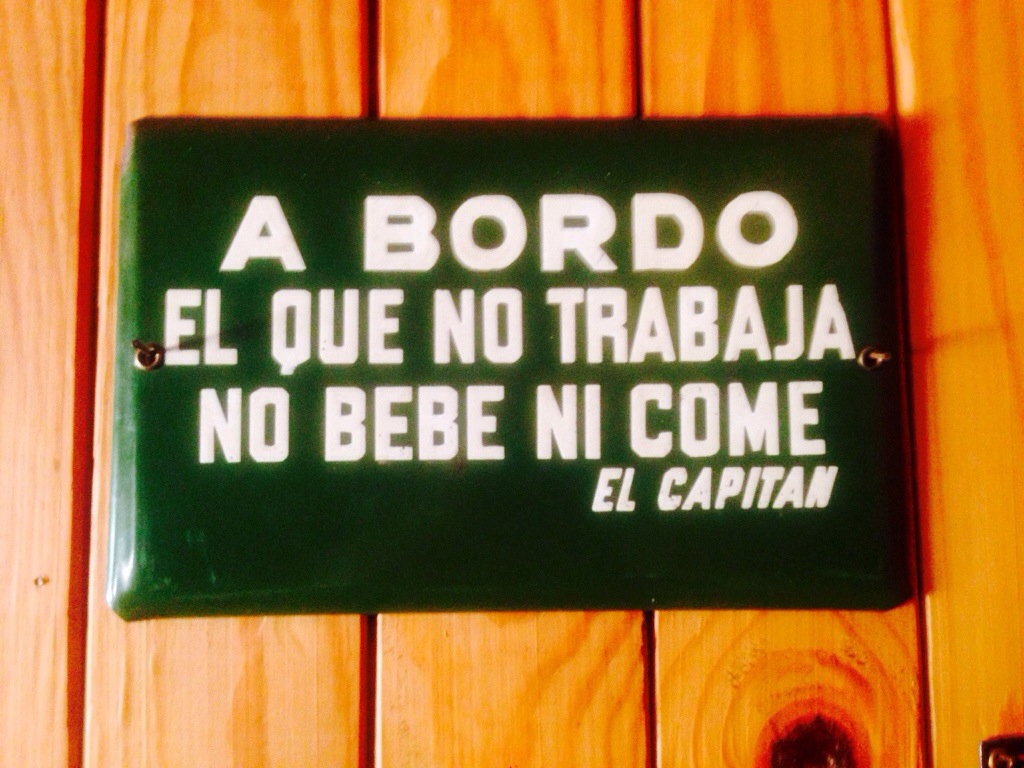
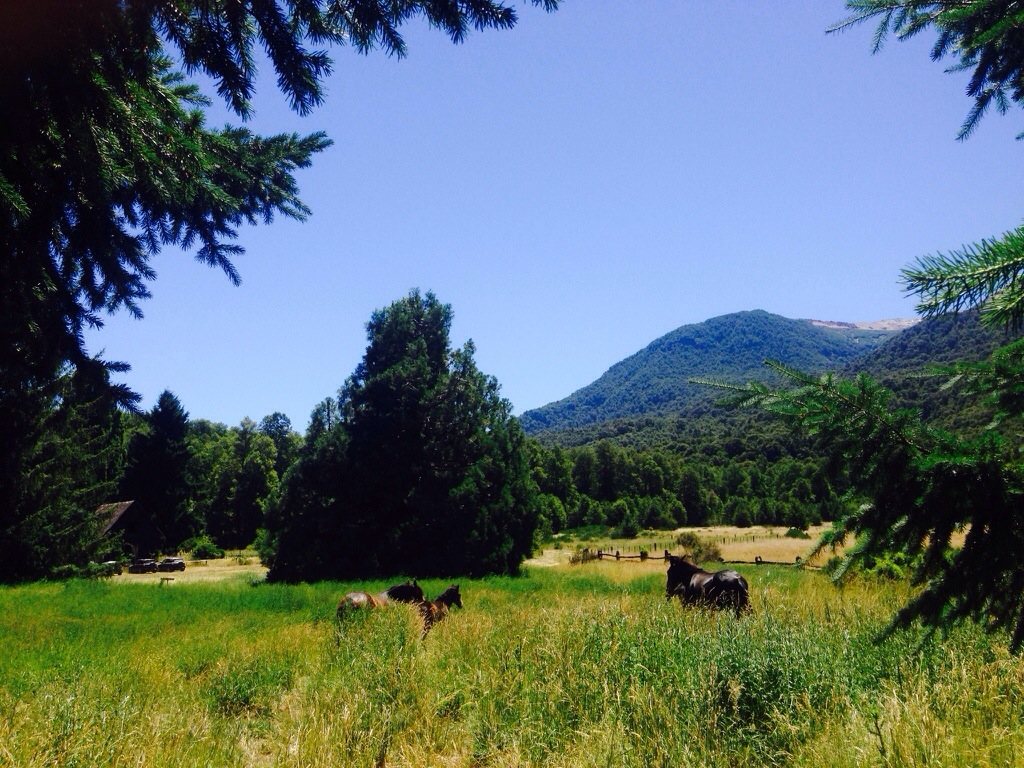
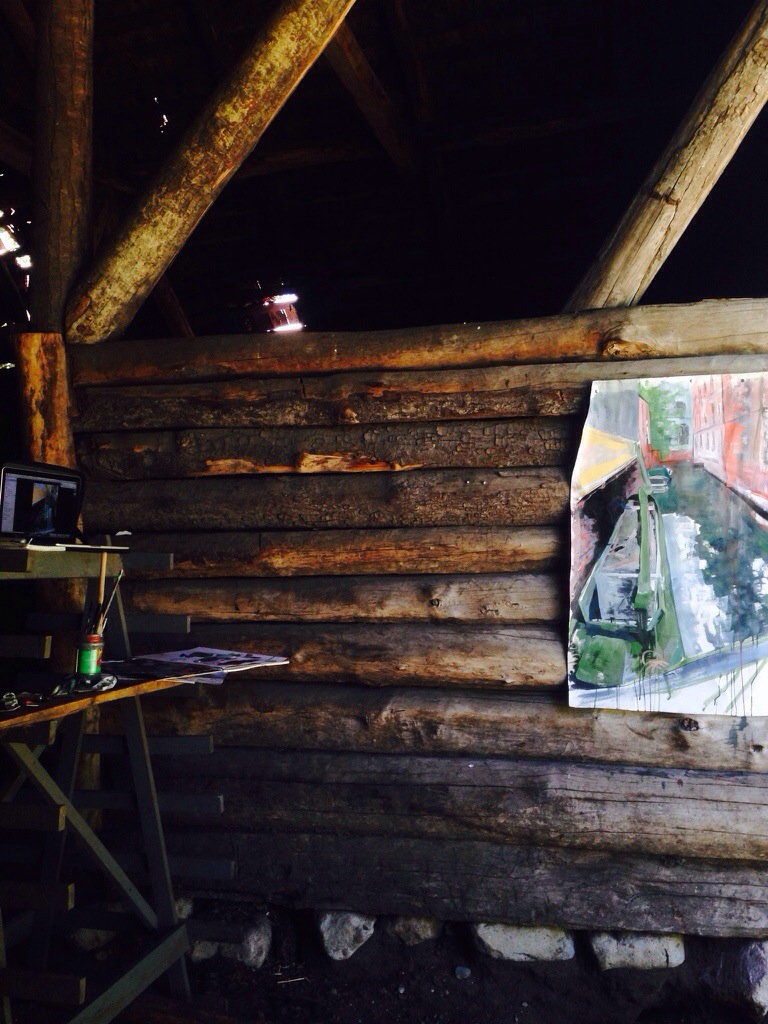
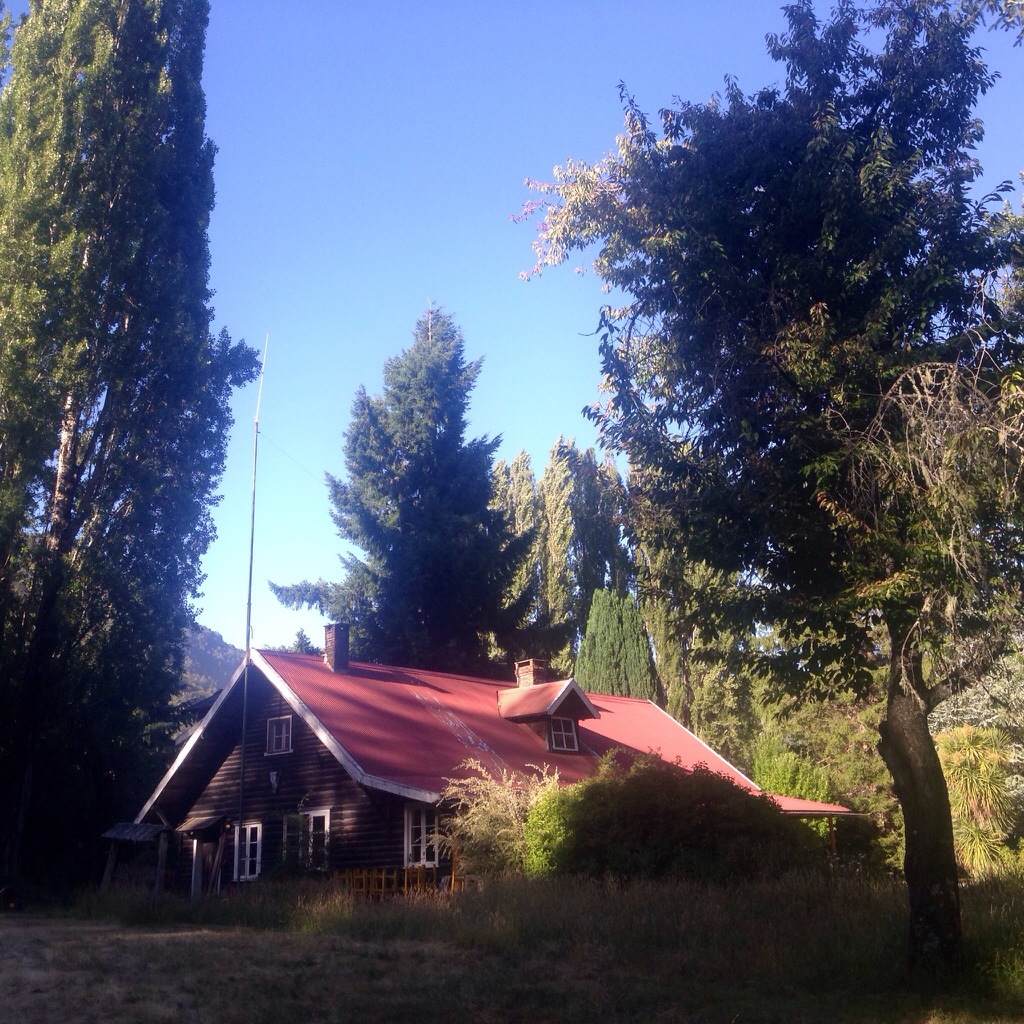
At the moment I’m living 30 miles away from San Martin de los Andes, a Brunswick sized town. I’m staying on a ranch where there is a saw mill that manufactures components for log cabins. There’s also a tea house run by five Argentines. They feed me and make fun of my spanish. I’m painting inside of a decrepit stable. I only have ‘un ratito’ on the internet so take these pictures, theres at least 30 so I owe you 30,000 words when I get back to the Buenos Aires sauna.
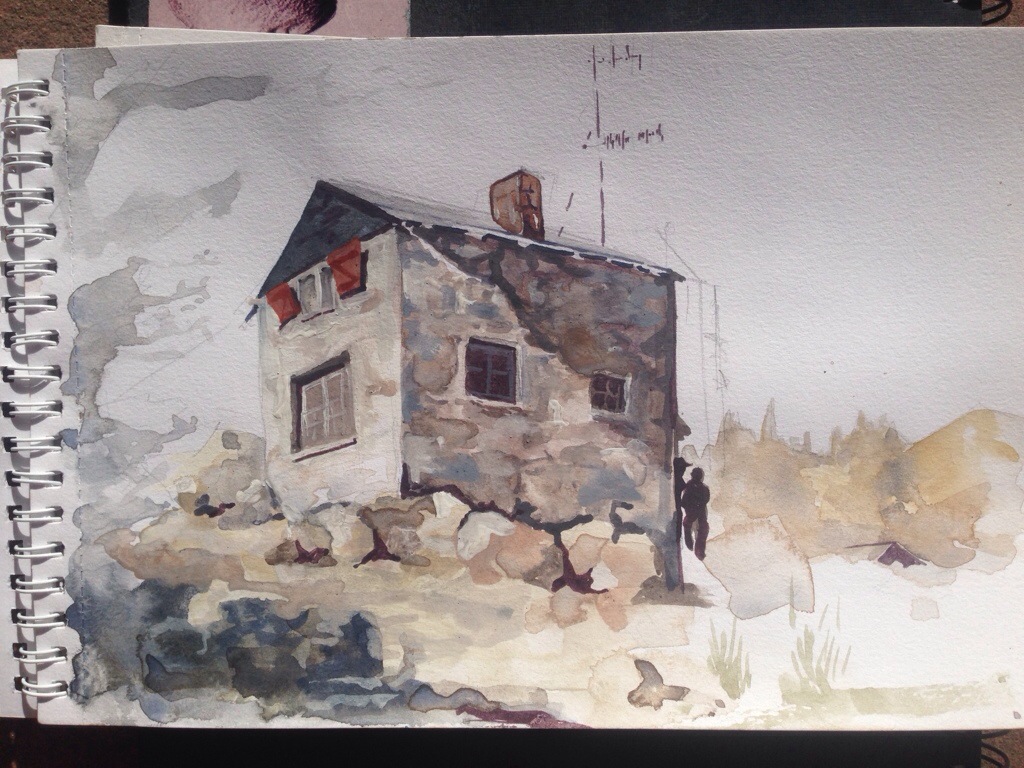
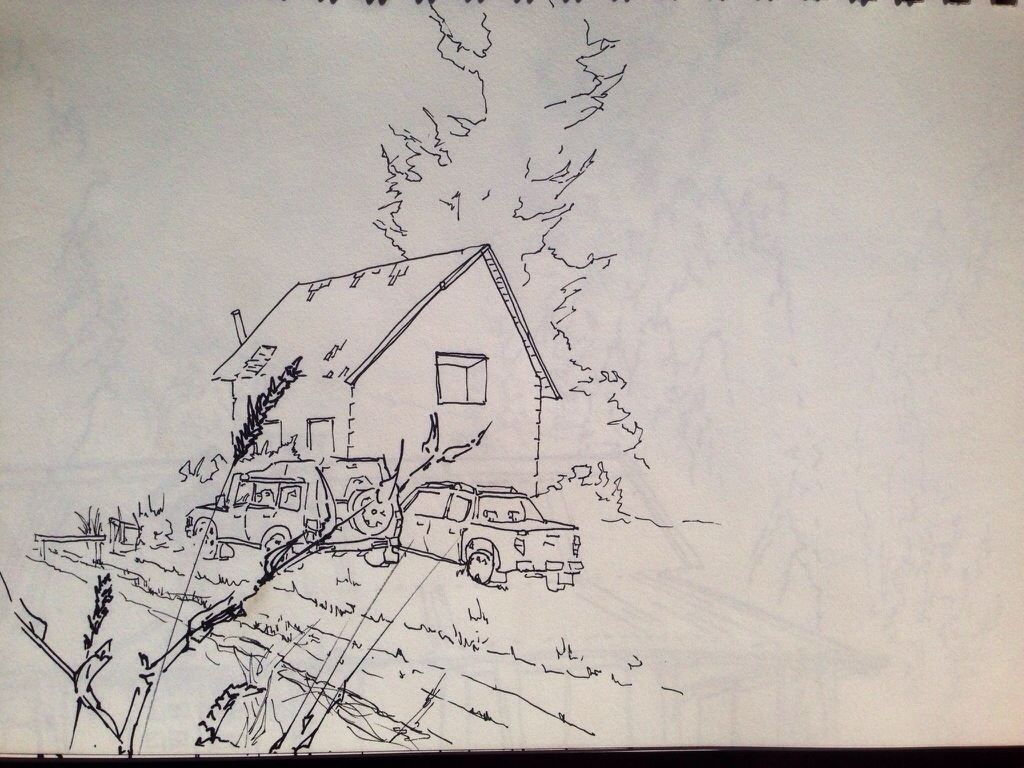
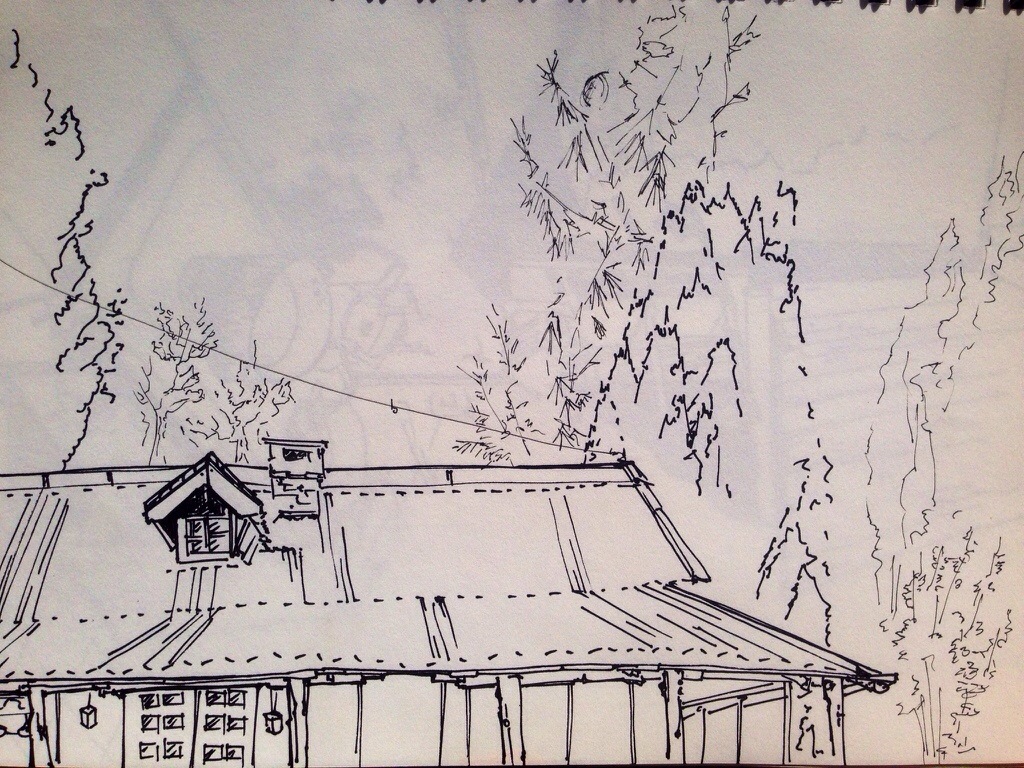
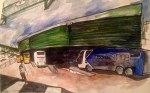
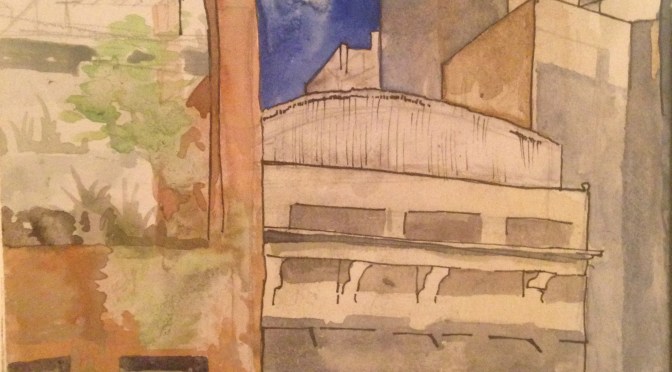
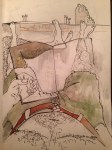
An incomplete water color of the barn I’m painting in. The roof has caved in in the middle and plants are growing through.
This is the voice of Hannah Bruce; David’s interjections are in bold.
This is only part 1 of our vacation. There is more to come. But here are all of the photos. Sorry about the Ken Burns effect. I know its super annoying.
http://www.youtube.com/watch?v=bKpp-Zl0Zc0
I land at 730AM a little disoriented after flying overnight. Argentine customs was a breeze, since I remembered (was reminded over and over) to pay my reciprocity fee (a bribe to let gringos like me [You are exceptionally gringo. No one is like you] into the country). I grab my bag, clear customs and head out to find the car that’s meant to take me to meet David, whose just made it back from Ushyia [Ushuaia. Way to sound it out, though], the southernmost part of the continent. There was some worry he wouldn’t make it in time to meet me, so ever the planner, our father booked us a room for one night at the Intercontinental as a Christmas gift/contingency plan. [This information embarrasses me] I walk into the arrivals area in a daze [A daze? This is how to best describe it—imagine Mike Tyson’s pet tiger, for the sake of the story we will call him Leonard. Leonard has been fed filet mignon and Häagen Dazs every day for meals. But one day, an animal rights group breaks in, dodges Mike’s punches, captures Leonard and releases him into the wilderness for the first time ever. Can you imagine how scared he must have been? The fear in Hannah’s eyes was about a 1/10 of that. I was standing right there with a big grin on my face, and she walked right past me, blinded by intimidation] when I hear my name shouted through the crowd. There is David to surprise me. I almost don’t recognize him. His hair is the longest I’ve ever seen it, and he’s got a thick beard. He seems older [#foreveryoung], more mature as a result of traveling on his own for the past 5 months. We drop bags at hotel and go to exchange dollars to pesos. Quite the experience, but I’ll tell you the story in person rather than put it out on the internet [you’re fine, you’ve left the country, I’m the one who will be kidnapped]. We return to the hotel with a large roll of money [I’d call it a stack]. I quickly learn that in Argentina cash will get you twice as far as charging a credit card. With our rolls of 50 peso bills [5 USD] locked in the hotel safe, we venture out. David’s Spanish is great, although he doesn’t think so. He’s able to engage people in conversation, ask for things he needs and is able to order from a café or restaurant. I was impressed. I have my first empanada of the trip, a food that will soon become a staple in my diet for the duration of the trip. [oink] We walk from hotel to San Telmo, one of Buenos Aires’ many neighborhoods. We browse antique markets and fruit stands. We pop into a few shops to find me a hat – the summer sun is strong and I desperately want to avoidsunburn. From San Telmo, we head to La Boca, a bohemian part of the city. Restaurants and bars line the cobbled streets where tango dancers trying to make tips put on shows for tourists. All of a sudden I amtired and we take bus back to hotel for a little siesta. I’ve always loved a good nap. We eat dinner at Francesco, a fancy Peruvian restaurant (ironic, I know) with David’s friends Luchu, Maria and Paddy. [Maria and Luchu dressed up like they were going to meet the first lady. Way to be an intimidating big sister Hannabee!] We trust Luchu [She manages the daily schedule of the Argentine minister of health, so she can order food for a couple of Bruces] to order for us and all eat family style. We feast on ceviche, salmon, grouper and steak fried rice. David chooses a wine from Salta, in the NW part of the country and where we are headed on the 25th. After dinner, we cram into Patty’s VW Golf [He gave us a sweet rundown of the city. As always, it’s awesome to ride around windows down on a warm summer night, packed with music, friends and family. It was good, really good]. and grab a drink at an underground bar, Atlantic Flower Shop (Floreria Atlantico). You walk into a flower shop, tell the woman behind the register that you’d like a drink and she points you to a large refrigerator door concealing a set of stairs down to the bar. Well worth the trip if you’re ever in Buenos Aires.
December 24th – David and I have a Christmas Eve breakfast feast at intercontinental #thanksdad [I had a buffet with five courses I think #bellyache]. We almost leave all of our pesos in the hotel safe. [But someone brilliant remembered before it was too late] Not a good start. [Could have been much worse] Christmas Eve is a quiet day in BA. [good rhyme Eminem] Xmas Eve is a day for people to be with the families and isn’t the large commercial ordeal that starts at Halloween, which I am grateful for. It’s 90 degrees out, so it’s hard to remember that it actually is Christmas. Museums and stores are closed, but David and I set out to walk around the Recoleta neighborhood [Hannah’s impressions of neighborhoods: In La Boca, “this is nice, I like it!” San Telmo, “Ohhh! This is my new favorite!!” Recoleta, “I think this is where I would live” and I said, “yes, of course you would, this is the nicest, wealthiest, safest neighborhood in Buenos Aires”] and the Cemetery. The Cemetery is [an] incredible [waste of space]– a small village of intricate and ornate mausoleums and graves. I had to snag a look at Eva Perons grave. I’m such a tourist. Many of the tombs are very intricate complete with stone and marble cravings and detailed wrought iron gates. David’s favorite is one made of wood with a corrugated tin roof. It doesn’t fit in at all among the splendor, but it is clearly meaningful to the owner of the plot. [or could just be the landscaper’s shed] Sweaty [speak for yourself, please] and tired, David and I caved and sat on a shaded patio at a Starbucks [this is so embarrassing] to cool off. David was thrilled about the chance to indulge in an iced coffee after a month of travelling in Patagonia [trudat]. Feeling recovered, we continued to walk towards the Japanese Gardens, which were closed for the holiday. Tired of walking and disappointed the gardens weren’t open we hopped in a cab and headed to the Palermo barrio, the soho of Argentina. Cute boutiques, restaurants and cafés line tree-shaded streets. We find a place for lunch – gazpacho and split a salad. On the way home, we stop to pick up a pint of ice cream from Freddo, David’s [Argentina’s] favorite ice cream shop, and a popular chain in Buneos Aires. We drop the pint in the freezer of the apartment one of David’s friends has let us crash in while he’s home in the States. Thanks Misha! [Thanks buddy!] Since everything is closed, we decided to cook dinner at home. We rush over to the Disco, the local grocery store before it closed to get food to make our Christmas Eve feast. [I didn’t check the expiration date of any of the food I got. Rookie move.] We (David) spent the evening cooking, planning our adventures in Salta, looking at photos from David’s month in Patagonia (newly added to my bucket list of places to see) and enjoying some wine. David cooks chicken, grilled eggplant and large bell peppers with egg inside. David has brought back glacial melt water to drink, which of course I’m skeptical of #citykid. [she looked at it as if there was a cockroach giving birth inside] We open some stocking presents from our parents and watch Despicable Me 2. It’s bad [But the minions crushed it] so we give up half way. I’m happy to be with David over Christmas. [heart warming] I would have hated for him to be alone over the holidays. And this wasn’t exactly a sacrifice on my part to be away from home. We both head to bed feeling quite ill. [My stomach was performing the opera] Food poisoning had to happen at some point. Argentine eggs aren’t refrigerated at the store, but we ate them anyway. Or maybe it was the chicken… [Benjamin Bruce and I were chatting via Face Time when the food poisoning made itself known—a bonding moment for all!]
December 25th – Off to Salta! After little sleep we are up early to catch our flight. We down some coffee and a bite of granola, lock up the apartment and we are on our way backpacks in tow. Argentine airports are like bus stations. Security is lackadaisical at best. You don’t need to remove liquids from your bags or your shoes. [What liquids were you carrying in your shoes, Bee?] No one checks your ID. The flight is delayed. Typical. We post up for a nap on the floor. The flight gets delayed again. We grab a bottle of wine from a Cafeteria by the gate and indulge in some snacks the ‘rents sent over from the States. Thanks for the beef jerky, mom. We play cards to pass the time. David is [so good he seems like] a cheater! [#cantlose] The gate attendant admits the airline he works for is crap. I appreciated the honesty, but not sure his airline would. [I started chatting with the agent responsible for our flight, and share my story about my 26-hour delay two days ago. He laughs about the lack of organization of Aerolineas, suggesting that a toddler could run the airline more effectively then assures me his dimwitted airline will get us to Salta at some point today]. It’s 1:30PM and our flight is finally ready to leave. It’s a two-hour flight and I sleep [‘sleep’ also known as ‘fear-filled body shutdown’] for most of it. The plane comes down for a landing with mountains on either side. It’s a beautiful view of the Andes, but of course all I can think about it the plane going down in the mountains and David and I will never be seen again. Irrational. We share a cab into Salta with two Canadians. Rule #1: always look for backpacks when traveling in a foreign country. It usually signals people on a budget, who are happy to help make life cheaper for you. We arrive in central Salta and find the hostel. David has booked a place he heard about from people he met in Patagonia. We are sharing a quad with two young French men. Co-ed hostel accommodations are new to me, but I try to take it all in stride. At $7/ night, [$6] who can complain? I came to Argentina to experience how David has been travelling, and while I would love to be in a nice hotel [#bratty], it would completely defeat the purpose of my trip. David and I drop our bags and walked to Plaza 9 de Julio. It’s Christmas Day so very little is open and no one is around. We grab a beer and some lunch on the square. We try a local beer, Salta Negra, that quickly becomes a favorite. [Riquísimo!] We also share a milonesa, a thin slice of steak that’s breaded with cheese and ham on top. Can’t go wrong. We continue to walk around and explore town. We visit a few of the local churches and then walk back to the hostel to read and nap. At 9 we venture out for dinner – Argentineans eat late. Salta has come back to life by now and stores, bars and restaurants are opening. We sit down for dinner at a spot clearly designed to entice tourists. Music is playing and a couple dances around the tables in traditional dress. David and I share empanadas humanitas and tamales. We stop for some soft serve on the way back to the hostel. I’m embarrassed to admit it was from McDonalds. [Never! They serve soft serve dulche de leche ice cream. I’d eat it for breakfast it’s so good.]
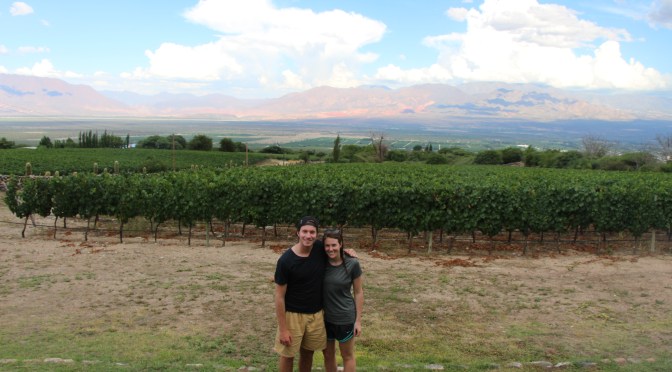
December 26th – We grab coffee con leche [fine spanglish] and medialunas, like croissants, but better, for breakfast and walk to the town square to pick up a rental car from Hertz. It’s manual. David has driven manual before, but is by no means a pro. We drive around a few city blocks while he gets the hang if it. I don’t think I took a breath for about 15 minutes. [Her tension made me tense, it was like she became Jean Grey from Xmen and controlled my thoughts and feelings]. After a couple stall outs and some wrong gearshifts, we hit the road. Our destination is Cafayate, a small town south of Salta. Words can’t do justice to the drive, so you’ll have to check out the pictures. We stop along the route for pictures. Most of the road is paved, but it’s slow going. Lots of sharp curves. We stop at la gargantua del diablo, and natural cave built into the rock. It looks just like you’re staring down someone’s [el Diablo is probably a little ticked off you refer to him as just ‘someone.’] throat. About 100ft high. Maybe more. It’s very hot. There is no refuge from the desert sun. [Except the air-conditioned car.] We arrive in Cafayate. The town is small, built around a central square. Some roads are paved. Others aren’t. Beautiful church on the plaza, which is dotted with cafés, bars and artesian markets. We find a hostel to stay at – not knowing where I’m sleeping at night is new to me, but I trust David. We find a hostel a block away from the plaza, leave our backpacks and head out to walk around town. It’s about 4 and the town is quiet. Siesta. Not much is open, so we decide to get back on the car and check out some of the surrounding vineyards. [We had hoped to rent bikes and cycle around to the vineyards, but all the bikes in the town had already been checked out, unfortunately]. This is Argentina’s wine country. [The beginning of it. Wine country stretches all the way down through the epicenter in Mendoza to then its southernmost region is around Bariloche. Cafayate is pretty far north, but it’s high altitude makes up for its latitude.] The desert climate is perfect for growing grapes and rainwater coming down from the Andes is enough to keep the vineyards hydrated without having to pump in water. 3 varietals are grown in the regions torrentes (white) Malbec and cabernet sauvignon. My first wine tasting. We learn to first check color then smell. Wine should smell different after you swirl it if it’s good. The vineyard is stunning. Sits on top of a hill overlooking Cafayate. [My favorite part was the cactus-lined driveway. The cactuses in this region got huge, up to 20 feet or more! Senior year, I had a cactus named Neil. Apparently he’s getting super big at home. This definitely made me miss him.] We get a tour and learn how to make wine. [You know how to make wine after that? This lady is spectacular!] It’s almost 5 and the vineyards are closing. We head back into town and walk around artisanal markets. Pick up two mini bottles of Malbec [One was called ‘Don David’] and go sit on the hostel’s roof to drink and read. Treat ourselves to a nice dinner on the square. Restaurant is called Turrantes [Amazing you remember this stuff] and came recommended by someone at the vineyard. We dine on empanadas, steak, and raviolis and indulge in a bottle of organically grown Malbec. We sit next to two Canadians at dinner – an elderly couple who are spending a month in Argentina. That’s the life. No obligations – can just pick up and travel. Back to hostel for a good nights sleep. Off to Cachi tomorrow
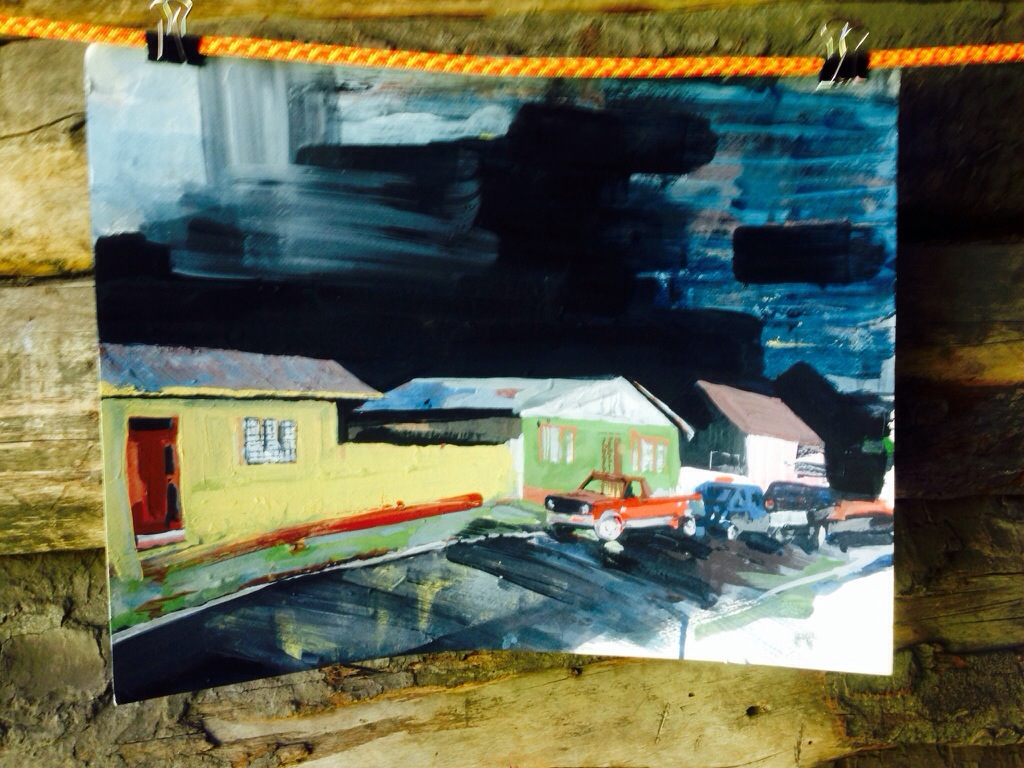
I was the first one stirring. I woke up especially early, way before my 7am bus to Ushuaia, so I went out and walked around Puerto Natales before departing. The sun was rising, but still low in the sky because we were so far south. It cast horizontal shadows onto the facades of the corrugated metal buildings. It’s fun being the first person awake in a place. I returned to the hostel, cooked myself some chorizo that we had left over from the hiking trip and complimented with avocado and cheese on crackers. After, I ate a second breakfast that was provided by the hostel, then made my way up to the bus station.
It was a long bus ride through the desert. I was reading The Kite Runner, which was a strong emotional contrast to the landscape. I looked out at the sheep, condors, and the usual sights of the Patagonian abyss then returned to a boy desribing his native Afghanistan in violent turmoil. The bus got on a ferry and crossed a small channel to get us to the Chilean Tierra del Fuego.
The landscape here was called Tierra del Fuego because the region’s first colonial visitors looked towards the coast from their ships and saw small fires all over the place. The natives would walk around naked and keep all the fires burning to keep warm. Solid central heating system.
As we crossed the channel, some dolphins plopped about chasing the ferry.
Remember my story when I first arrived in Argentina about my trouble with the border control? If not here it is: https://citiesatsea.com/2013/10/31/buenos-aires-travel-to-and-first-thoughts/. That story hadn’t ended yet. It turned out, for want of a better phrase, that the guy who completed my file for the reciprocity tax completely fucked up that morning of October 29th. It all came steam rolling back to me here in late December. As it turned out, the nice young man who typed in my file, typed in someone else’s passport number. I had no idea, but I found out very quickly from the border control officer whose eyes pierced right through me like lasers. It got sorted, eventually after a little less than an hour. At that point, my bus was waiting–I was shocked it didn’t drive away–up the road close to the gas station. I had a great walk of shame towards it as all 50 passengers sneered at me. I nodded my head in thanks as I slumped to my seat in the back. The whole way, I received snotty remarks from the ‘organized travelers with their leather important documents folders.’
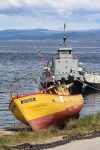
We eventually made it to Ushuaia. It was an 11 hour trip. Tierra del Fuego turned from barren land into pine forests and we got to the port town of Ushuaia on the Beagle Channel. I was in the southernmost city in the world on the second longest day of the year. Ushuaia is surrounded by snowcapped mountains. It’s harbor is filled with fishing boats. A few are now washed ashore, infested by seagulls and rotting away.
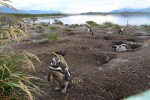
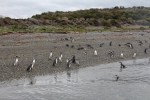
The next day, we did a tour out to an island that was inhabited by penguins. The ride out there was on an inflatable zodiac that cruised through the bay with its twin 250 hp motors. The captain let me into the back and said I could hang off the side of the boat. We blurred past swimming penguins. In the background, a glowing light illuminated the mountains. It was pretty special. On the island there were thousands of Magellan penguins, hundreds of Genko penguins, and three King Penguins (March of the Penguins kind).
Armony was being sassy on the way to the store to get food to cook for dinner, so I put her in the trash can.
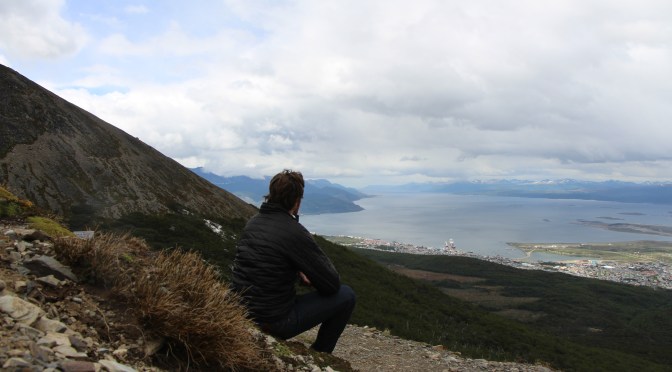
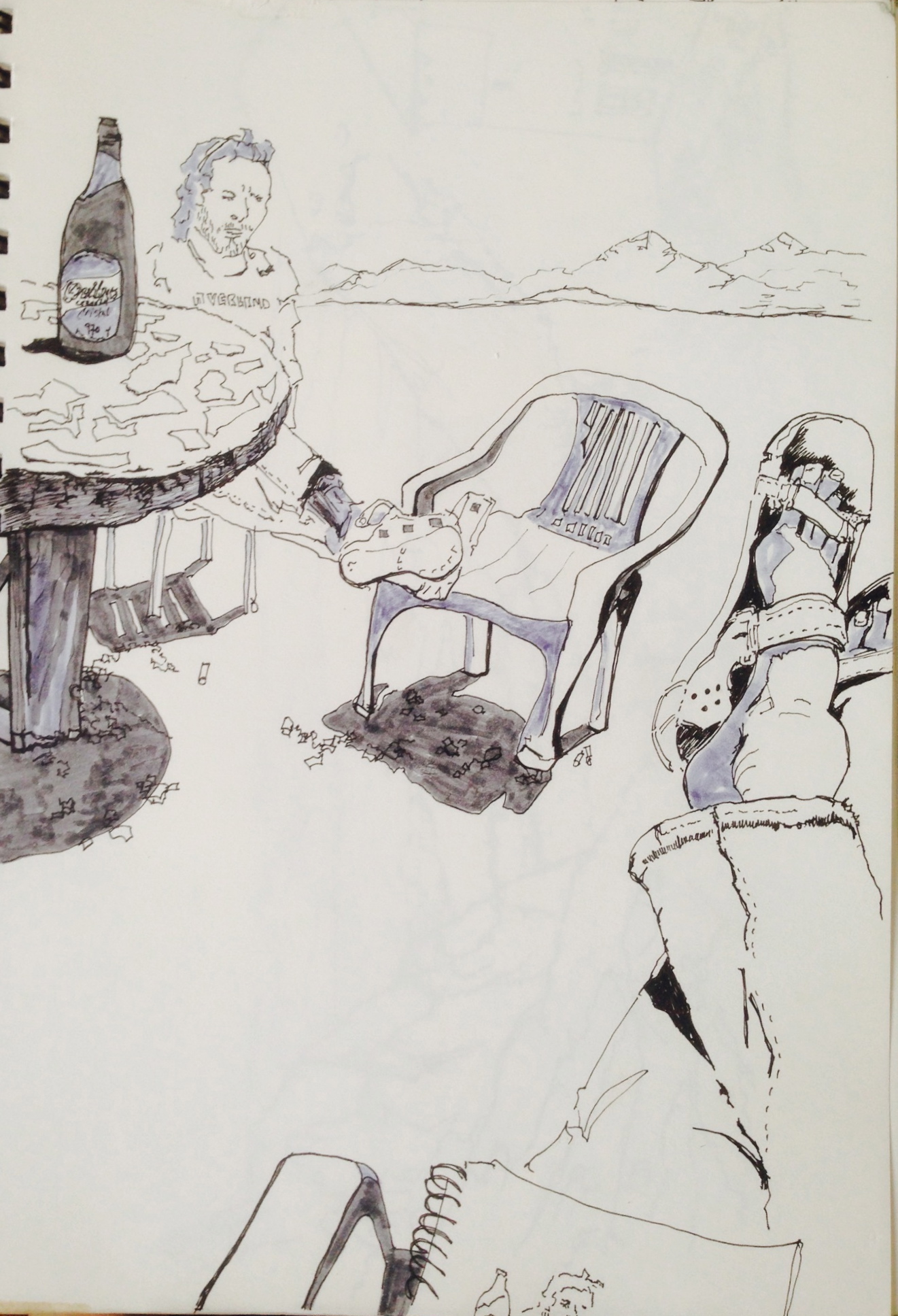
On my last day in Ushuaia, I hiked up a ski hill to get a view overlooking the town. I sat there and stared off into the horizon, beyond the snowy mountain tops towards the southern abyss towards Antarctica. I wished that I could get down there, being so close. But that would have to wait. I drew a picture of the scene and had this overwhelming wave of contentment. Although I, more or less or completely, abandoned my project for the past three weeks, I felt invigorated, like I had succeeded in travel and discovery. I had never felt more comfortable in my own skin. That felt like an accomplishment. I look forward to going down to the ranch in San Martin and connecting back to the project with a new energy for research. I look forward to have a space and great environment for painting.
My flight back to Buenos Aires was on the summer solstice, the longest day of the year in the southernmost city. I walked to the airport because I had completely run out of cash at that point of my travels. On route to the airport, I passed the southernmost rugby field in the world. Above the gate, the banner read, “If rugby is only a game, then the heart is only an organ.” I continued to walk about an hour and twenty minutes, not minding the mountainous view off the road at all. Eventually, a taxi driver pulled over and offered to take me the rest of the way for free. I didn’t say no.
I passed through security and sat waiting at the gate, enjoying watching the setting sun on the longest day of the year. I watched the airplane technicians outside patch up a brown spot on the nose of the plane with a large metal bandaid. Society already is engrained with a fear of flying, so I thought it was an imbecile move to do work in front of all the passengers. Then the inevitable happened.
The voice of Aerolineas came over the PA system and I was informed that the flight at been cancelled. It was struck by lightning as it was coming down to land. That explained the spot. I felt gutted when I heard the announcement. I was eager to get back to BA because I was out of money and wanted to organize things before my sister flew in the next day. I waited for my bag and ended up last in line to get an accommodation. As it turned out, all of the 2, 3, and 4 star hotels got filled up, so I was stuck, along with all my other cronies in the back of the line, headed to Las Hayas, the nicest hotel in Ushuaia.
I was treated like a king to a 3 course meal of spinach soup, king crab ravioli, and raspberry tart and I didn’t mind taking a hot shower, and snoozing off in a king sized bed. The value of that one night alone, was worth more than my three previous weeks. I was on top at the bottom.
The airline wasn’t getting anything sorted out, so I into a cab and headed towards the airport. I waited in line and explained how my sister had just spent 10,000 pesos (of course exaggerating for dramatic effect) to come down and see my for Christmas and told them they were doing a whole lot of damage to a longstanding plan. They got me on a flight. Lucky for me. I heard that the others who waited idly in the hotel didn’t make it out until the next day, but they got another night in Las Hayas.
I got into Buenos Aires at three in the morning, relieved to make it back to the city. I took a nap at Paddy D’s apartment then headed to the airport to surprise Hannah at 7.
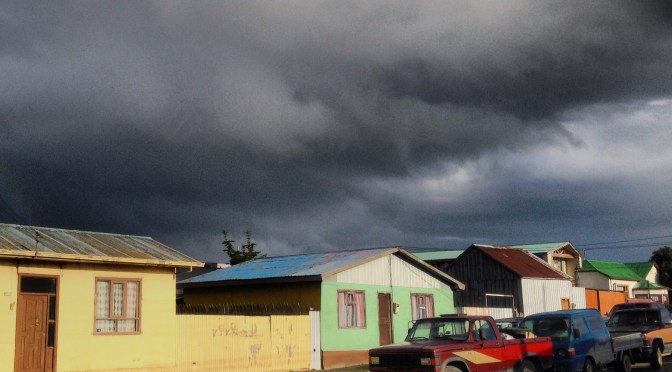
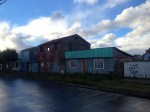
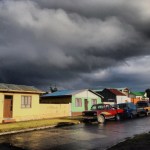
From El Chalten, I took a four hour bus ride to Puerto Natales, a small harbor town in Chile. PN was my favorite of all the small towns in Patagonia. It was less touristy, less expensive, and had the most village dogs. The houses were mostly made out of corrugated metal and were painted all kinds of great colors. I made my way down to PN because it’s the best gateway into Parque Nacional de Torres del Paine.
“Compared to my experience getting into Argentina a month and a half ago, this was an especially relaxed border crossing. The Chileans are super uptight about bringing livestock and agricultural goods over, but other than that, they seem to let people pass freely. I heard that you needed to pay a fee to pass into Chile, but I didn’t have to cough up a cent. We passed through a sleepy old mining town that was rusting away. The majority of the drive was along route 40, the road that cuts Argentina along its Andean spine. (Little did I know that I’d get to drive along the same road in the country’s northwestern province of Salta in only a few weeks). Plains. Cows. Horses. Giant birds of prey. Colossal walls in the backdrop. In and out of sleeping.”
“Chatting with a dutch aerospace engineer sitting next to me. He’s traveling in South America before going to design jet engines for Rolls Royce in Berlin. He had the classic Dutch look about him: slicked back and groomed hair, colored khaki pants, and a v-neck. He told me about a 3 o’clock meeting at Erratic Rock about the trekking loop.”
There is basically no good information about trekking in Torres on the web, so a bar/hostel called Base Camp/Erratic Rock takes the lead with an info session every day at 3pm. They’ve been running the information session for the past ten years to ensure that people who set off into the park have all the information they need and don’t pull any joey moves, such as burning half the trees down like some idiot Israeli kids did three years ago in the park. Torres del Paine translates to towers of blue, the bright neon blue color that you see in the lakes in the park.
The mountain range is much younger than the Andes, in fact it was all formed underground in a magma chamber, then shot upwards into the sky at some point in recent geologic history. The mountains here are not nearly as tall as the Andes get around Mendoza, Argentina, Bolivia, or Peru, but they appear to be much taller because they basically erupt out of the earth as vertical rock walls. From Torres-del-paine.org: The “Macizo de Paine” (the central massif) was formed when hot volcanic magma cooled and turned into granite. Over millennia, this area was covered by layers of sediment, compressing to form rock cap over the harder granite below. Over thousands of more years unbelievable geographical pressures forced the entire area to rise up. The area was then covered by glaciers and as they retreated the ice carved away the softer, sedimentary rock to reveal the harder granite columns below. The result is the jaw-dropping site of almost vertical columns of rock that shoot up from the ground like towers, rising to just below 3,000m in height.
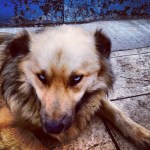
“Puerto Natales is an amazing place, on the broken up islands of the Pacific. It looks the way I’d imagine a small town in Alaska to look like. More stray dogs than I’ve ever seen. Wolf like about territory. The main street is run by 8 golden dogs, they look like family. They work in a pack to make sure no other dogs get onto the street.”
“At the info session a French woman, Armony, walks in 15 minutes late and sits down on the floor next to me. I share my dried fruit with her and she starts asking me questions. All her questions would have been answered if she came to the meeting on time. Her relentless barrage of questions pisses off other audience members. After the meeting, we started chatting and decided since we were both traveling solo, we should team up and split the costs. We were joined by two other guys and the legendary group was formed.
Armony, a 30 year old French engineer. She had a stereotypical type-A personality, and commandeered the trip planning, which I didn’t necessarily like, but I would go along with because she was attractive
Dan, a 26 year old Californian who grew medical marijuana plants professionally. He had a stereotypical type-B personality.
Bill, a 32 year old advertiser who was pretty clueless. He lived on a different planet.
and Me.
Buying food for a 4 day trip with people you met 15 minutes ago is a magnificent wet blanket, but we got it sorted. I demanded that everyone in the group elect their spirit animal. So Armony, the pit-bull, Dan, the eagle, Bill the wolf, and myself a black bear cub got ready to hit the trails. We couldn’t have been more different personalities– it was a very strange hiking experience compared to what I had been used to, just hitting the woods with friends–but it worked out great.
We woke up at 6 the next morning. All the hostels arrange a breakfast of toast and scrambled eggs for breakfast, because they know that most people get up and prep for a big day of hiking. There was a two and a half hour bus through to the park.
I knew immediately when we had arrived. As you stroll up alongside the entrance, the park’s mountains are hanging off in a circular formation in the distance. I could make out three distinct valleys, each one had different weather. I couldn’t decide whether it was more like a Disney Land for Outdoor Recreation or like a hunger games arena. Whatever it was, that sight got me amped. We were just one of five coach busses that dropped people off into the wilderness of paine. The coach busses then filled the seats back up to return back to Puerto Natales. It was like clockwork, a factory line for getting people onto the trail. The park was swamped with people. But still insanely beautiful. I can only imagine how sublime the experience would be if there were fewer people there.
The roads leading into the park were infested with Alpaca.
Here are my notes from my experience in the park:
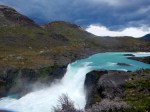
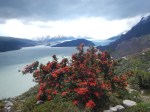
Azule of the Lago Torres. Carribean color.
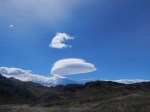
Before we caught the ferry to the other side of the park and begin our hike, ran up to check out a waterfall. In the sky, there was an alfajor shaped cloud. (An alfajor is a classic argentine snack–an oreo type cookie filled with dulche de leche).
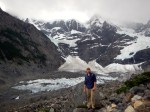
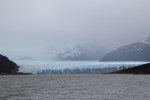
Standing facing Glacier Grey (the glacier in the park is connected to Perito Moreno, hundreds of kilometers away, through the Southern Ice Field) the winds are sweeping off the glacier and knocking me back. Staring down into a vast icy wind tunnel. From a distance the glacier looks like the great wall of the north from game of thrones.
Dan the Mt. Shasta pot grower had terrible blisters, told me he has worn nothing but chacos for the past four years. I treated his blisters–then told him to hike in his chacos for a bit. It was as if he had put wings on his feet.
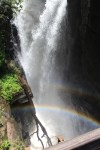
Hanging glaciers–> waterfalls coming out of the clouds. Falling from the sky.
The rocks and mountains were formed from magma intrusions, vertical walls that were shot out of the earth. Multicolored with distinct lines. Purple to tan.
On the trail, we kept on running into a 70 or 80 year old Italian man. I got to talk to him a little bit in Spanish. He doesnt walk fast, but he never stops–like the way old timers play golf. They don’t hit it far but they hit it straight. He walks with a walking stick. He’s got a red LL Bean style jacket, ray bans, and a north face backpack that hangs low over his back like a 3rd grader. Hope I’m that radically awesome and am able to do this kind of thing at an age like that. As soon as I get to a point where I cant get myself out in the wilderness or force myself up a mountain to ski, its probably time to tap out.
Last night, I met a woman who told me she has a great friend who did a Watson some years ago–something with painting and drawing. Now, she draws and records scientific expeditions. She just got back from Greenland where she artistically rendered a study on narwals.
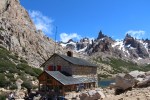
The refugios here are incredible. Ski-lodge status. We’re hanging out by the fire here, but camping out tonight and every other night. There are comfy couches and even a bar in the other room. Just smoked Armony in chess. Checkmate after 8 moves.
Day 2:
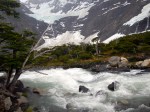
30km today. 19km with a backpack to Campamento Italiano, the rest was a side trip up Valle Frances (the French valley lies between the English and Italian campsites–nice). Up to our left, there was a hanging glacier with waterfalls running off. The wind was so strong that the waterfalls never hit the ground, just blew off in a spray. Turned to mist by the wind. Climbing uphill. Beside us is a stream of intensely powerful whitewater–glacial runoff. Elegant violence. I always think of my friend Sarah Johnson when I see whitewater. On our trip through the swamps of Georgia and Florida, she would sit for hours just watching the rapids. Striking verticality of the mountains. Granite walls. So far on the trip, we haven’t been blessed by the weather. There’s been a relentless light drizzle. Just bring on the rain! As we ascended the French Valley, a pocket of light broke through the clouds and illuminated the Torres. Real treat. Writing this the tent on my mat. Legs numb. Feel great.
Pot-grower Dan is really funny. At one point he was talking about how much he loved American Spirit cigarettes and how he felt like the warrior on the label when he smoked them, “Grab my war paint and my peace pipe,” he remarked, “they dont really go together but f*** it.”
Day 3:
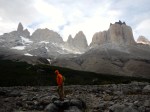
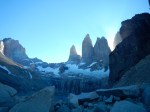
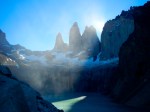
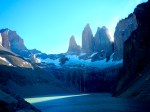
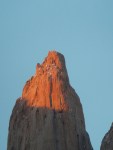
Long day hiking from Italia to Campamento Torres. Dan and Bill were a bit slow and injured so Armony and I cut ahead to claim campsites. The 3 valleys of the park are three microclimates. Today, we lucked out with the weather. Sunny day today. After the 8 hour hike, we set up camp then hiked 45 minutes directly up the ridge to the Laguna de Los Torres. Exhausted. Legs jelly, but I ran up to make sure I caught the Torres before the sun set. When I got up there, the sun was passing through each of the three towers, casting a triangle of light onto the lake, like a sun dial, as it passed between each of the towers.
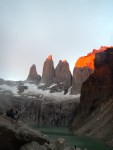
We were up that same ridge again only 7 hours later. Hiked up in the dark to watch the sun rise up and over the ridge and light up a corner of light on the tip. Just the tip.
I cooked dinner that night, a three course meal of meat and lentil soup, mashed potatoes, and grilled cheese–or as Armony called them croque-monsieurs. I ran into Audrey Sherman at that last campsite, a Dartmouth ’14 who is good friends with one of my Hanover homies, Matt and great friends with Clare Sutphin from Bowdoin. The next day, we were back to Puerto Natales and met up for burgers and beer with everyone I met on the trail. Early the next morning, I hopped on a bus to Ushuaia. Armony decided to accompany me. It was fun traveling with a companion for a week.
“Booked into the Calafate Hostel. I was looking for a dorm room to stay in. Somehow I got stuck in a double with a lone German–a 40 year old man, boozed up and reeking of cigarettes. His first observation once I met him was that I didn’t have a tent. How did he know such a thing? Was he ruffling through my bag after his 8th beer? He then proceeded to give me an airline safety demonstration of his tent, taking it out from under his bed and showing it to me. He explained how it fits 2 and suggested that since I was alone, I should join him on his hiking trip. I haven’t been back to my room since.”
He continued drinking then snored all night like a huffalump. I was up at 6am and out of the room. I sprung out of bed. Usually I’m terrible at waking up, but I was excited to get as far away from this man as possible.
“Calafate looks like a western frontier town. It had one tree lined high street, the rest just looked like cubes that were arbitrarily thrown onto the plain, the way lego bricks tumble out of a box onto the floor. Except this wasn’t a very big lego box. Just a small one. The flat-topped mountains in the background look like they were designed for the woman who will be coming around the mountain when she comes. Yee-haw.”
The first thing I did when I arrived in Calafate was visit a bird sanctuary. It was really windy and pretty cold. But there were flamingos and other really unique birds flopping around. I was surprised to learn that flamingos set up shop in the Patagonian plains. I’ve always thought of them as residing exclusively in Lakes of Africa. A pleasant surprise, surely.
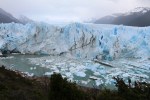
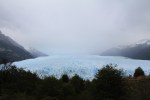
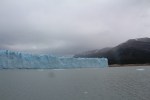
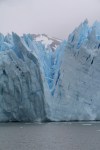
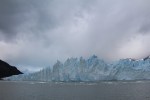
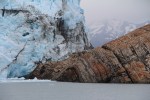
The next day I did a day long tour of Perito Moreno Glacier. The Glacier is an extension off the second largest ice sheet on the planet, second only after Antarctica. Perito Moreno is the most popular of the 47 glaciers that extend off of the Patagonic Continental Ice sheet. PM is incredibly accessible and is so staggeringly large and expansive that an impressive tourism infrastructure has profited off it. Off of the continental sheet, 13 glaciers melt into giant lakes towards the Patagonian desert. The tens of thousands of year-old ice melts into a beautiful turquoise blue and flows into small streams and rivers which cut the desert and eventually flow out into the Atlantic.
The ice field is the world’s third largest reserve of fresh water.
The park is about an hour and a half from Calafate. I took a bus to a ferry dock, got an up-front and personal look at the glacier on boat, returned to the designed walkways on the cliffs facing the expansive glacier, then returned back to town. Half of the walkways were shut down because the glacier had been calving and massive blocks off ice were tumbling dangerously close to where spectators could hypothetically stand. There were opportunities to walk on top of the ice, but in no means was that cheap, so I passed it off.
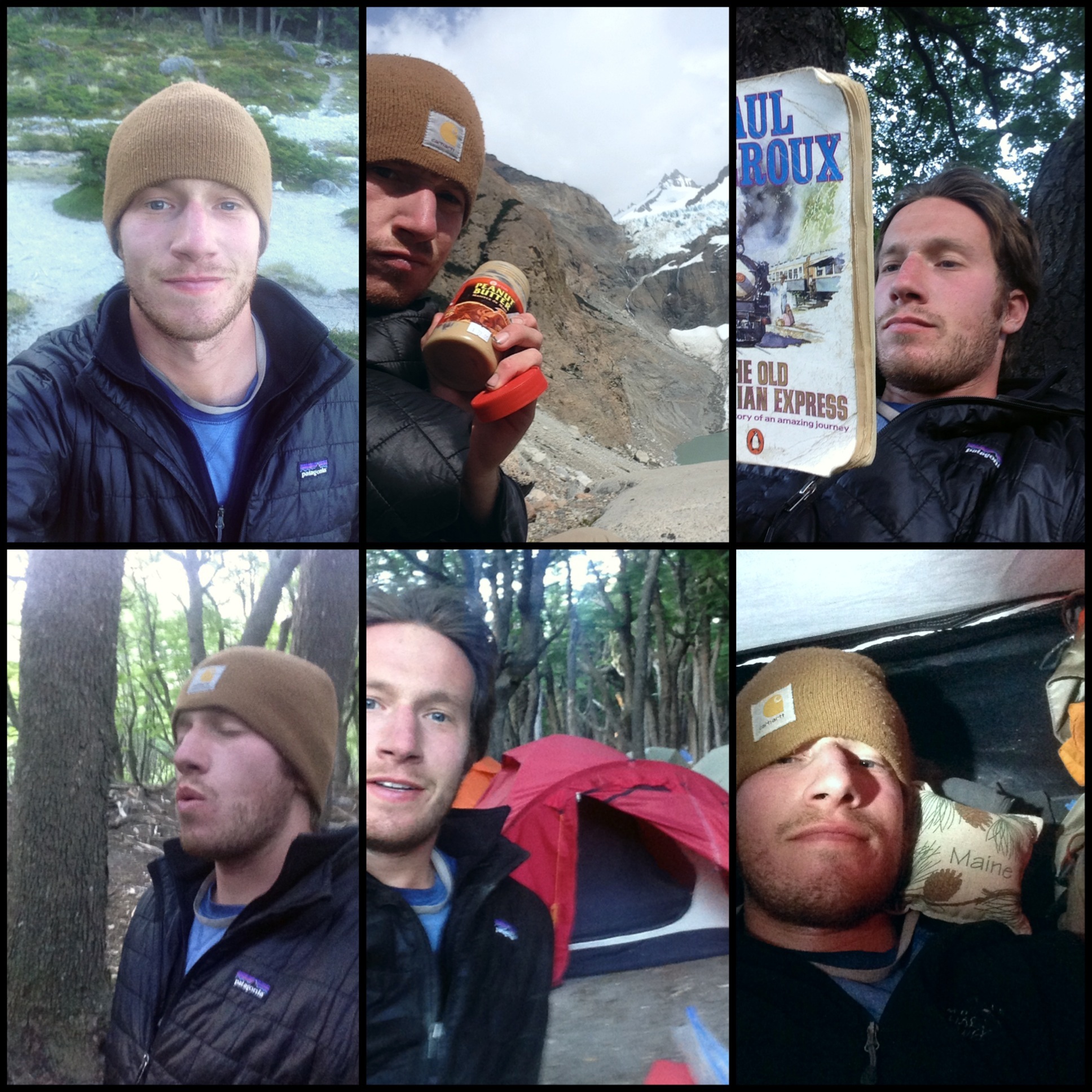
That afternoon, I caught a bus to El Chalten. Chalten is dubbed the hiking capital of Argentina. I got there on a three hour bus ride around two of the large glacial lakes. The bus ride was from 7:30 to 10:30, but the sun was hung low in the sky for the whole ride. I arrived in Chalten late that night, spent a night in a hostel, very relieved to see that the German man was not my roommate. I stayed at the Rancho Grande hostel. There, I ran into about four different groups of people I had met at different stages throughout my time in Argentina. The most rewarding encounter was with two Middlebury girls I met out at a bar in BA. They just got off a 3 day trip and gave me their left-overs–a gift box of maple and brown sugar oatmeal, peanut butter!!!, a slew of delicious energy bars, powdered coffee, and toilet paper. They have no idea how happy these gifts made me. Really happy. I got up the next day and rented a tent and a stove, ready to go and spend the night at the foot of Mount Fitz Roy, the tallest mountain in Patagonia. Heres what I wrote at my campsite, reflecting on the previous two days:
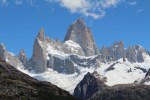
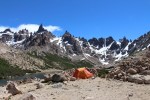
“I’m sitting on a sandy patch of land in Parque Nacional de los Glaciares. Its 6pm but the sun is still high in the sky here in the deep south of Patagonia. Mount Fitz Roy is a kilometer from me, towering up in the sky as the tallest mountain in Patagonia. It is marvelous to be sitting here in a cozy patch of soft sand with the warmth of the sun and a cool breeze. Like all of my hiking days in the Andes, today was spectacular. I hiked with Victor, my seat mate on the tour from El Calafate to Perito Moreno Glacier. Victor is a great, unabashed guy from Barcelona. We traded off, taking turns practicing Spanish/English as we hiked up to the spectacular lakes at the foot of the Fitz. As he left my campsite to hike back to Chalten he said, ‘Thanks for making my travels better.'”
“Perito Moreno was amazing. I kept it simple by taking an hour long boat ride and walking the ready prepared trail. No glaciar walking…too expensive. The glacier is staggering. Not only are the 60 meter faces, but the whole thing extends into the horizon, through a valley that the glacier itself carved through a string of mountains. Every once in a while, you’d hear a massive rumbling, louder than if there was a thunder-strike right above you. You’d look out over the ice expecting to see a significant chunk of the glacier falling into the lake triggering a tidal surge. I’d look out wide-eyed expecting to see the beginning of the world end, but be disappointed by barely noticing boulder sized chunks, which looked like pebbles in contrast to the sheer size of the glacier. Just the pebbles falling off the top would cause the ground to shake. The ice was very much alive: cracking, crumbling, and even roaring at unknown and unpredicted intervals. ”
“The bus between Calafate and Chalten was a gorgeous ride through the desert. Alpaca were hopping over fences and running off into the sun, there were turquoise rivers cutting the sandy desert, the sun was piercing through the window of the bus refusing to set. I’m at the bottom of the world, and I feel it.”
That night camping out alone was brilliant. I got to sit out, listen to the wind and watched the clouds that just hung over Fitz Roy. I cooked myself a pasta dinner and watched the mountain. That evening, clouds beheaded the top of Fitz, but couldn’t ever pass over it. The mountain was an impenetrable barrier.
A day in the life: solo hiking. Campsite. Peanut Butter & Glaciers. Books. Relief. Built a home. Sweet smells of home.
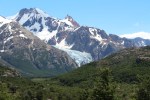
The next day, I got up early and went on a hike through the wilderness to find a hanging glacier hugging a rocky ridge. I climbed up a mountain to observe it only to find a raw, wind-swept terrain. I couldn’t stand up without getting knocked over, so I had to lodge myself up against a rock behind me so that I didn’t fall off the mountain. Brilliant stuff. I was the only person up there, an eerily isolating feeling. I was staring down a natural force that outdates dinosaurs. The thought was sickening and in that isolation, my imagination started taking control. I pictured an earthquake ripping up the mountain beneath me and sending me into a molten magma crevasse, I thought the giant rocks would get set into motion by the wind and flatten me like a looney toon, then I worried that the glacier would slip off its millenium-old perch and add me to its records of time. I wasn’t ready for that–yet–so I went back down to camp to pack up and hit the road.
I had a huge grin when this guy and his wife passed me. He knew I was grinning at him, but wasn’t sure why. So I told him I like his shirt. Turned out he was from Amsterdam and knew some of the people I met in the Netherlands during my months there.
After returning my gear, I found a place that made a banana, avocado, and honey milkshake. My favorite thing.
That evening, I took the bus back to Calafate, booked a bus to Puerto Natales, Chile, then found a hostel for the night. Here are my notes from the bus back. I asked for a seat right up front so I could watch the desert.
Condor drags carcass of road kill off the road, fearless of the bus hurtling towards it.
Desert. Fences. Nothing but a road.
Dead alpaca caught on a barbed wire fence. Head and hind legs intact with fur, ribs are exposed, eaten from the inside out. Preyed on by the desert.
Sandy plain, snow capped mountains in the mist.
In Calafate, there was a street dog that I was particularly fond of. This dog was a bundle of energy. He wouldn’t ever stop doing what it loved to do. His favorite activity, in the whole wide world was to wait on the street until a car came by. The dog would run next to the car, barking at it. The dog would then get a step on the car and stick its head out in front of the bumper and try to bite the tire. Right before the dog would get smushed, he would dip out and run back to the starting position. Time after time after time. I stood on the curb and watched this pup do this over fifteen times in a row. It was homeless, but knew how to have a damn good time. Fearless.
At this point in my trip, I only had 60 pesos (6 dollars) and 50 US dollars in cash to get my through Argentinian Tierra Del Fuego. I knew that was going to turn out to be a problem, but not something to worry about for now. I was heading to Chile, a country without the same currency controls so I would be able to use my debit card, rather than just rely on cash that I had exchanged a world away in Buenos Aires.
I’ve spent the past month in the Andes. In 30 days, I slept In 24 different places. It was the most movement this year, and thereby the most intensive traveling I have done in my whole life. I traveled light–only with a couple t-shirts, a pair of shorts, jeans, and winter layers. I knew I was traveling south and I new penguins lived there. In school I was told that penguins liked the cold, so I brought a winter coat. My goal was to reach Ushuaia, the end of the line; the end of the continent.
I left my computer, and half of my backpack in Buenos Aires. I know I abandoned the blog. I know I abandoned you. But, I kept notes and now I’m ready to share my past month. The text in “quotations” is directly from my little black book.
I ventured southwards via Pinamar, a small coastal town south of Buenos Aires.
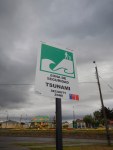
Buenos Aires is also the name of the province that the capital is in. Buenos Aires Province is the province that is most tangled up in the effects of climate change and sea level rise. The coastal aquifers are endangered by salt-water intrusion, which would taint the freshwater supply to the densely populated Buenos Aires metropolitan region. In addition, the low-lying suburbs of Buenos Aires’s and the stretch of small coastal towns down the Atlantic coast are on the lie on the front and take the largest beating from the sea. These coastal towns, which are visited by many of the capital city’s residents to between December and February, the staggeringly hot and humid summer months are also vulnerable to the impacts of coastal flooding. Pinamar is one of those towns.
“I’m in Pinamar, a small beach town only three hours south of Buenos Aires. It took us six hours to get here though. I came down here–the long way–with Misha last night. We left the capital on a 1:45 AM sleeper bus to Mar Del Plata, then we took a two hour shuttle to backtrack. The Long Way Around—I understand what the Dixie Chicks were singing about. There was a midnight bus that went directly to Pinamar, but we got to the bus station too late to get seats on it. Instead we had to overshoot our destination then reverse course on a new bus. We’re with Mike, a South African guy who seemed significantly lost at the Mar Del Plata bus stop. Being the only other gringos there at the bus station at 5 in the morning, he came up and chatted to us about our plans. He changed his plans and followed us to Pinamar. He was wearing a bowling hat and holding a plastic boo-boo-zeila (I’m not even going to attempt to figure out how to properly spell that word) blow horn. Since he completely redirected his plans after he talked to us, and ended up in a 3 bed dorm room with us in Pinamar, I got slightly weirded out that he was going to rob us or hurt us, but we haven’t been robbed or hurt yet, so it’s probably cool.”
In retrospect, that guy was a totally useless traveler. He had no idea how to find a hostel, no idea how to get around Argentina. We even cooked him dinner that night because he didn’t know how to do that.
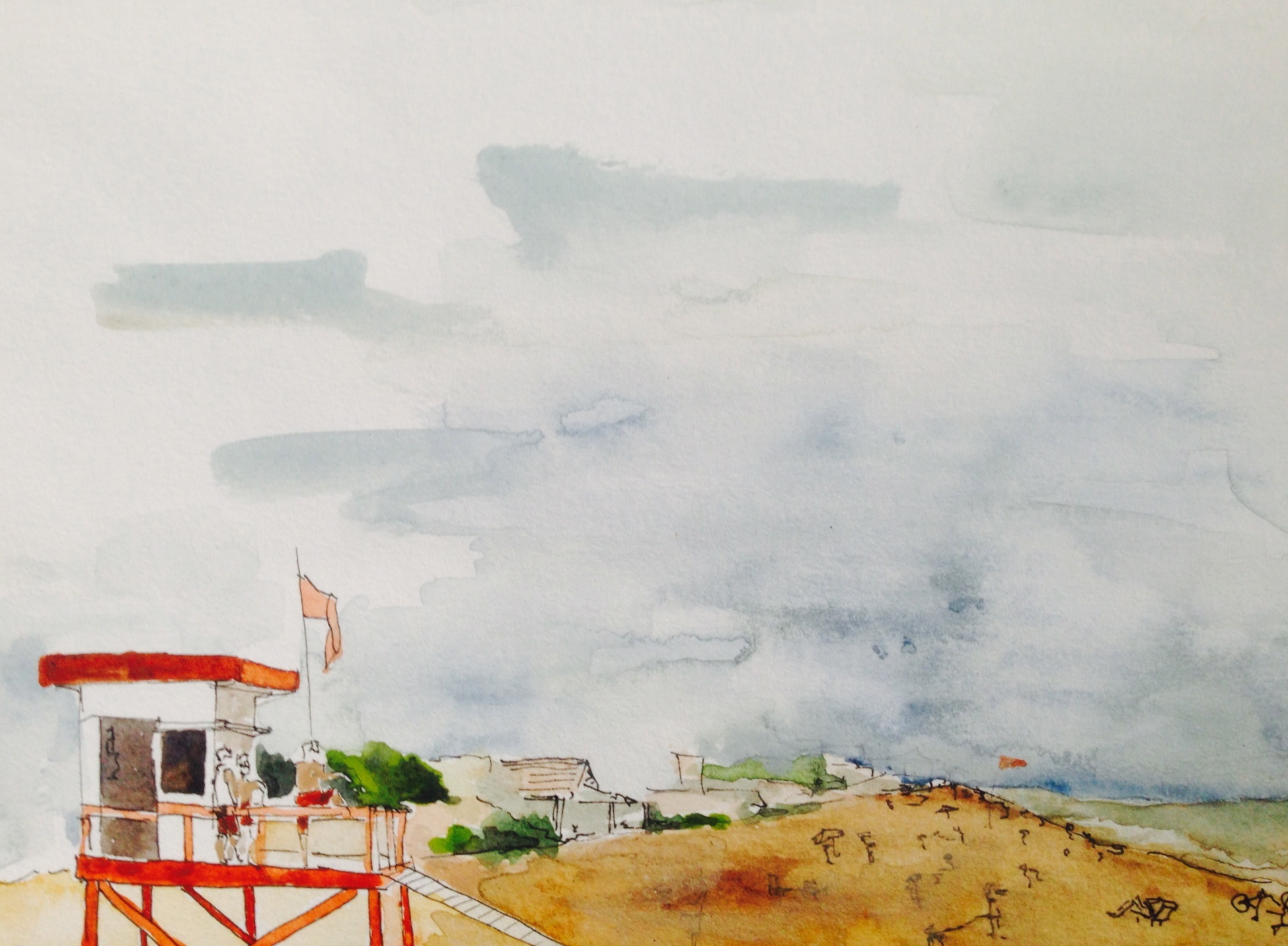
“We dropped off our stuff, then went out to search for a place to rent surfboards. Just strolling across the beach on the hazy morning, we came across the lifeguard clubhouse. It was decked out with couches, radios, and lifeguard supplies inside of an abandoned cargo container. Misha took the lead and started asking the happy-go-lucky life guards where we could rent a board for the day. We were told of a place in the next town over, a fabrica de tablasin Valeria Del Mar. We hopped on a bus and headed over to the next town. We rented boards, got smashed up in the waves, swallowed lots of seawater, and had very little luck surfing. The ocean won, as it usually does, so I retired to go and have a nap on the beach.”
I’m seriously afraid of getting chomped by a shark. We were the only two people out in the water, so that was probably good exposure therapy for me.
Pinamar
In the crevasses between my head hairs, I brought sand from the Atlantic shores into the Andes. I thought that was pretty cool.
I spent the next day, every single one of its 24 hours on a bus from Pinamar to Bariloche. We crossed La Pampa, a province south of Buenos Aires. In La Pampa, the scarcely populated ranches turn into endless plains of shrubbery, then the plains just turn into a void. It was surreal to go to sleep in a landscape of recognizable countryside farms and wake up in a sandy abyss. Around every corner I was looking out for the Andes, anticipating them to rise up abruptly from the desert around each bend.
“I’m reading Paul Theroux’s The Old Patagonia Express. It’s a surprising comfort. I’ve found something that I can relateto: the voice of another solo traveler. He’s an entertaining writer, got good stories—although he must be partly bluffing. He’s traveling by train from Boston to Patagonia in ’79 when the world was very much a different place. Countries were ending their dictatorial regimes, the U.S. ran the Panama Canal, and Jorge Louis Borges was still alive. Theroux spent his days in Buenos Aires reading to the blind writer. The book is good stuff, also fun to have him catch up to me as he was zipping down by train and I was rumbling by on a dirt road through the desert. No matter how much you talk about and share your experience traveling—no one can relate to such an individual experience. But Theroux is able to connect. Maybe I need to look more to books for company during these stretches of solitude.”
On that note, here’s a Theroux quote I found in the book:
Reading alters the appearance of a book. Once it has been read, it never looks the same again, and people leave their individual imprint on a book they have read. One of the pleasures of reading is seeing this alteration on the pages, and the way, by reading it, you have made the book yours.
And another:
Travel is not a vacation, and it is often the opposite of a rest. Have a nice time, people said to me at my send-off at South Station. It was not precisely what I had hoped for. I craved a little risk, some danger, an untoward event, a vivid discomfort, an experience of my own company, and in a modest way the romance of solitude.
Back to my solitude and my black book.
“Driving across the desert. For 10 hours, no tree or shrub higher than ankle height. Occasional towns, few trucks, saw a pack of alpaca, or llama. Not sure. Only signs of human life are of what has come before. There are doghouse-sized mausoleums on the roadside memorializing people who set across the desert, but never made it to the other side. I’m on the top floor of the bus. All but four got off this morning, before we left to pass through the void. Sleepy cabin. Nothing has stirred all day, mirroring the lifelessness outside. There are fences and gates marking property, but no signs of habitation. Dust. Swirling dust. The bus rumbled. The driver drove over the siding of the road, and onto the safety strip. Brrrrrrmmmppppp. He must be exhausted looking out into nothingness. How often do the drivers switch? No way this guy has been driving straight for 20 hours. I hope.”
“Its dry. Dried up riverbeds, drainage canals with no drainage. As far as I can see through the dust, there are no Andes. Outside of Baires, everyone is much friendlier. Tranquilo. Slower pace of life. The man from Bariloche is sitting in front of me asked me what I was taking pictures of. I guess he’s used to the landscape outside. To him it’s probably boring. To me, it’s like laying eyes on a new species. He told me about a volcano that erupted here two years ago. See some of the detritus scattered.”
I remember when the Andes appeared, like a curtain hanging from the sky to change the set. The landscape changed. Mounds turned to hills, shrubs turned to bushes. Then eventually hills became impressive ridges and bushes became trees. There was a shallow river with crystal clear water.
“Bariloche is a gorgeous place, the love child of Jackson Hole and an Alps ski town. Bariloche itself looks like a cozy swiss town, but the red sand stone rocks in contrast with the snow capped mountains behind remind me that I’m in America.”
In Bariloche, I met up with Ollie and Elliot, two Bowdoin juniors who opted to take a semester off of college and make up their own curriculum rather than do one of the recommended semester abroad courses. Elliot worked at a dude ranch in Uruguay while Ollie took buses from Mexico to Peru, and then hopped on a flight to meet me and Elliot for Thanksgiving in Buenos. When I arrived after my 24-hour bus ride, they greeted me at the bus stop with cured meats, and an 8-peso (US 80 cent) bottle of wine. They weren’t sure when I was getting in to Bariloche, so they had been waiting at the station for me for a little over 2 hours. When I pulled in on the bus, I saw them before they saw me. They looked like sad, lost dogs not sure whether or not I was still kicking it in the game. In fact they were very happy to see me, since I hadn’t gotten in touch with them for the past three days, they had doubts about whether I was alive and headed in their direction.
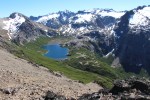
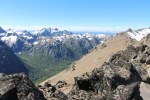
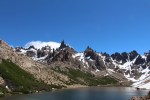
That afternoon, we got right to planning for our days spent out in the Nahual Haupi national park. Our plan was to do a four-day hiking circuit between two of the park’s Refugios. I’ve spent time hiking in the Wind River Range of Wyoming and the also in the Maine Mountains and Woods. The landscape in Bariloche was up to this point the most magnificent I’d ever seen. On top of the ridges, we could see lakes, snow capped mountains, sandstone slopes, dunes, volcanoes, expansive valleys, and a cloudless sky only interrupted by the daytime moon. At night, it was a treat to look up at the stars and see recognizable constellations that were there, except flipped upside down from the northern hemisphere’s orientation. The big and little dippers were the wrong way around, dumping their contents into space, and Orion’s sword was pointing upwards. There were shooting stars and even comets. The climate would turn from being in the high 80s to falling close to freezing at night.
“Tomorrow, Ollie, Elliot and two Israeli girls they met last night are heading up those mountains. They both served in the military for the past two years and now are enjoying their freedom for a year. They worked at a Jewish summer camp in Texas and now are working their way south.”
Little did we know that these girls would turn into being the biggest toothaches. For myself, Ollie, and Eliot, living and hanging out in beautiful places in the wilderness is a kind of sanctuary. It’s a time and place to appreciate a slower flow of things and enjoy being in sweet places with sweet people. That’s the sort of attitude we picked up at the Bowdoin Outing Club and I think it’s absolutely the right one. On the contrary, these girls were concerned about everything, making a trip that was ingeniously engineered by Mr. Eliot Taft to be chilled out and gnar-filled into something uptight, on a military-like schedule.
All they ever wanted to do was eat corn and make coffee. One of them would stop in the middle of the trail and say, “do you want mee to maaayyke caaauufffeee?” I’d think, ‘What? No. That’s the last thing on my mind. We’re in the middle of a hike and we will be at the Refugio in 20 minutes.’ Their other defining habit was asking constantly how long it would take to get from point A to point B. For starters that a childish question because it depends how fast you walk.
Over dinner of quesadillas and thick mashed-potato soup that we cooked up in the bathroom to avoid paying the Refugio kitchen fees, they were starting to fret about our food supply. To dismiss their concerns, I propositioned that we could dine on the plethora of wood that was lying around. That was the beginning of our breakup. We split up lunch food and hiked separately to the next Refugio. But, the trip got much more fun after that point. Wood. Gets you out of sticky situations.
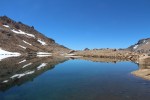
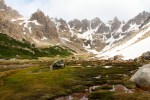
The hike between the Refugio’s was only about 12 kilometers, but it was by far one of the most brilliant hikes I’ve ever done. It was up a ridge, down a ridge, through a valley, then up a ridge and down a ridge. Every part was different though and the panoramic views we got off the tops of the mountains were stunning. We hiked through snow, past untouched snowmelt lakes, over mars like sandy surfaces, skidded down sandy dune like slopes, walked through dried out drainages, across grassy valleys, and whacked through thick brush.
A 28-year-old Canadian man, Gerome, who was traveling solo around Patagonia, accompanied us. He was one of the many delights of our trip. He had some epic tales of adventure, travel, mischief, and was plain and simple a good-humored guy to have around.
There were only about 4 or 5 other hiking groups around that we would weave in front of and behind as each of us trekked towards the Refugio. One of the other groups that was particularly enjoyable to have around was a 60 year old British couple that ran a bed and breakfast in the Lake District of England, up towards the Scottish highlights. They both traveled a lot when they were in their 20s, and now that they both felt they were getting older, they wanted to get back into it. The man, I never caught his name, used to travel around Europe, play the guitar on the street until he made enough money to get to his next location. He also spent a couple of months in India, in just about every place I’m heading in February so it was great to get his outdated impressions of India. He spent a considerable amount of time in Varanasi, where I’ll be living for the month of March.
The last night, since we were running short on cash, we opted to sleep outside for free. It was damn cold and I only had a thin summer sleeping bag rather than my heavy duty zero degree bag that I sent home before flying into Argentina’s summer season. That bitterly cold last night got us more than ready to get back to the hostel and get a hot choripan sandwich from a vendor in town.
Easter Island Heads in the Rock. Natural.
We hiked out of the park the next day. A slow 18 kilometer downhill strut. Spending time in the bush without phones, computers or connectivity, its always interesting to see what happened in the world upon reconnecting to the modern world. In our time away, Nelson Mandela died. More personally, I found out that my grandmother fell, broke her hip, had half her hip replaced, and recovered remarkably well from surgery. She is an amazing strong and resilient women; a role model for everyone in our family. I felt removed and useless being half a world away. In the past year, Nonnie has been lost in a mental haze, a sort of time warp, confused beneath the vice of 104 years of history and memory. Saying goodbye to her before I left for the year, she thought I was off to fight in the Second World War. She’s lucky to have the exceptional care and support of my parents who have barely left her side in the past few weeks. And the Bruces are extraordinarily lucky to have her. A fine matriarch.
That afternoon we started hitch-hiking, our preferred mode of transport for the remainder of our time in Bariloche.
We got rides with:
An argentine snowboarder our age. He spoke the least and drove us the shortest distance, only a couple of kilometers down the dirt road to the main access road to the town. It was a great relief to get picked up after walking all day, and it got us closer to the choripan sausage sandwiches we had been craving.
A 30 year old yoga instructor driving a pick up truck. She was amazing. A lot of the hitchhiking was a great opportunity to practice some of my spanish. Those short, mostly introductory rides were right in my powerhouse, completely in line with my level of (or lack of) proficiency. We got her to recommend a place to grab choripan and she dropped us off right there. She had my sold on yoga teachers. I’d sign up for one of her classes.
A 70 year old ex-physics professor. The next day, we went down to the bus terminal to explore ticket fares to our next locations. This gentleman in a really shabby red sedan picked us up. The car was almost as creaky as this man was. After Elliot explained who were were and what we were doing here, he told us his story, how he lived in Miami about 20 years ago and taught Physics. He returned back to Bariloche when he had a heart attack. His english was non-existant, so I was a little suspect of his professorship, but there’s a huge spanish population in Miami, so maybe so.
A 40 year old resident of La Pampa drove us back from the bus terminal. He was explaining the currency controls and inflation rates of Argentina to us. He was speaking really fast and I was too tired to try to keep up. On this ride, I just zoned out and enjoyed the brilliant views out over the lake and snow capped mountains.
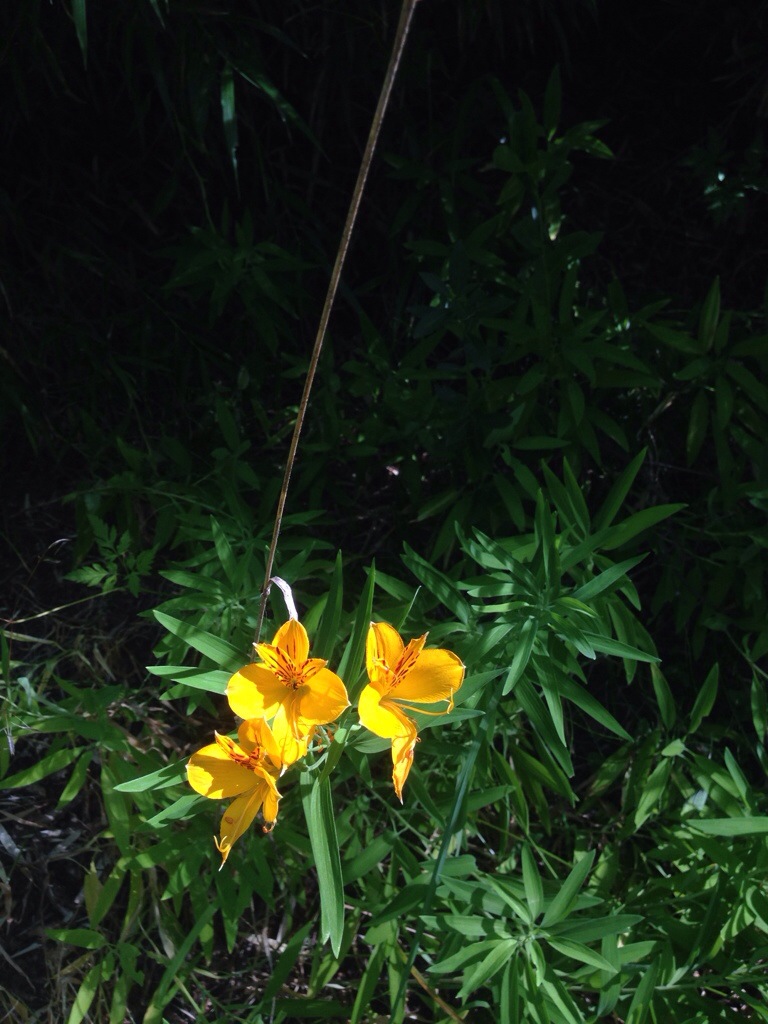
A 40 year old wood sculpture at the Swiss Colony of artisans gave us the best hitchhiking trip of Bariloche. He picked us up in a white rusty pick-up truck. Elliot got in the cab and Ollie and I hopped in the truck bed. We shared the bed with a couple rusty chainsaw blades and some odd looking tools and gave each other the ‘lets hope this goes okay look.’ The bed of the truck didn’t feel entirely stable. I think the screws connecting it to the chasis were a little loose. But, we made it, and it was a beautiful ride, especially out in the open air on the lakeside ‘chico circuit’. The roads are lined with bright yellow flowers, that contrast brilliantly with the blues of the mountains, lakes, and sky. This wood sculptor jerry-rigged his car so that the clutch, brake, and accelerator were finger pedals behind the steering wheel rather than foot pedals. Through the rear window of the cab, it looked like Elliot and this guy were really hitting it off. You never know where you find soulmates, right Elliot?
A 70 year old retiree. The wood sculptor gave us a ride to a trail head, way out there about 25 miles from town. Getting back was a lot harder. We had to walk for about an hour, until eventually a nice old retiree in a toyota SUV picked us up and gave us a ride to the grocery store half the way back to town. He had no patience and no time to listen to me try to small talk in Spanish.
A 50 year old womanizer. The last guy was obsessed with women. He’d slow down behind a girl jogging, never cease to point out when there was a girl passing us on the other side of the road, and always talk about the best bars and dance halls to find Argentines. It was like he just got out of an all boys middle school dance.
Running off our creative juices from cooking Thanksgiving dinner, we continued the trend and rocked out every night cooking delicious food in our Bariloche hostel. Our meals were limited to a create your own pizza night and competition, a cuban pork and avocado salsa that Ollie man threw together, chorizo pasta, and brownies. Good food and good people. A winning combination.
Pudu Hostel Cat
In the final days, we enjoyed spending time around Bariloche, rented bikes, and explored opportunities to fish. We weren’t able to fund a fishing expedition, but we did learn that in Bariloche, the Rainbow Trout in the lake come from California and the Landlocked Salmon come from the Sebago Lake in Maine. In the 1890s, the fish were brought down to Argentina by Train to the harbors of the east coast, Shipped by boat (via London) to Patagonia then brought by oxen to Bariloche. The transport was attempted three times before it was successfully completed. For any readers who are ES majors and taking Professor Klingle’s Environment and Culture in North American History class. I think this is a bomb research paper project.
From Bariloche my plan was to just work southwards. My next stop was Cafayate and El Chaltan to see Parque Nacional Los Glaciares and see one of the third biggest ice sheet in the world, behind only Antarctic and the Arctic.
In retrospect, looking back on spending time in Bariloche with Ollie and Elliot in the great outdoors was very important for my psyche. They helped me rediscover what a special opportunity I have to travel and discover disparate corners of the world this year. Before getting to hang out with these guys, I was definitely getting a little down and intimidated by what I had gotten myself into. But they, without even knowing it, helped me get my head right and renew my spirit of adventure for the road ahead.
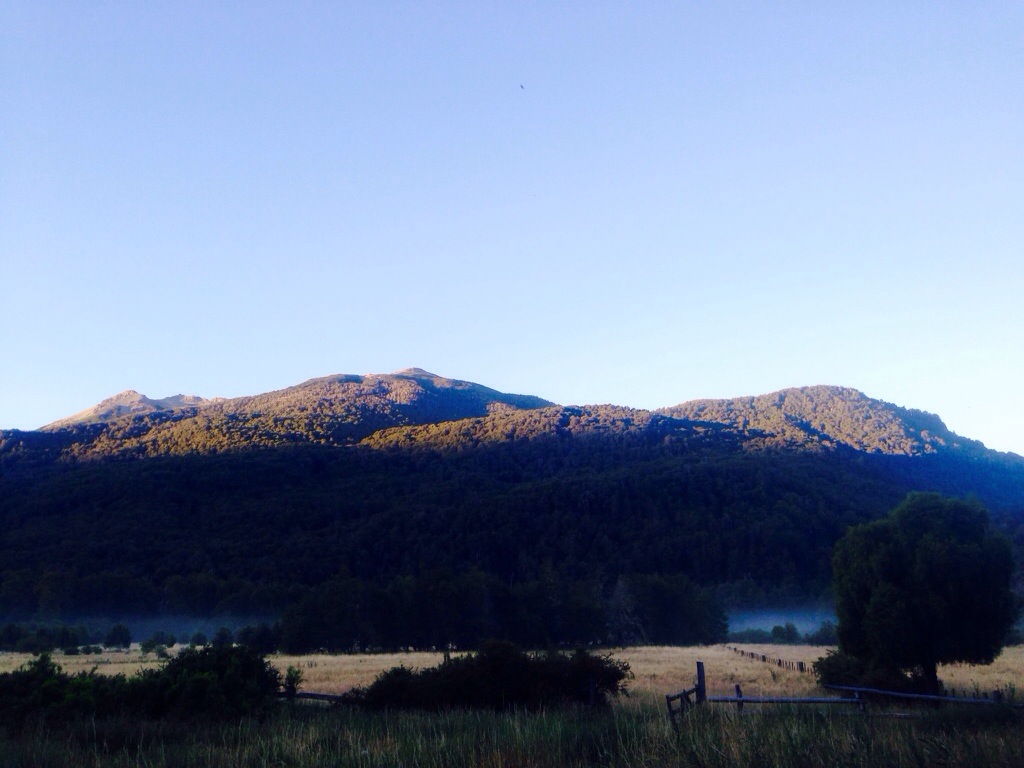
This trip also got me to re-think my plan for the month of January. As it stood before I went out tree hugging, I was going to return back to Buenos Aires and work in an artist residency in the Belgrano barrio. ‘Ace, the artist residency had super fancy facilities and seemed like a great community of artists. But it was also expensive and I decided in Bariloche that I strongly disagreed with the prospect of having to pay to paint. In late December, I discovered a ranch in San Martin de Los Andes, a town two hours north of Bariloche where the owner has offered to take me on as an artist in residence. I’m heading out there tomorrow on a 20 hour bus. It should be a great opportunity to take a lot of the themes I’ve been thinking about over the past five months and turn them into paintings. I hope I can be productive with my time there.
To end this post and get you excited about the rest of the Patagonia adventures that follow, here’s a terrific Walt Whitman quote that a good friend shared:
Afoot and light-hearted I take to the open road,
Healthy, free, the world before me,
The long brown path before me leading wherever I choose.
Henceforth I ask not good-fortune, I myself am good-fortune,
Henceforth I whimper no more, postpone no more, need nothing,
Done with indoor complaints, libraries, querulous criticisms,
Strong and content I travel the open road.
The other best quote from the trip was this:
While the Russians and Americans were investing in their nuclear program, the mexicans on the other hand were putting billions into the development of a really really tiny horse.
I made my first thanksgiving turkey yesterday. It was not a complete disaster.
The kitchen in this apartment is designed for one of the seven dwarves. Most likely grumpy because that’s the only way I feel when I’m inside. It is so small I can’t even turn 45 degrees without breaking anything. My tally is 4 glasses and a plate so far. That’s an average of 1 item a week and I haven’t even lived here that long.
As holiday season approaches and families back home started to get together for thanksgiving, I became a little daunted by what I’ve gotten myself into traveling far away from home. At times this week, I was definitely thinking about home more than usual.
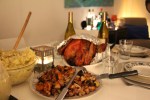
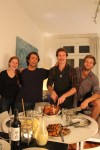
Thanksgiving is a day to celebrate being with family and enjoy a delicious meal together. For this, it’s one of my favorite holidays. However, yesterday I was really lucky yesterday to be able to get together with friends–old and new. I cooked a turkey with the help of Ollie Klingenstein and Elliot Taft, two fellow Americans who have been traveling and working on ranches in South America. I introduced the magic of thanksgiving to three awesome Argentinians.
Back in early October, I got a message from Eliot. He knew I was going to be in South America sometime towards the end of this year so he wrote me, saying that he and Ollie were going to meet me in Buenos Aires for Thanksgiving. I laughed it off there, understanding the flakiness of travelers. Plans change, you meet people, find out about new places–anything can happen–so I wasn’t entirely convinced that we were actually going to cross paths. But they made it happen.
Ollie, a rugby teammate taking a semester off college to get learn from the winds and sands of Central and South America, came in on a flight from Lima at 5 in the morning. We caught, shared stories of our travels so far, then went later that afternoon to pick up Eliot at the ferry terminal who was coming in from Montevideo after working at a dude ranch for a couple of months.
We walked around, I showed them a place to get a 60 cent sausage sandwich, which is likely what kept me bent over the toilet, fully emptying my stomach for the next day. We went shopping, very lucky to find a turkey.
Pumpkin pie is easily my favorite part of the Thanksgiving meal, but pumpkin pie producing products were no were to be found. Emily Norton hooked it up with a sweet potato pie…we never tried it. It’s still in the fridge. The other Argentine twist to the meal was replacing cranberry sauce with a pear/fig marmalade. Its harder, and usually used to compliment crackers and cheese. Adding some water, it made a great substitute though.
We had a blast cooking all day, listening to CCR, Zac Brown Band, Trampled by Turtles, and a whole lot of other music to make us feel at home. Unfortunately we missed out on some key events: no football, no catch in the back yard, and no post dinner dog walks. But, it was great to be connected with good friends and to share the holiday with new ones. Thanksgiving this year was different, but absolutely memorable.
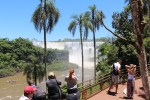
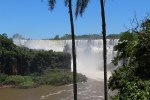
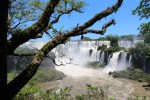
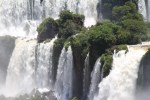
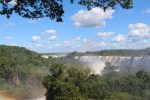
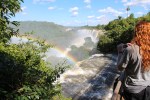
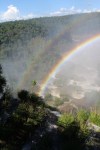
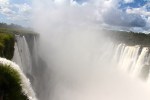
In order to get a better understanding of what the brute force of water looks like, I went to Las Cataratas de Iguazú in the Northeastern-most corner of Argentina. Tucked in between the corner of Brazil, Argentina, and Paraguay are the Iguazu waterfalls, easily one of the most sublime natural features I have ever laid eyes on.
My friend Emily and I traveled by bus. We left Buenos Aires at 3:30 Friday Afternoon and got to the bus stop in Puerto Iguazu at 10:30 on Saturday. It was 19 hours of non-stop bussing–about the same time of non-stop driving as it took me, Sarah Johnson, Lulu Oakes, Julie Bender, Zina Huxley-Riecher Phil Cuddeback, Alex Thompson, and Ben Richmond to get from the Old Crow Medicine Show concert in Savannah, Georgia back to Bowdoin for school the next day.
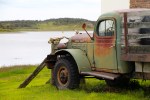
Bus travel in Argentina is very popular, though. A bus trip of that magnitude is a pretty standard, especially compared to the United States. On the road I would say 15% of the other vehicles we passed were coach buses. Another 20% were logging trucks, then the remainder were trucks, cars, motorcycles and scooters–carrying more than they could handle. Once you get outside of Buenos Aires, its quite common to see trucks and cars from the past couple decades. I’m used to seeing outdated cars rotting on the sides of the road in Northern Maine, here, there were cars and trucks from the 60s, 70s, and 80s rotting on the side of the road and also still rolling on past me the roads.
18 hours on the bus wasn’t so uncomfortable. We opted to spend the extra ten dollars and get a Semi-Cama seat, which is basically a lazy boy chair that reclines to about 150 degrees. It would have been easy to sleep if it wasn’t for the audio of awful movies projecting directly through the mis-wired speaker like a PA system to the whole bus, rather than only being able to be heard when plugged into the audio-jack. In Bear-Grylls fashion, I rigged up my fleece, with this all purpose heavy duty twisty ties from EMS and jammed a pillow in between the fleece and the speaker, as air tight as I could crank it to muffle the whining rants of the atrocious video content. I figured the guys that rotate through driving 18 hour shifts must see so many movies that it may become very slim picking. Or they just have bad taste.
The unfortunate media let me focus on appreciating the Argentine ranch-land out the window. The setting sun cast an orange glow across the landscape, which looked quite a lot like rural texas with barns, farms, cows, low-lying brush, and the occasional crop-field windmill. It was nice to be able to see the sun fully descend down the horizon rather than being cast in darkness an hour early behind the shadow of Buenos Aires’ buildings.
The most satisfying part of the bus trip was the coffee. In Argentina the go-to coffee is café con leche, a really frothy and milky 4th cousin of coffee. I really miss the big mug of black coffee that is easy to fill up and lasts much longer than the european expresso style in a little teacup. The bus had just what I had been missing, and lots of it, in a vat approximately the same size as crate for medium sized dogs.
Even though I drank a few styrofoam cups of coffee, I slept through to the morning, waking up to shift around a bit every hour or so. We arrived in Puerto Iguazu and found the hostel. It was a really nice place, with a little swimming pool in the back. It cost 252 pesos for two people for two nights. Thats 25 dollars, or just about 6.50/night.
The hostel was in town–a place with stray dogs, abandoned buildings, restaurants, and bars that cater to the park’s visitors. The place had an authentic South American feel. The roads were stained red from the iron-rich jungle soil, and all around was thick brush and a limitless expanse of trees. The town is just a little pocket of streets, telephone wires, and buildings, completely enveloped all around by jungle.
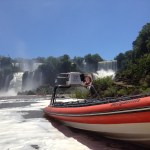
It was another 20 minute bus ride to the park. Sheraton has a hotel directly inside Iguazu national park, but that was a little pricey. We spent two days in the park, both days on the Argentine side. There are also great views from Brazil, but we planned the trip last minute and didn’t have time to straighten out a Brazilian Visa. Europeans can travel to Brazil without a problem, but Americans need to pay a fee and get it sorted before hand. The closest I got to Brazil was on a boat on the river that powered its way up the rapids and right underneath some of the smaller waterfalls. The river is the border. The border is still the country, so I’m checking it off my list. I’ve been to Brazil.
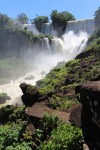
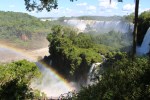
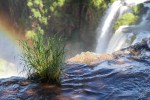
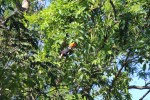
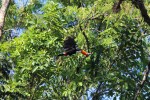
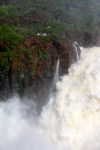
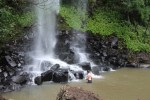
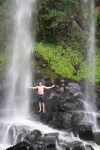
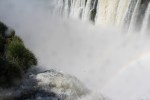
In two days, we hiked all the trails in the park, took a boat ride underneath the falls, spotted a toucan, a couple jungle raccoons, a whole lot of beastly lizards, and some funky butterflies. One of the highlights of the park was a longer, less popular trail where after a 3.5 km walk you get to a natural pool below a waterfall where you can swim. The whole place was really incredible. Pictures can’t do justice to the space, the immensity of the currents, or the beautiful jungle climate surrounding. In the Iguazu National Park, there are between 150 to 300 waterfalls, depending on the water level of the Iguazu River. About half of the water from the river flows into one channel, named the Garganta del Diablo, the Devil’s Throat.
I just got back to Baires after another big bus ride. We took another company back, one that loves to blast air conditioning. I was shivering like a penguin the whole night in shorts and a tank top, extremely envious of the people in front of me who knew we were traveling by ice box and packed their winter gear and a blanket. If the sounds were the distinctive feature on the first bus, the smells were the feature of the second. We sat in the very back, right in front of the motor, so got drugged up by the 18 hours of smelling gasoline.
After three straight weeks of intensive Spanish class, I feel completely confident chatting with girls casually with text messages. Every once in a while, I need to ask Paddydel what a word or phrase means, but still I can get by. When speaking it is much tougher for me to keep up a sustained conversation. I need to think a lot, which leaves long pauses and completely negates any interest I might have implanted after introducing myself. In small business interactions in stores, I’m completely fine. But, in an inter-personal context, I do best socially with pre-schoolers. But I’ve been taking the mighty Crush learning attitude to learning. Be unabashed and let yourself fly solo.
Tomorrow I’m heading to Iguazu. The trip is by bus, an 18 hour ride to the North eastern corner of Argentina, tucked in between Paraguay and Brazil. I’m going to see the Iguazu falls, which are supposed to be the honorable mention for the 7 wonders of the world. The falls are on the waiting list, so if anything happens to any of the other wonders, Iguazu will take their place. I’m incredibly pumped to see the waterfalls. I’m not as excited for the 18 hour bus ride, but it’ll be some good time set aside for writing, reading, and studying. Also, I’ve got pretty good company.
The weather is really starting to heat up down here. But 18 hours north, it’ll be really roasty. The forecast says 95 degrees in Iguazu. I’m paying 9 dollars a night for the hostel…which has a swimming pool.
Palermo
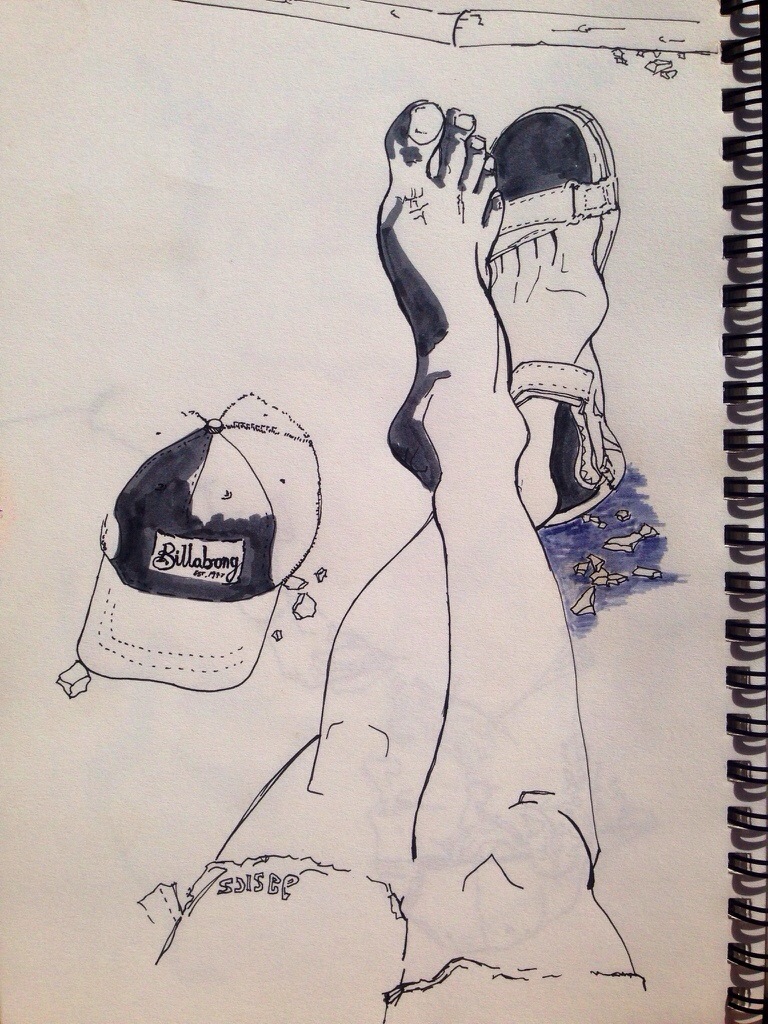
Piernas
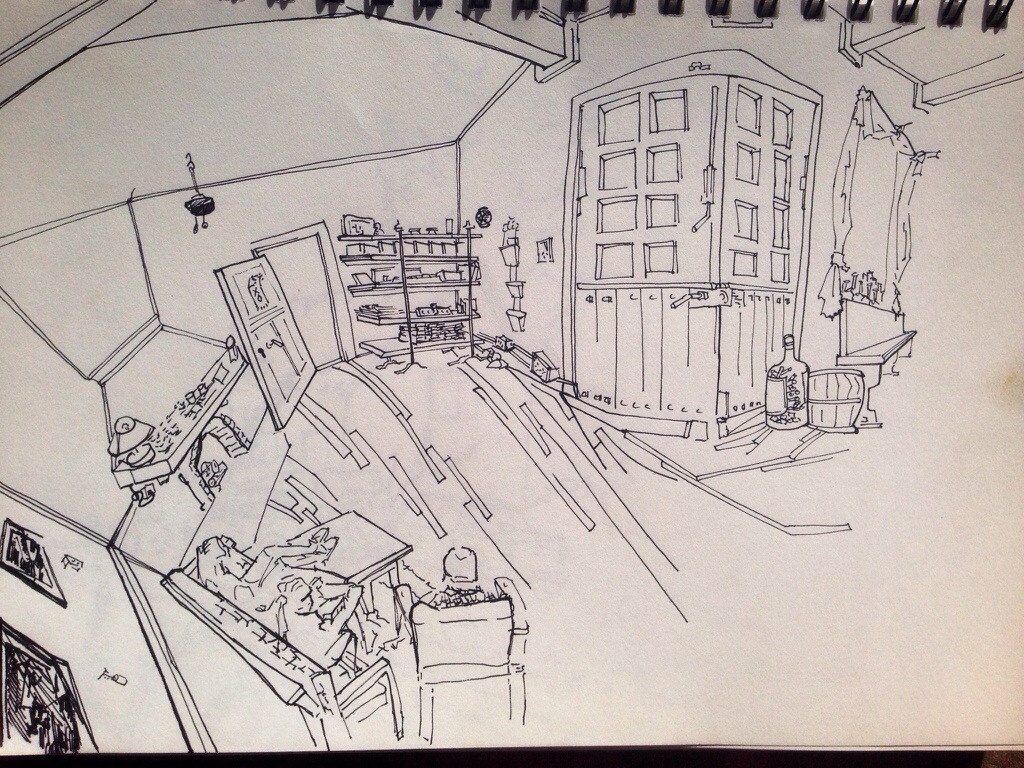
Afuera de mi apartamento
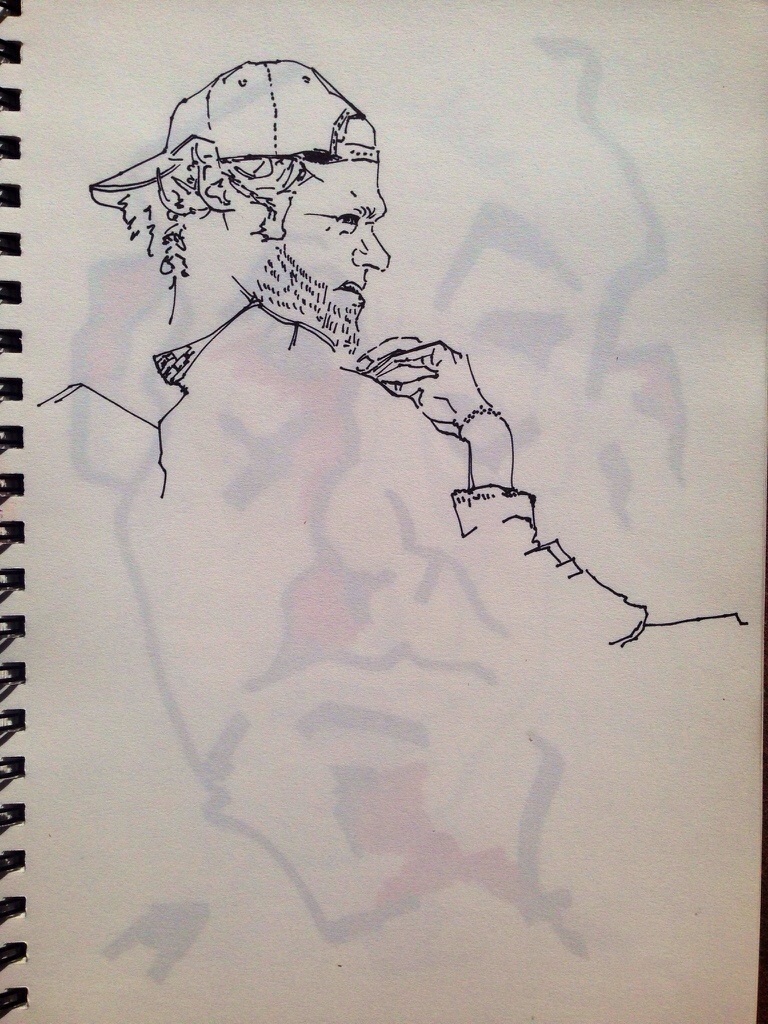
PaddyDel
Calle Uruguay.
I told my roommate that the only person that reads the blog is my mom, which is 98% true. Maru wanted to meet you, Mom. Meet Maria. She does my laundry sometimes and gets mad at me when I’m messy. She’s filling in for you terrifically!
























































































 Cities@Sea