
All posts by citiesatsea

Dordrecht
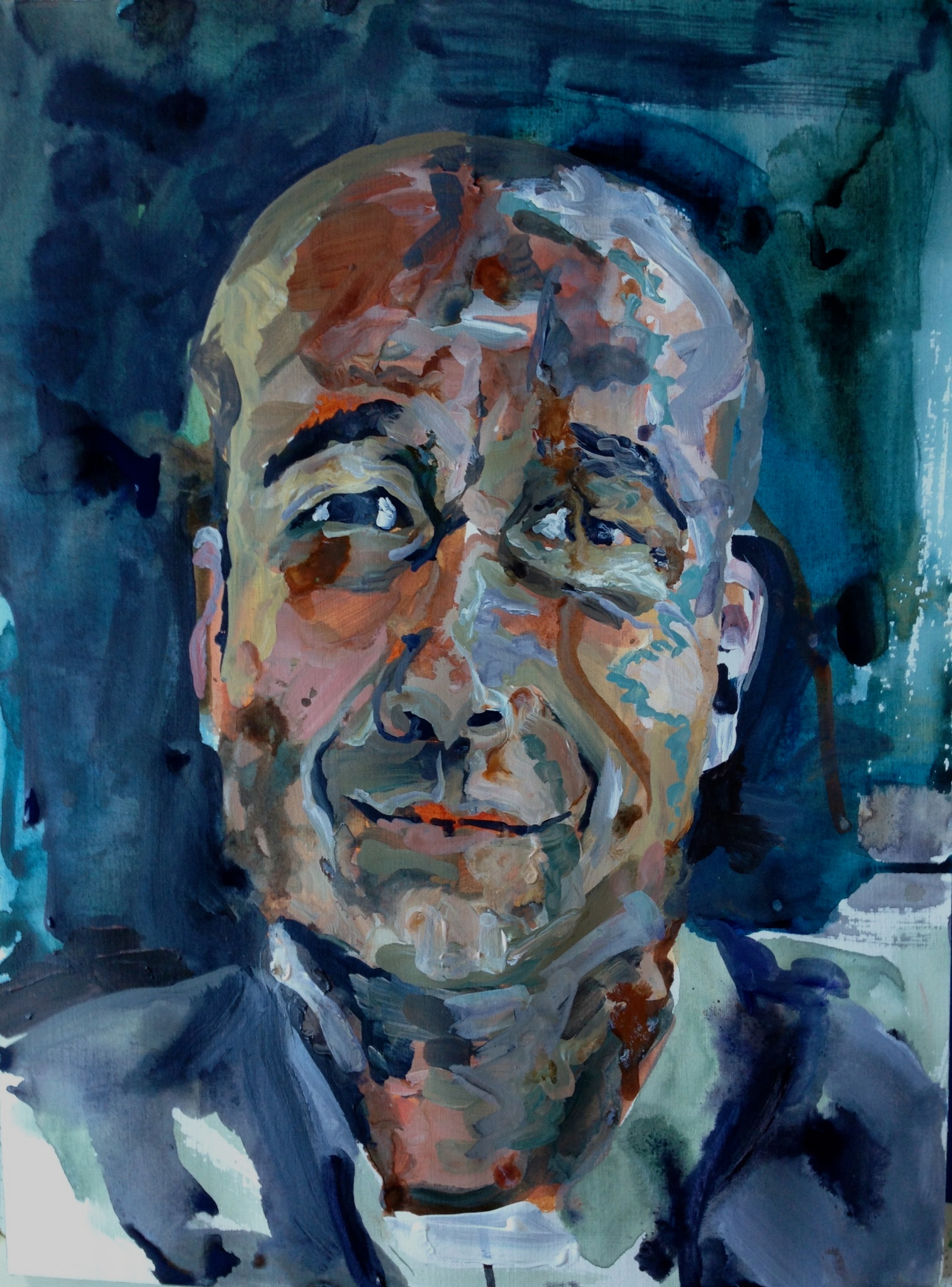
I had a FaceTime with my Dad last night. He asked me to shave.
I did. Hope you like it:
 My unlucky streak starting when my bike got robbed continued through to my rugby game on Sunday. In the 70th minute of the game, I was rolling out of a tackle situation and got knee’d in the forehead. Almost instantly, I got an egg-sized hematoma on my forehead from ruptured blood vessels. I’m going to rest up this week, under Dr. Bruce’s orders. Don’t look at these pictures if you get grossed-out easily:


I had my roommates wake me up sporadically throughout the night to ask me simple questions and make sure I wasn’t losing brain function from brain swelling. ‘What’s your middle name?–they thought there was a serious problem when I was answering David (not knowing my full name, Samuel David Bruce)– What do you use to brush your teeth? What country are you from? Who did we play yesterday? But one guy, Jappy, started grilling me on all the capitals of European countries at 3am. Not fun. My head feels fine, but I’m going to give it the rest it deserves. It’s the only head I’ve got and I like it.
The night before, a few of us went out for Turkish food at a neighborhood restaurant. Mikey, the British scrum-half and John, the German outside center brought their girlfriends along, so Bruce and Archie, the Scotsmen, were left to supervise and fifth/sixth wheel. It was good fun. The menu was in Turkish and Dutch so I went with the safe option–hummus and mixed grill, perhaps the only thing on the menu I recognized besides ‘bier.’
Good food and good company are one of life’s great treats. These scenarios feel especially sweet this year with new foreign friends in unexpected circumstances. Also this week, I went back to 78 Maaskade to join Marco, my old roommate, for a delicious home-cooked meal. I met a Swede who spent 3 months in Mumbai this summer. He got me super jazzed up about going to India. He said it’s an amazing, amazing place…and you get over the sudden, weekly midnight food-poisonings pretty quickly.
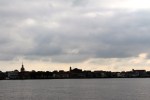
Today I went to Dordrecht, the oldest city in Holland. It was granted city privileges in 1220. Dordrecht suffered from one of the nation’s greatest floods in history, the St. Elizabeth’s Day flood. I saw a painting about the catastrophe when I was visiting the Rijksmusuem. The flood was in 1421 and the panels was completed around 1490.


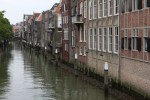
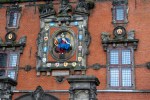
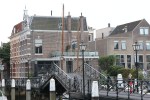
After the flood, Dordrecht established economic power in the timber trade as an important junction along the river. During the golden age, the 17th century, most of the components of the city were reclaimed from the river and the city expanded and developed. The old city center is basically just a conglomeration of harbors connected by cutesy dutch bridges. You really get a sense of the city’s longevity with the mix of architectural styles.
Most of the old city center was a ghost town. All the stores were closed this Monday. I’m not sure why.
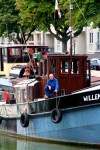
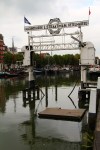
I took the waterbus there and the train back. As I was pulling up to the riverfront drive, I saw the waterbus hurtling its way towards the station, so had to race it by bike to catch it and not have to wait half an hour. The thing cruises at 40kph and smoked me! So thankfully it had about a 10 minute lag at the station. I’m convinced the captain saw me scurrying along the bank to get on. What a guy! Here are some pictures from the day:








Here are some drawings:
 A christmas card I’m working on for the boys.
 A map I’m making with the provinces (North and South Holland) that I’ve become familiar with and some notable climate adaptation infrastructure.
 A drawing based off a painting at the Rijksmusuem.
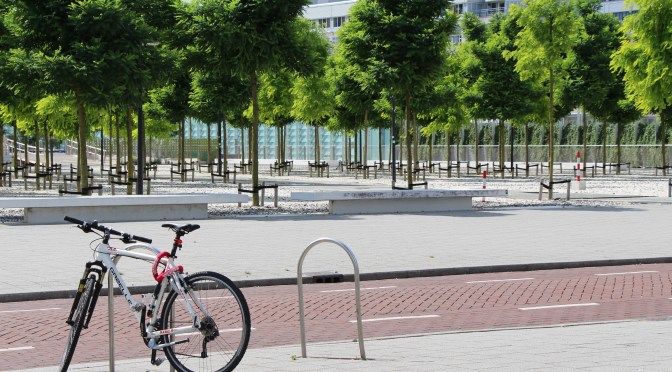
Half a million people have their bikes stolen every year in the Netherlands
I am one of those people.
I walked out the door and noticed something was off. I went back inside and shut the door hoping that everything would ‘reset,’ then went back outside a second time…Gone.
Every time I locked my bike up, I thought about the possibility that my bike would be stolen. I was often warned by various people about the thieves and punks that vandalize or steal bikes. Everyday my bike wasn’t stolen, I felt more confident that it would stick around. For the first month I had it, I carried it up the 60 degree steep steep dutch staircases and sleep with it beside me.
Last night, I got back to the house at about 4:30 am. Some French girls I met before I left for Rotterdam invited me out to a club that happened to be underneath the pillar of the Willemsbrug, the big red bridge that I crossed 200 or more times in August never knowing a club existed. It was one of those stereotypical european basement warehouse parties–pretty cool.
So between 4:30 and daylight, someone got to work on stealing my bike.
Those pedals, wheels, and chain were probably the most important tools I had in the Netherlands. Terrible news to have it taken. But, as my wonderful mother told me back home before I left, ‘you’re going to have a lot of ‘inconveniences’ this year just try to look past then and remember the power of positive thinking.’
Here are the positives:
1. I don’t have to find anybody to sell the bike to before I leave.
2. Found something to add to list for pent-up aggression for the Rugby game this weekend.
3. The guy who stole my bike most likely drifted off the road and into a canal where he got eaten by a giant squid. Sucker.
Picked up a box of oreos. Going to eat the pain away.
Enjoy your new life, mr. bike. Thanks for the service.
Here’s a poem I wrote about him:
Goodbye rockin’ Dutch bike.
I rode you across many a dike.
You and I traveled at great speeds.
You surely were a mighty steed.
But last night some jerk stole you.

Rotterdam’s Floating Pavilion
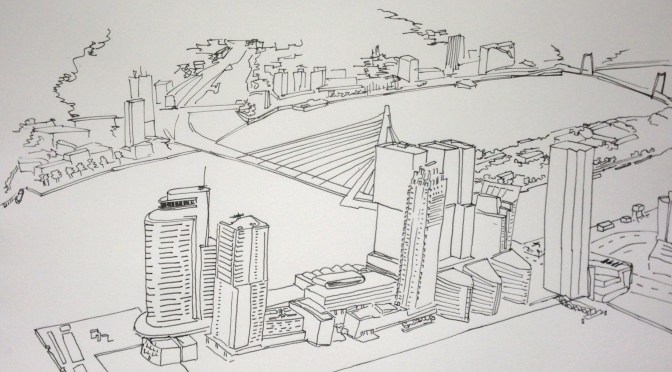
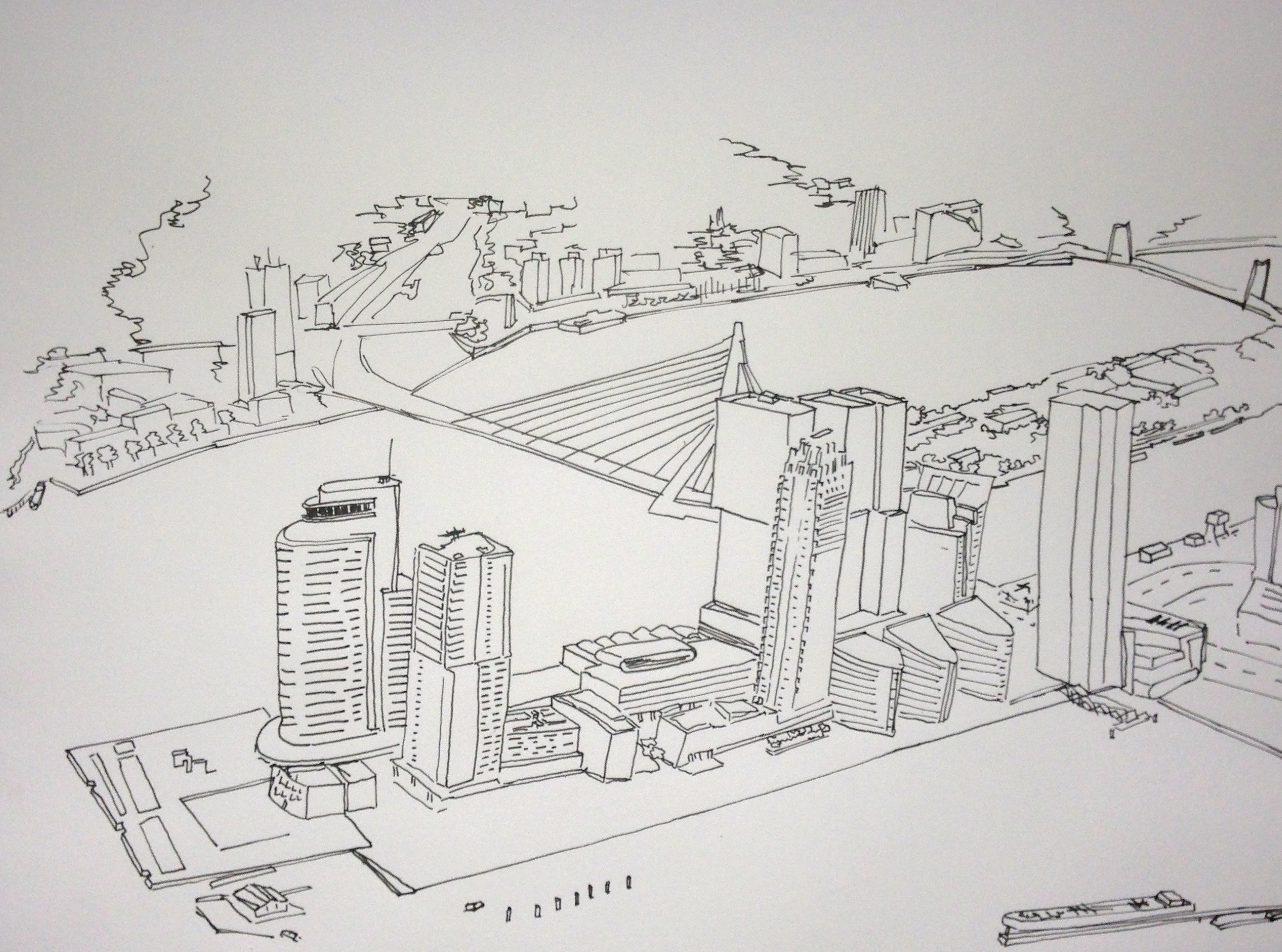
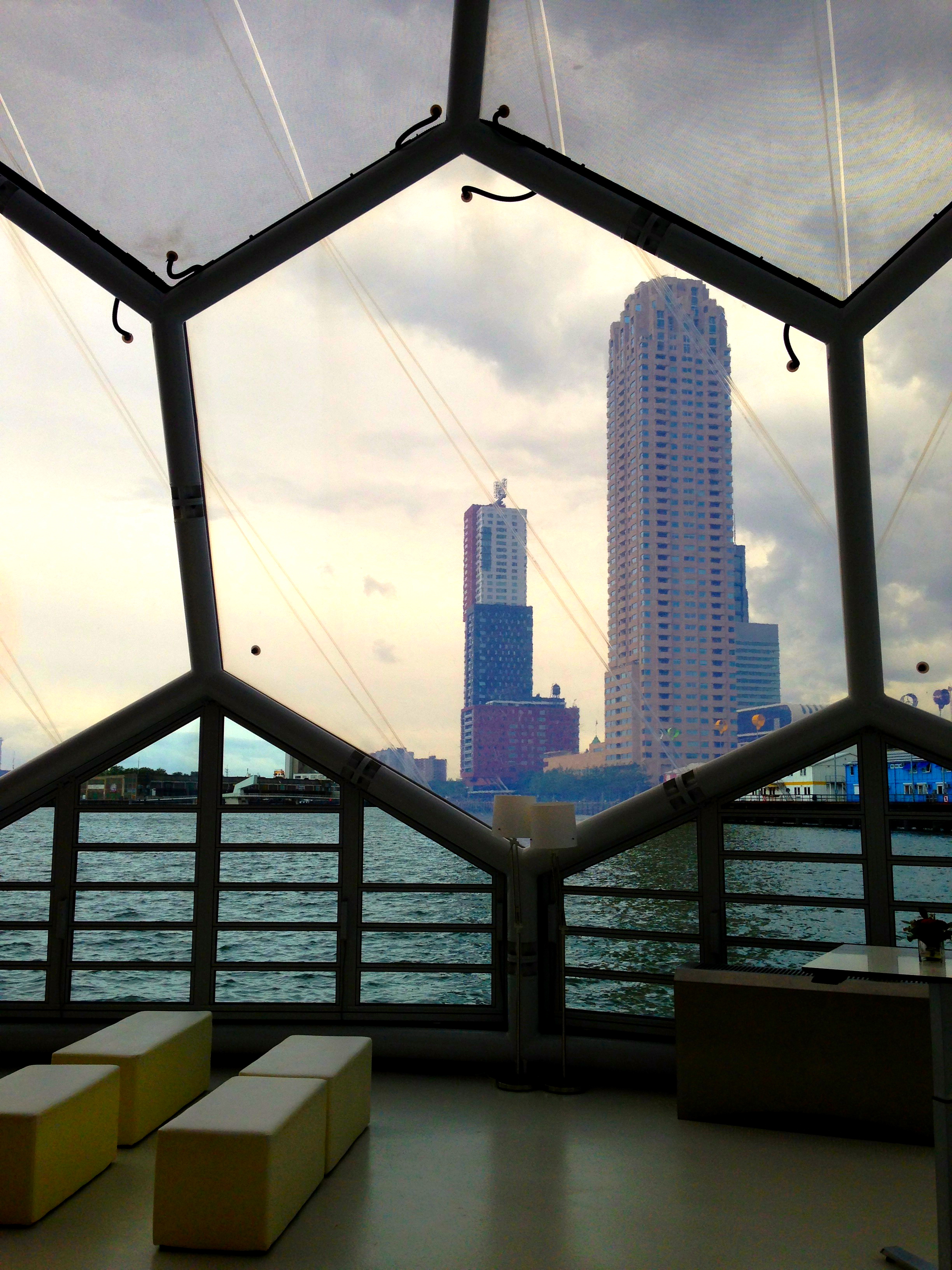
This morning I biked across the Erasmus bridge to Rotterdam-Zuid (South Rotterdam) to investigate the Floating Pavilion, designed by DeltaSync architects. The floating pavilion is situated in an old, unused harbor that the city is trying to revitalize. The pavilion is used as a public gathering space and is home to the National Water Centre. It also serves as a message board for the Rotterdam Climate Initiative. Rotterdam is trying to present itself on the international scene as a forerunner in innovative water and energy solutions, sustainability, and delta-environment construction. In some ways, the pavilion is the keystone symbol of that mission.
FP is an example of a structure that could be just one building block of a bigger floating community.
The building floats on its foundation, which is constructed from a combination of concrete and expanded polystyrene–I can’t tell you much since I barely scraped by in Chemistry 109 four years ago–but I know that it’s a type of foam that makes the platform unsinkable. It consists of 98% air, the rest is a closed cell structure. I assume it’s similar to the way water consolidates into a hexagonal crystal structure and can float. Correct me if I’m wildly wrong. The facade of the building is sort of a hideous bubble. It absolutely looks like the underwater city Jar-Jar Binks was exiled from in Star Wars. The plastic cover of the building makes it light, but also heats the building to reduce the pavilion’s footprint.
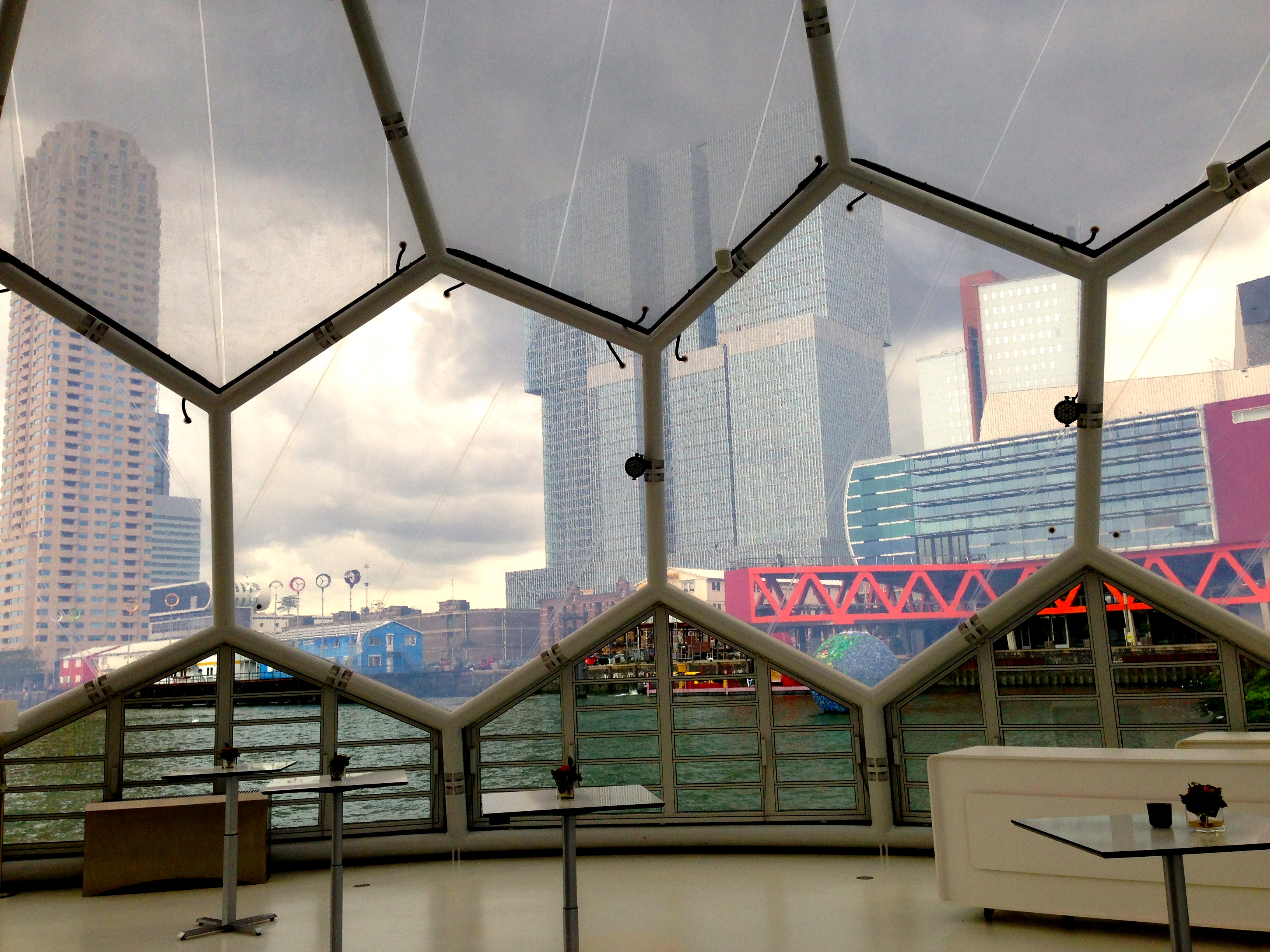
Of course, floating structures aren’t suitable for all marine environments. This building is located in a sheltered harbor about 10 miles inland of the ravenous North Sea. The Netherlands doesn’t get hit by hurricanes and tropical storms. So obviously floating communities aren’t practical for many parts of the world. But in the Netherlands, living on the water can be a way of life. From the house boats on the Amsterdam canals, to the floating IJburg community, there is a market for people who want to zen out with the agua.
The Rotterdam Climate Initiative has posters and information posts in the floating pavilion. The whole building is sort of the flagship of the city’s initiatives towards climate adaptation. The city has a goal of reducing its CO2 emission to 50% of its 1990 levels in the next 12 years. In the more foreseeable future, Rotterdam wants to be a sustainable, attractive, and 100% climate-proof city while maintaining its economic integrity. Rotterdam is aiming to set examples for other delta cities.
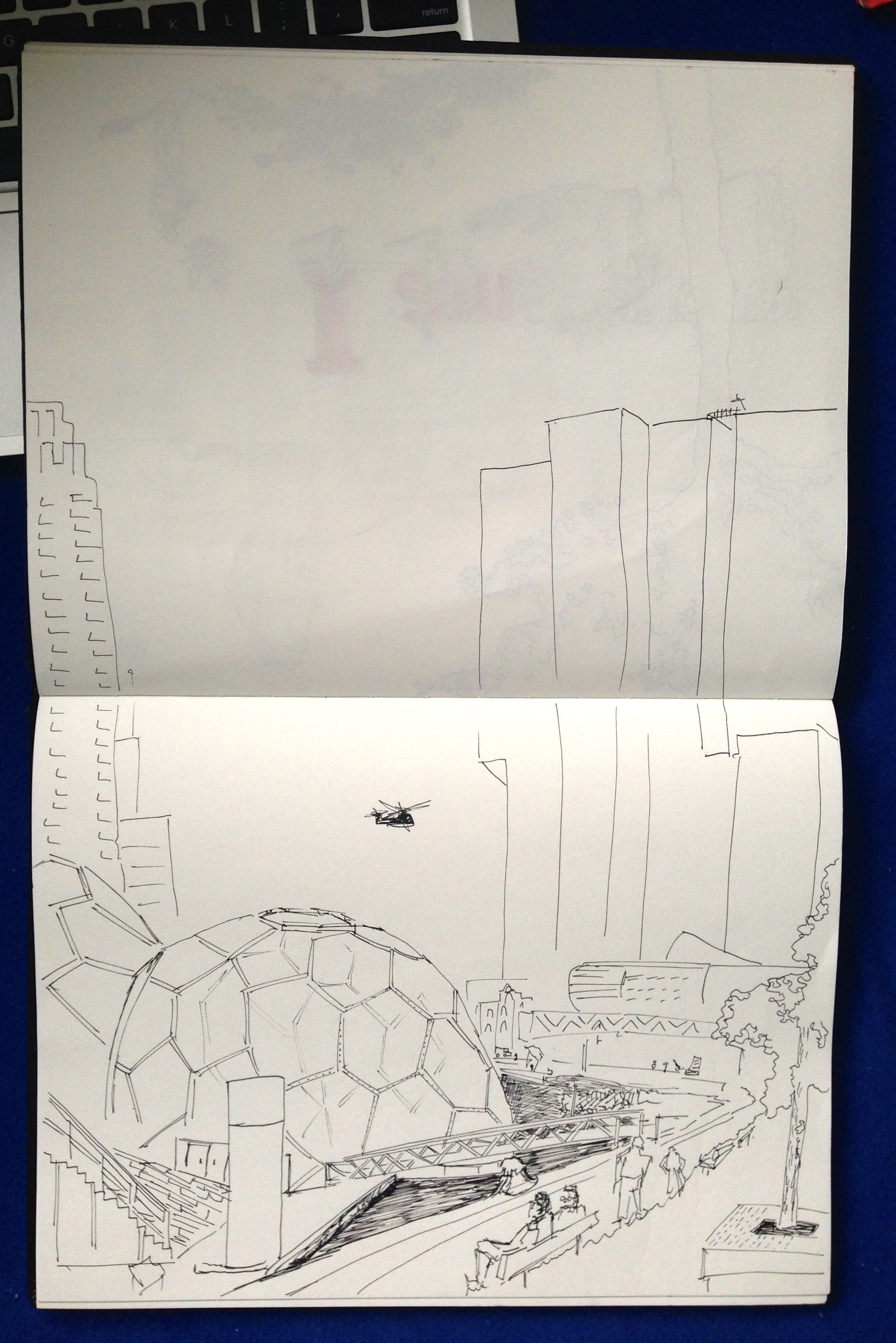
Helicopter!
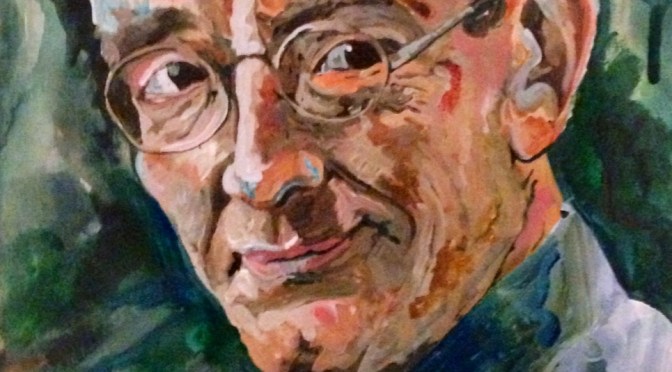
David Waggonner
Back in January, I gave David Waggonner, an architect out of New Orleans a call. David is highly involved with water management and climate-proofing the city. He works closely with Han Meyer, the professor at TU Delft I met a few weeks ago. I went back to our conversation and typed up the useful and insightful things he said:
SDB: So my plan is really to investigate everything using a visual approach, so trying to draw objects, or people, or different settings that would require me to learn about the different things that are going on surrounding this issue. I’m a visual art minor at Bowdoin, I really want to take advantage of my passion for drawing by using a pen, pencil, or paintbrush to take a look at this issue which really excites me academically.
David Waggonner: I like your proposal to make this visible. Photographs make a record but that’s all most people do. It’s a good idea. There are a lot of people who want to do this now. They just want to go and figure out what it looks like. The only difference is you want to describe it graphically, but you need some insight into what you’re seeing. You also need a practical approach.
SDB: So what’s the future of these cities, what is the future of New Orleans? Is good building, innovation, and design going to do it or does there have to be something else? Is New Orleans still going to be around in 150 years?
DW: That’s a legitimate question. It’s all…it’s all unknown. Nobody knows the rate of deterioration. New Orleans has a levy system…well I don’t know if you know about the stuff we do but…we’re trying to deal with subsidence and water management in the Dutch way. If we manage it with a slowly rising sea then we could sit here for quite a long time, but if the sea level rises 4 or 5 feet…You know Florida is gone.
Is there anything we can do to stem that…? I don’t know. We have to try. I know there are a lot of positive things we can do in terms of climate temperature and we should be doing that. So all you can do is understand is there’s a problem and do everything you can to change that…to offset that.
The Dutch have huge investments; they’re below sea level. They really have a better coastal structure, they have the dunes, and they don’t have storms coming at them that push water over.
But in your life you may see…you know, we don’t even know…what the dislocations might be.
You need to understand that this is going to be your lifetime’s work. You know, a lot of these cities are quite worth saving. Amsterdam is a world treasure. So is New Orleans, maybe not at that level, but it’s a treasure. It’s a wonderful place to live.
Klaus Jacob, a geologist at Columbia is saying that the sea is coming to take back where we are now living. Adaptation strategies are required to lengthen the investments that we have made but we can’t get any change in the political structures like the core of engineers that allow us to do anything about it. It’s tough when your hands are tied. You need to be able to use the possibilities that are there. That’s the difficulty of working in the US rather than the Netherlands…they have some brilliant projects there. For example, the room for the river projects…you need to study those. The Dutch are moving people to allow the river to discharge differently, to let it flood. Those are the strategies that are needed.
It’s not like you can build a gate and hold a whole ocean off of the continents, you know. You can’t really wall off all of New York. That’s not going to work. You can’t wall off Florida. It’s going to be a challenge…so you do everything you can.
I was in Washington on Monday for a presentation at the Dutch Embassy, there was a congressman from Virginia who said that the Climate denial stuff still goes on in Washington. The one part of the government that is not in anyway questioning this, no kind of denial and adapting as quickly as possible, is the Department of Defense. First, their job is national security, which this is absolutely affecting. Secondly, they have many, many assets at sea level and so they are very worried about whatever happens at the naval bases. What the hell are they going to do if the sea rises four feet? They can’t be caught unprepared. Everyday the quantity of petroleum they consume is huge…so they’re trying to reduce that all the time. They are fully engaged in climate adaptation, the American military, even though the government does seem very quick about it at all.
So I don’t know what the future holds.
I know that its not responsible to do less than everything you can.
You can be trying to fight a fire, and you know that you can’t fight the fire but you still have to fight the fire to protect what you can.
It’s not the future its now.
It’s your generation’s work. If you have children it’ll be their work. But it’s my generation’s work as well. We’re trying to do something about it before it’s too late. Design and drawing play a role in this. Because if we cant visualize it then we can’t do anything about it. You know we have to be able to see, right.
You have to make these things visible. There can’t just be policies that people write on paper. You do have to have rules, you do have to have regulations and you do have to have policies. But you can’t motivate people with ‘thou shall and thou shall not.’ You have to let them touch it, think it, let them connect sensibly with it. You want your proposal to, at the end of the day to be useful to other people. You want them to be able to see what you see.
This is a knowledge transfer business.
SDB: If you don’t mind: what do you think about being an Architect. I did the Harvard GSD career discovery program two summers ago and I worked for a urban planning firm in Chicago last summer and it’s something I’m thinking about. Do you have any advice for me? Or any thoughts?
Architecture is a really good way to think. You get to work with people you like. People in the office are your friends…in the right office. In the bigger offices it’s all systemized with behaviors and hierarchies. Architects by nature tend to be problem solvers, but they also tend to want broader definitions of those problems. I’m enthusiastic about the profession and what it can contribute and how it must contribute I’m less certain that we have an economic basis…you’ve heard that before. I feel blessed to have found my way into Architecture.
Architecture is probably as good an education as a person can get. It teaches you to think broadly, it teaches you to be critical, it teaches that you have to put forward your ideas—and if they’re not any good people are going to have other ones. One problem might have 10 different solutions…those are good things to learn.
Teaches you how to problem solve. There’s future thinking that architects are trained to do, this bettering of places, this almost blind idealism that we have to have to make this project to make it better.
Starchitecture is a hindrance. Hero…doesn’t matter. Need collaboration. Not about 1 architect it’s about many making good buildings together, not signature projects. How many signatures do you need in a city?
These are all interesting questions and ideas and layers of understanding. I would commend the life to you as long as you don’t feel the urge to make hundreds of thousands of dollars a year.
At the time we spoke, I was in the middle of the application process. We take a lot of about my itinerary. Here are some things he said about certain cites:
In Amsterdam and Rotterdam there are lots of people, especially in Rotterdam, which is really the center of all this thinking in the delta cities, the low-lying cities. This is the group that knows the most and is most active in organizing these climate-proofing efforts.
If you go to Hamburg, not far from Rotterdam, you can cover more with less running around and jumping around. They have a whole section of the city that they allow to flood. A very interesting adaptation strategy.
Singapore, of course is an island state with real resources and is doing a lot to try to adapt to climate change. The guy I know is the head of the water institute, the national institute of water.
Jakarta has a huge problem. The issues you they have to talk about are subsidence. When areas are subsiding you have a huge climate change problem on your hands very quickly. On top of that there’s a whole waste issue. That may or not be your area of interest, but it’s certainly a climate question.
Kolkata and Jakarta: you’ll be able to see how poverty comes into play. These cities are a whole different case from Rotterdam and Hamburg. When the toilets are on top of the waterways no wonder nobody wants to be near the water. It’s the garbage. So different from Europe, where there’s one ethnic group and specialized people tackling these problems. When you start to look at overcrowding and poverty on top of it the climate problem, everything becomes so much more complicated.
I would say Rotterdam is the one essential place. Amsterdam is a good contrast. You’ll find out that Rotterdam is a de-watered polder situation where Amsterdam they brought in sand to build it up. Two different approaches to ways you stabilize a city in bad land.
Amsterdam and Rotterdam are the tutorial. But in many ways you’re getting over the best part first.
SDB: Maybe there’s some argument for going there and then coming back at the end.
DW: That would be smart. Then you can consolidate and say that’s why it looks like this. That’s why there are these political implications.
Recently I’ve been having trouble finding some more people to meet and interview, listening to this today left me a little more reassured and self-confident in the work I’ve done so far and happy about the people I’ve been able to meet. He was talking about connections he has in different cities around the world…
DW: It took me years to develop these networks, and of course it does take years to develop networks. These people wont spend weeks with you, but they may let you in to talk to them for a few hours.
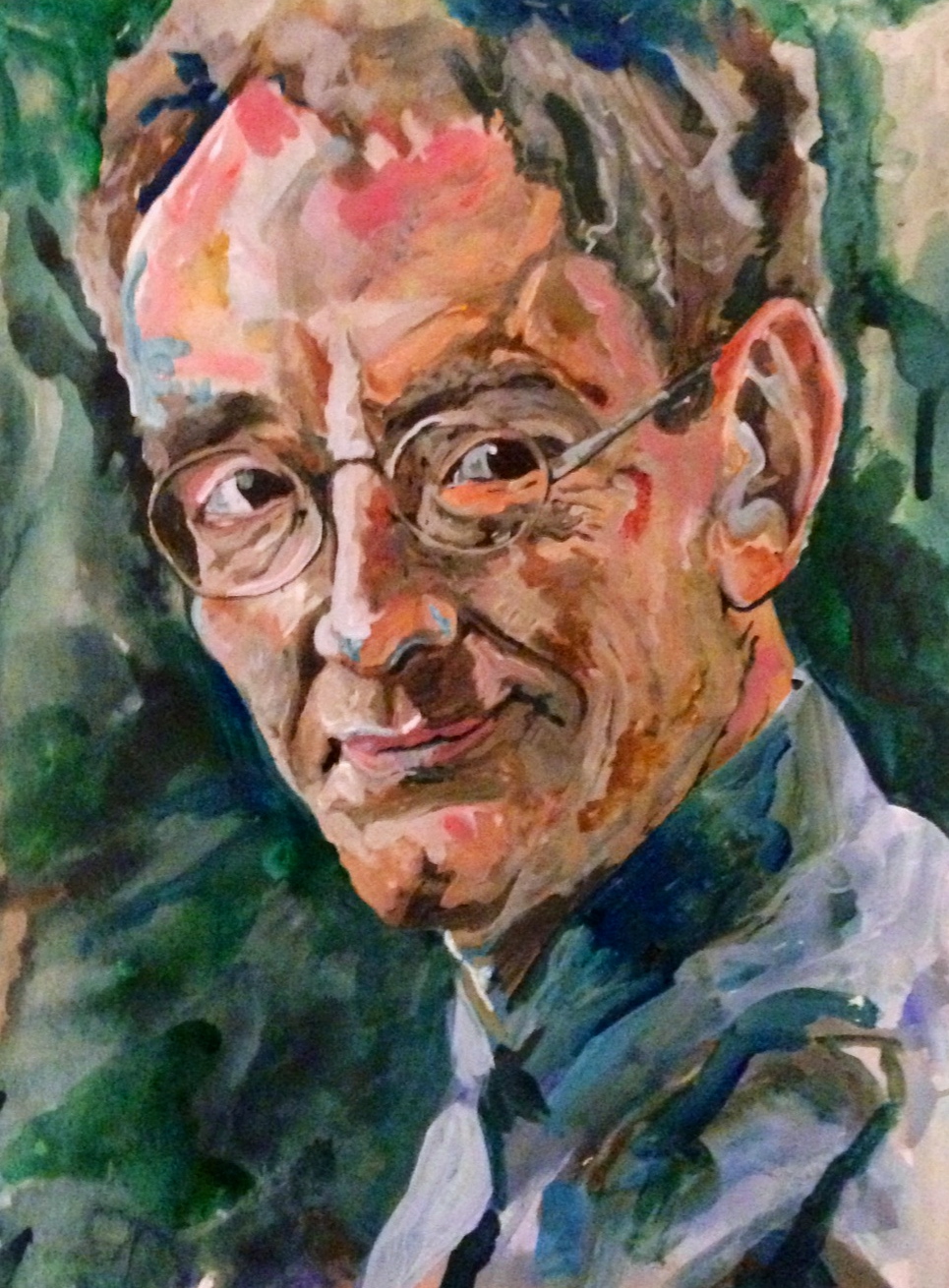

I AMsterdam
The most iconic tourist sign in Amsterdam and the Rijksmuseum in the background.
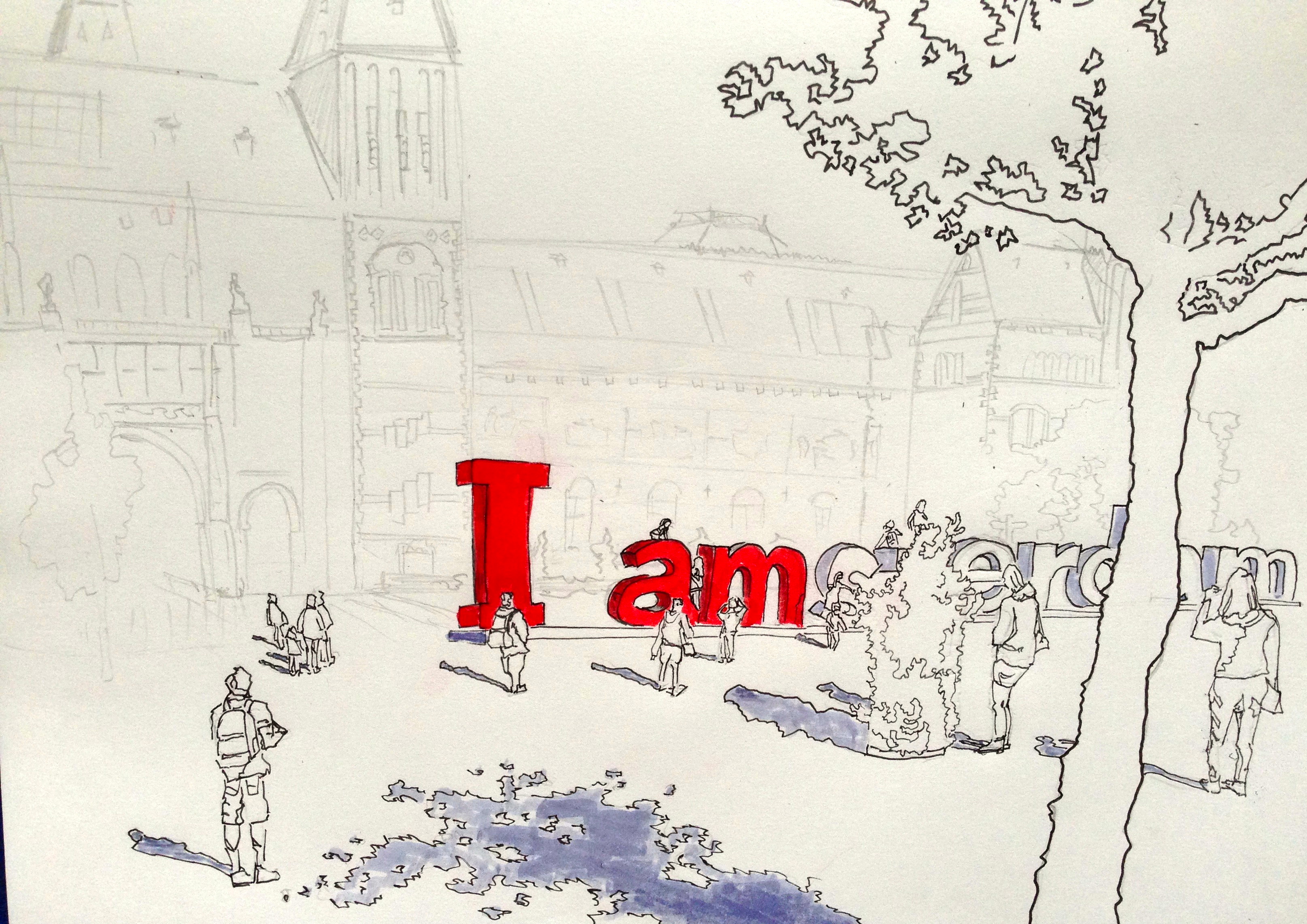

Westerkerk
This church is built on the Prinsengracht canal. Located along one of the nicest, and historically wealthiest parts of town, this church was built for Protestants by Protestants. It was built between 1621 and 1630 and the steeple is the tallest point in central Amsterdam. The city ordinance doesn’t allow any building to pass the point.
Inside are numerous bells. The main event weights over 7000 kilos. The bells rest on wooden ‘chairs’ complicated wooden stands/foundations that absorb the vibrations of the ding dongs. If the wood was not their to absorb the noise, the bricks would crack!
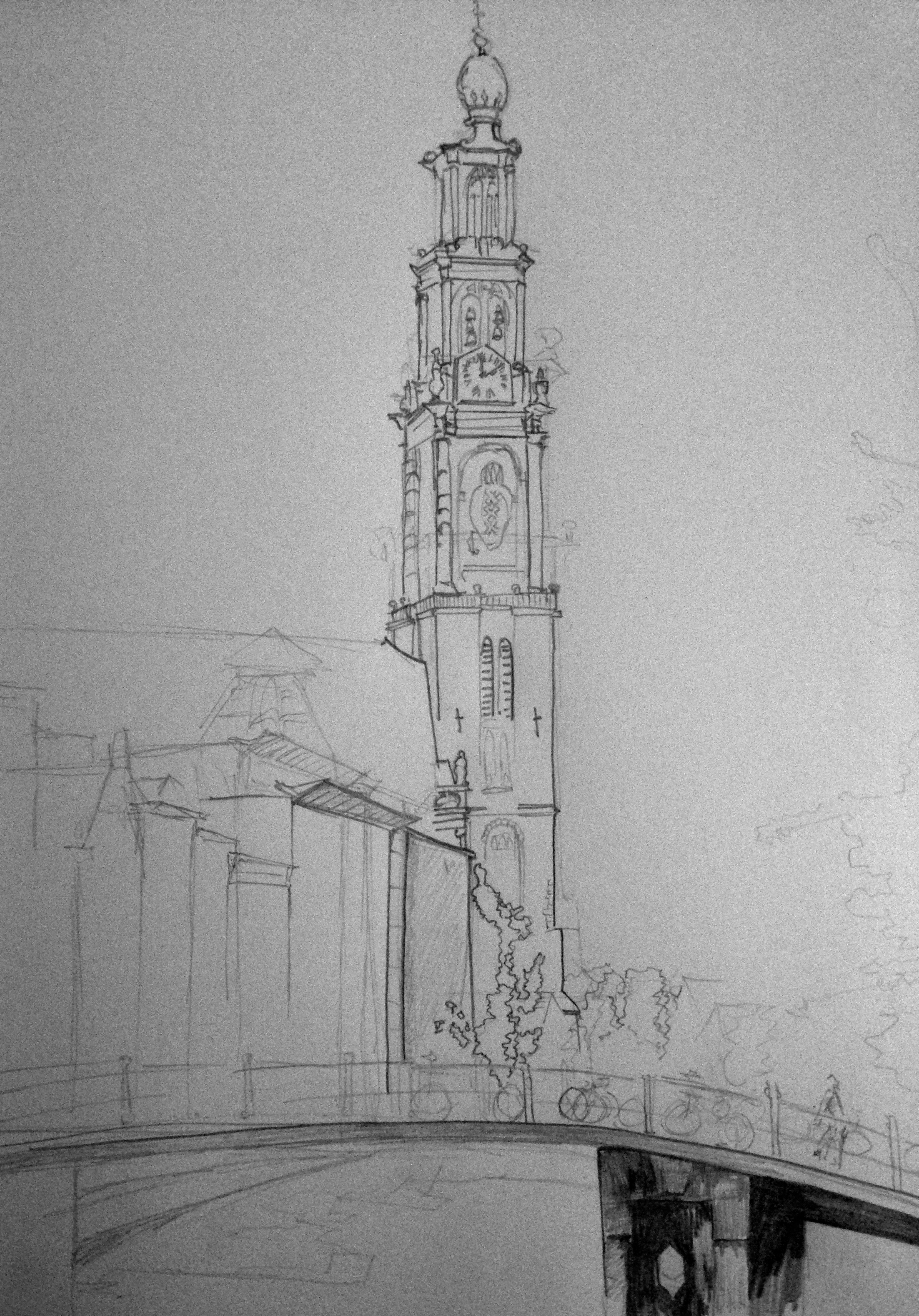 This is in pencil.

Wall of Fame
I have moved back to Rotterdam. I’m spending a month in the apartment with the rugby team. I feel like I’ve fulfilled a mini-Watson objective, settling down in a place for a month with people who I didn’t know when I left home for a price more reasonable than anything you can get through a commercial enterprise. Plus, it’s a cozy nook and who doesn’t like to have a rugby ball to cuddle with at night? The younger guys on the team call this place the ‘retirement home’ because the residents range from 25-29 (25-62, most players joke). Every elderly person needs a resident nurse though…I think I’m prepared for that role.
Coming back to Rotterdam sort of felt like coming home. It’s become familiar. I know the layout and neighborhoods of the city and I have friends here. It would have been cool to try to establish something similar in Amsterdam, but I have the whole year to learn new places. Why get rid of something good once you’ve found it?
This morning I had my second visit to the Rijksmuseum to take a closer look at the Dutch master’s paintings in the Gallery of Honor. The first time I went to the museum I wasted all of my energy enthralled in the model ships, medieval weapons, and ornate furniture that I was too tired to take a look at the paintings. I was honestly pretty flabbergasted by some of the detail work in Vermeer’s Milkmaid painting. I wasn’t impressed, or even interested, by his representation of the figure, but his craft depicting the bread, basket, tapestry, and tablecloth is just sensational. He painted the still life on the table with a photographic realism. It was painted in 1658. How can something sustain its clarity for that long!?! I mean..preservationists and art historians but you have to give credit to the man’s skill.
The most special part of the Rijksmuseum is seeing 800 years of artifacts organized and time-lined. It’s pretty incredible to be able to see the transitions and tangents the craft of painting went through after the 17th century. And it’s awesome to see early traces of expressionism and very abstract brushwork in work from the 1600s!
I’m proud to announce my biggest accomplishment of the week: posting on the Heineken Beer Factory wall of fame for this performance.
It was open monument day in Amsterdam yesterday so I joined up with two Bowdoin Juniors, Sierra and Melody, to see some of the canal houses, churches, and the Heineken beer factory.


Also I explored ‘golden age’ canal houses and the Oude Kerk, the oldest church in the Amsterdam:


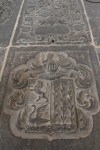

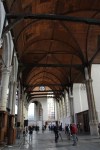
It’s quite a trip to think that the Netherlands was once one of the richest countries in the world with a global influence through its maritime trade. Amsterdam was a center for wealth. Walking along the canals you can see clear evidence of this in the elegant townhouses dated from the early 18th century.
Saw Portugal. The Man last night. Rock on! They were good, not mind-blowing. But…the lead singer wore a thigh-length raincoat with the hood up for the whole concert. I dig.
One rainy afternoon, I passed the Anne Frank House, where the young diarist lived in hiding during the Nazi occupation of Amsterdam. I noticed that the rain had washed the line away. The queue, which usually wraps around the entire block was shortened to just a few people. It was getting dark and I was surprised it was still open, but took the opportunity to take the tour. Now a UNESCO heritage site, the museum Anne Frank House guides you through the hidden annex to see preserved artifacts. A lot remains unchanged. To get up the stairs to the annex, you have to slither through a crack behind a bookshelf and up a steep staircase. A few of Anne Frank’s quotes are elegantly painted in different places around the rooms.
There were only a few people around me as I tiptoed through the house in Anne Frank’s footsteps. It was a very ghostly, ominous, and incredibly sad experience. The whole tour had my emotions stirring and tears finally came after I saw video footage of Otto Frank, Anne’s father, describing reading the diary for the first time after he knew his daughter would not be return home from the concentration camps.
 Here are two postcards I picked up. On the left is Otto Frank revisiting the annex after the war. On the right, the girl who dreamed of becoming a famous journalist.
Amsterdam is a really beautiful city. The whole place is so dynamic. Sometimes adjectives sound so cliché. I’ll describe with nouns: Bikes bikes bikes. Music. Trams. Bikes. Beer. Trees. Bridges. Potted plants. Tourists. Museums. Bikes. Pot. Bikes. Red lights. Water. Houseboats. Fearless pigeons. Pigeon runover by bike. Pot. Beer. Bridges. Rain. Bikes. Rain. Bikes. Rain. Music. That wasn’t my ‘experience’ but it describes things you might see and think about if you were a robot walking through the city.
It was interesting to see the strains of ‘touristy’ areas that run through it, then rewarding to find the pockets that appeared to be much more authentic. SInce I lived a little ways outside the central canal district, I biked through wonderful local pockets. On bike, I could cover a lot more ground and I think I got a good sense of the city. Amsterdam uses its limited space very efficiently and there are so many funky shops, cafes, restaurants, and bars. It’s the love child of a quaint small european town and a global metropolis. I’m reading about the urban development of the city and the construction of the canals now. Pretty interesting stuff. I’ll make a more informative post when I feel like I have something significant to say about them. The canals are gorgeous.



I have two drawings that I need to touch up–I’ll post them later on tonight.
The yoga apartment was cool, but very solitary. Feels great to have people to chat with and laugh with and just hear footsteps down the hall. It helps my imagination from thinking up horror stories about things that happen in yoga studios to dashingly handsome 22 year olds when they stay in Amsterdam on their year of Watson Adventures…I have quite a few of those if you’re interested.
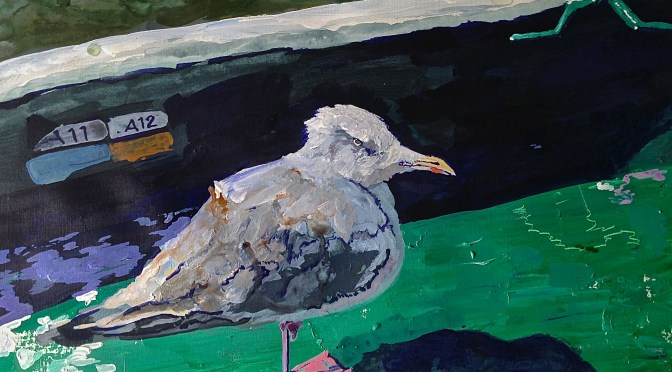
You need a cat….
for this houseboat rat!


 Cities@Sea