Category Archives: Rotterdam

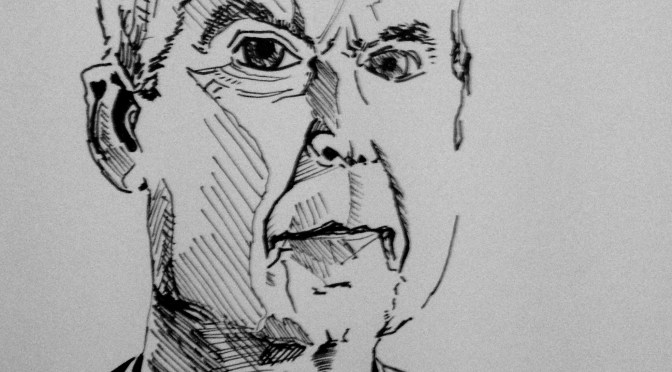
Han Meyer

I walked into the Faculty of Architecture at TU Delft and was instantly reminded of long summer days spent at Gund Hall during my Harvard Graduate School of Design summer course in Architecture. Since the Dutch summer holiday period is wrapping up, the halls, desks, and studios weren’t as busy as I’d image they usually are. It was nice to walk through the studios and see all the workshop space where minds are usually hard at work designing and creating.

I meandered through the halls of the west wing of the building looking for the Urbanism department and the desk of Professor Meyer. Because I hardly know Han Meyer, here is a brief biography from the back of one of his books: Han Meyer is a professor of urban design theory and methods at TU Delft’s Faculty of Architecture. His research focuses on the fundaments of urbanism and on comparative analysis of urbanization and urbanism in delta regions. 

Han Meyer spoke to me for a little less than an hour sharing some of his professional insights on urban planning in delta regions. He left me with a great suggestion for my visual journal and recommended two titles to pick up at the faculty book store as I left.

Here are some bullet points from our conversation:

  • Flipping through my sketchbook, Professor Meyer encouraged me to draw plans and sections to compliment my current drawings of city ‘perspectives.’ He explained that the essence of urbanist drawings use the combination of the three type of illustrations to describe a built environment or a space in greater detail. Up to this point, I have been focusing entirely on scenes in perspective. He encouraged me not to forget about the informative power of the other two types of plans and sections.
  • The Netherlands has been managing water since the 13th and 14th century. The landscape has developed into a patchwork of dikes, canals, and polders over a period of centuries. Still, there are always new delta plans and changes to their Dutch water management strategy. A country facing up to the challenges of sea level rise now cannot expect ‘Dutch’ results after a decade or so. The management strategies in the Netherlands are as old as the nation itself.
  • In the U.S. today, there is a debate about whether to retreat from certain coastlines. What’s worth saving? Where are the costs too steep? I asked Professor Meyer if he had one recommendation for what the U.S. should do in the next fifty years, what would he suggest? His major recommendation for the U.S. is to stop building on the coast. It is unwise for private investors and public policy should change to prevent future coastal development.
  • Meyer referred to a project he is involved with in New Orleans called the Dutch Dialogues (he actually happens to work closely with David Waggonner, an architect from New Orleans that I talked to in January of 2013 and really helped me organize my thoughts and strengthen my application for the fellowship). New Orleans as a ‘delta city’ is similar to parts of the Netherlands. But really, Meyer explained, there are more differences than similarities especially because of the cultural underpinnings behind the two countries. One major difference between the Netherlands and the United States is the ability to buy flood insurance. In the Netherlands, the damage from dikes breaking and the country flooding would be so great that insurance companies could not cover it. It is impossible to buy flood insurance in the Netherlands. Also, the Netherlands bans coastal development and leaves the sand dunes and beaches as a primary and natural line of defense. Professor Meyer explained that the power of Hurricane Katrina would have been buffered slightly by the wetlands of the Mississippi had they not be paved over and developed.  The other major difference between the Netherlands and the United States is that the fate of the nation is on the hands of the water defense in the Netherlands, whereas in the United States it is only cities. If the Netherlands floods, the country, the culture, the history is wiped out.
  • Planning in delta regions seeks a balance between ecology, economy, and the built environment. For example, in building the Oosterschelde Barrier, there were detrimental effects on the ecology, and the dam beheaded the shipping channels between the smaller port towns north of Antwerp but south of Rotterdam. The benefits of the dam were that it provided flood protection and reduced the exposed coastline. How can you find a balance between competing interests?
  • A new initiative in the Netherlands is to pump sand into beaches and let natural features of the landscape work in the defense of the lowlands. How can we look to use the processes of nature rather than control nature. Why attempt to control something that is in such a constant flux? Employ the natural function of the landscape.
  • Sea level rise in the Dutch context means something different from other parts of the world, because of the subsidence of the land due to draining polders for agriculture, the land behind the dikes is actually sinking while the sea is still rising. Therefore SLR for the Dutch is the net difference of the sea rising and the land subsiding. The Dutch are looking to the Mekong delta in Vietnam, where the fields still flood and don’t have the problem of subsiding land caused from draining. Yet, the Vietnamese are looking to the Dutch for the ‘Dutch expertise.’ As the developing countries grow and people get richer, they look to change their standards of living. For example in Vietnam, as GDP grows, they may not want to deal with the annual flooding of the agricultural plains, however it is this natural function that maintains the solidarity of the land.
  • There is no universal solution to planning for rising seas. A ‘solution’ is so tightly bound and so heavily defined by the cultural, economic, and environmental context of the city, region, and nation in of itself. There is absolutely no way to find cookie-cutter solutions to these intricate and complex problems presented to cities at sea.
  • Under Professor Meyer’s recommendation I picked up two books at the book store:
  • Delta Urbanism: The Netherlands Edited by Han Meyer, Inge Bobbink, and Steffen Nijhuis: Delta Urbanism is a major APA intiative that explores the growth, development, and management of deltaic cities, toward balancing various and often competing goals in a sustainable manner: urbanization, port commerce, industrial development, flood defense, public safety, ecology, tourism, and recreation. Delta Urbanism contemplates the policies, tools, technology, coordinated planning, public outreach, and international cooperation–both current and emerging–needed to save deltaic cities. 
  • Atlas of Dutch Water Cities: ed. Fransje Hooimeijer, Han Meyer, and Arjan Neinhius: The Dutch have a rich and internationally renowned tradition when it comes to the intense relationship between urban development and water engineering. Their expertise and knowledge of the laws of water and ingenuous technology have helped them successfully transfer a wet and marshland type of area into an area for agricultural and urban use. However, water is a surprising and dynamic element of nature, whilst the use and perception of water have also been subject to change throughout the years. This is why the relationship between city and water is dynamic; it constantly needs to be determined, designed, and devised. Since the last decade of the twentieth century we are confronted with new and surprising effects of water: a rising sea level, increasingly intense rainfall, and greater differences in the volumes of water produced by rivers. Urban development forces us to consider a new relationship between city and water. 

I am very grateful to have met Professor Meyer and had the opportunity to sit down with him. I look forward to reading his work and being able to organize some thoughts about delta urbanism in a structure that’s more organized than bullet points.

Before meeting with Professor Meyer, I had the chance to bike through Delft, a very nice town that’s architecturally a huge contrast to Rotterdam. Rotterdam is unlike any other city in Europe. Its dominated by reflective glass and ‘experimental’ architecture. After the entire city was bombed by the Germans in WWII, Rotterdammers rebuilt the city anew in the 50s and 60s. It lacks the traditional ‘european’ architecture: buildings from the 14th century, cobbled streets, and central squares. My roommate Berend describes it as the New York City of the Netherlands. Rotterdammers take pride in the skyscrapers and the urban development. They are also eternally bitter that Amsterdam is known by the rest of the world as the iconic Dutch city. But to me, Rotterdam can’t touch New York. It feels only slightly bigger than Portland, Maine.

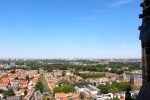
The literal highlight of my day trip to Delft was climbing the steeple of the parish church through a claustrophobically tight spiral staircase that felt as if it never ended. It was a dizzying climb up the slippery triangular stone stairs, but the view and the breeze from the top was rewarding. It was a clear day so I could see all the way across the horizon. Skyscrapers from Rotterdam to the Hague pierced the skyline and I could see wind turbines and industrial cranes towards the port. My perch had seen this modern world grow up around it. It’s been standing there since 1381.

Here’s a drawing of the Delft central square:

Image

Tomorrow I’m going on a 6 hour cruise to see the Maasvlakte 2, an extension of the harbor so that Rotterdam can upgrade and accommodate the largest container ships in the world. They are dredging sand and extending the coastline into the sea. I’m looking forward to checking it out.
HAAGSE RUGBY DAGEN and amphibious housing

Den Haaaaag, The Hague, has the biggest rugby club in the Netherlands. I traveled Northwest with the Erasmus team to play two friendly 40 minute games (two halves) against The Hague’s 2nd XV and Delft.

I played fly-half, the position I played at Bowdoin, for the entire 80 minutes. The pitch was wet and the grass was long so the games were slow and defense-heavy with a lot of scrums and knock-ons. It was not the style of game tailored to my strengths as a player. I prefer a faster pace with running, slick passing, and fancy moves.  However, the guys on the team were pumped to have me and seem to want me to stick around and play for them for as long as possible.

I noticed quite a few professional photographers around the pitch so hopefully I can provide photo evidence later on in the week.

After the game, we drove back to Rotterdam to go to the Irish pub and watch the South Africa-Argentina match. I took the train to the match with 3 of the other guys but I was offered a ride back in someone’s car. Frank, a 6’6” lock (the biggest guy on the team) hopped in the trunk to make room for me. Of course this is illegal, but he ‘disappeared’ after he rolled the baggage curtain over his head. Perfectly concealed from the 5.0.

I left my bike at Centraal Station for the day. There are usually thefts and lots of vandalism in the giant parking lot of bikes, especially late at night. I was very happy to find my baby intact with both wheels still on! I’ve grown very fond of that bike. It’s definitely the most useful tool you can have in the Netherlands.

I had a wobbly ride home and then fell asleep as soon as I plopped down on my pillow. Long day.

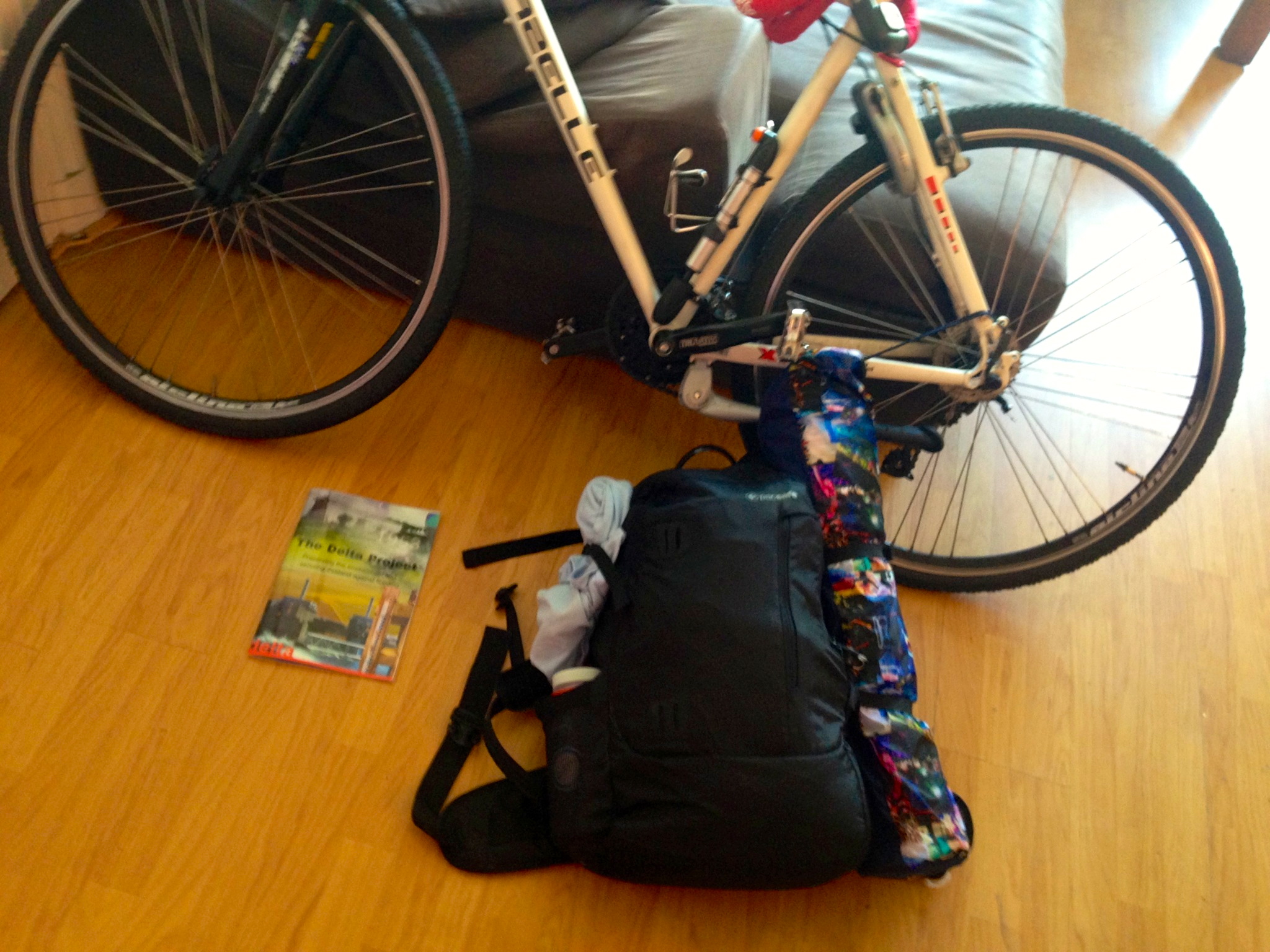
Tomorrow, I’m meeting Han Meyer, the director of the Urban Planning faculty at Delft Technical University, the premier engineering and design school in the Netherlands. One of his projects (Project Delta-Urbanism focuses on the way territorial conditions in delta- areas have to be taken into account in  urban design and urban planning. The research pays especially attention to the borders of land and water and to the question how the infrastructure of water-management can be integrated in the urban fabric.)

Should be especially interesting to hear about.
He was very nice to offer me a time to meet him. I first heard about Mr. Meyer after reading an introduction to a book called Waterwonen in Nederland (Amphibious Housing in the Netherlands). I just dropped him an email cold and he got back to me with a time. Cool beans.

Here’s an excerpt:

Within a short period the relationship between urban development and water in the Netherlands has been completely reversed. Just a few decades ago urban development and urban regeneration almost always involved the filling in or draining of lakes, canals, waterways, and harbors, annexing and impoldering areas adjacent to the rivers, repositioning and raising dykes and reclaiming river beds. Now the opposite is true. The new consensus is that we need more space for rivers, for surface water in cities and for the temporary storage of ever-larger volumes of rain water to limit further subsidence and saline seepage. 

What exactly does this mean for the city? Widespread concern about urban and rural clutter has made it a hot topic in the world of professional designers and in public debate in the media and at meetings organized by local architecture centres.

It is absolutely vital that we explore how solutions to the matter of water in the city can contribute to the development of meaningful new urban structures. 

Amphibious housing has received a great deal of attention in competitions and small-scale experiemnts, much of it dominated by futuristic vistas of floating cities…But such experiments have tended to emphasize technical solutions to matters like stability and connections to onshore facilities. (or G-WAVE?) The latter is certainly important, but what has been missing so far is exactly what this book is all about, a systematic approach to the question of how water-based housing can contribute to a new, durable and meaningful form of urban design.

Amphibious housing is less a problem that needs a solution than a springboard for new qualities and connections that can provide cities with entirely new perspectives.

Krimpen aan den Ijssell

This morning I rolled out of bed kind of sore and beat up from rugby practice last night, fed myself some eggs, brushed (but didn’t floss) my teeth, crushed a can of Spinach pop-eye style, and hopped on a bus.

A waterbus, infact.

It’s pronounced the vwahterboose in Dutch and it’s awesome.

The main line is on the River between Rotterdam and Dordrecht, Holland’s oldest city. The waterbus is a motorized catamaran and it cruises up to 40kph. The waterbus traveled a distance equivalent to the Lower Manhatten to 125th street in only 10 minutes. No traffic lights, bike accessible, and there are 3 buses each hour.

If the water’s there…use it. Waterways used to be the major highways in the world, why change that?

The waterbus is used a lot by commuters who work in central rotterdam. It quick, cheap, and fun.

A side note:

IMG_2553

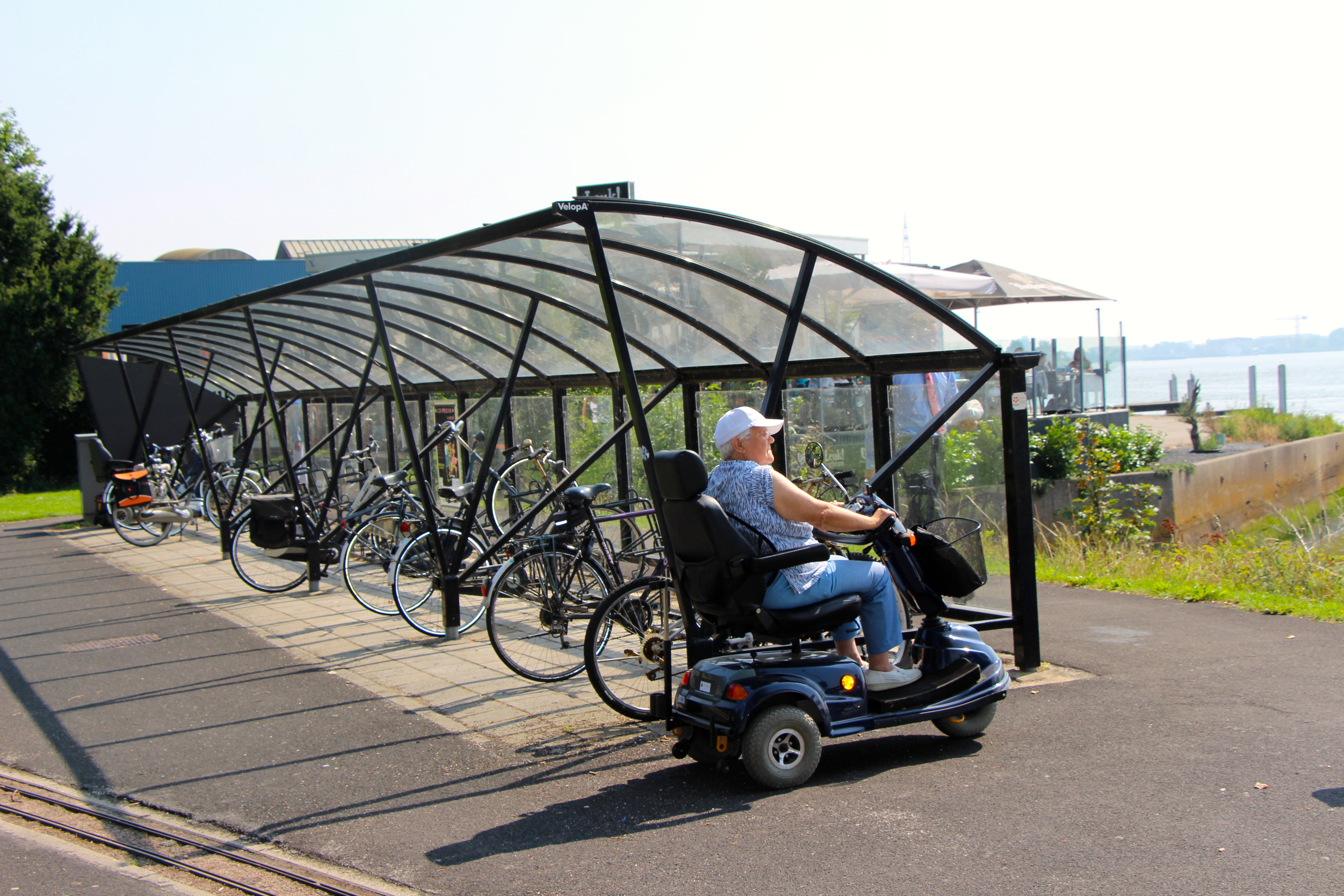
Perhaps a bike-friendly watery world will be advantageous for the future…considering everybody is beginning to live so much longer with advancements in healthcare there will be a booming elderly population. Bike and boat infrastructure seems to go hand in hand for old people in buggies. There are ramps and paths everywhere, and the waterbuses have lots of storage room. This form of vehicular transportation is surprisingly abundant in the Netherlands…But honestly, lets hope we never get to that!

I traveled to a stop called Stormpolder. Then biked to a town called Krimpen aan den Ijssell, a suburban sprawl. I came to this painfully plain town to see a specific storm barrier, one of the delta works projects. It was nothing particularly life changing. There was a large steel wall that can be lowered like a guillotine into the river in order as the first line of dense for river floods. It would be disastrous if the water slipped over the dikes and flooded neighborhood like a bathtub.

Image 3

IMG_2555 IMG_2561

I took advantage of being alongside a river on a beautiful summer day and biked along the banks for a bit. I stumbled up on a sports store where I picked up a better pair of cleats for a rugby game in Den Haaaaaaaaggg tomorrow (The Hague). I’ve been wearing a pair of old soccer cleats that were ripped open at the toe and kept together with medical tape. The studs were small and I’d slip all around the field. Sometimes it felt like rugby on ice. I figured I’d pick up something slightly more put together for some ass-kicking on the pitch tomorrow.

I biked back to Rotterdam and didn’t get lost once! I’m really starting to figure this place out!

Here are two more recents:

Image 2 Image 4

Boarding

I skateboarded to the tune of Whitney Houston’s I Wanna Dance WIth Somebody along the bank of the Maas River as the sun was setting over Rotterdam. The late 80’s jam and the skateboard made me feel like some stud rolling along the Miami boardwalk back in the golden days of the 80s. Skateboarding isn’t so popular in the Netherlands so I often rolled by people waving in awe of my superstar skills and I even got an occasional “yolo” called out at me. It was pretty awesome. I’m really lucky to have my radius and ulna intact, though.

Earlier in the day yesterday, I helped the Erasmus rugby team recruit freshman in the club fair. The event was similar to the Bowdoin activities fair, but much much bigger and much more european–house music was penetrating from every corner and there were bars dotted between the societies’ booths. It was very impressive and put together entirely by students. It was held in Excelsior’s stadium, the division two football (soccer) stadium in Rotterdam.

photo

This week I’ve had such a good time, partly because I met so many more people my age. One thing my rugby coach Mark told me was that the best part about knowing how to play rugby is that you are welcomed into any club and any community of rugby players anywhere around the world. Now I definitely see what he was talking about.

1239243_10150339968559945_1583768853_o
Some handling games to show off.

My dad will be very happy to know I finally shaved my scraggily beard. I met some people (not on the rugby team) that are worth cleaning up for.

This week I started studying some Spanish in preparation for Argentina in November and planned out an itinerary for seeing Copenhagen, Stockholm, and Hamburg in October.

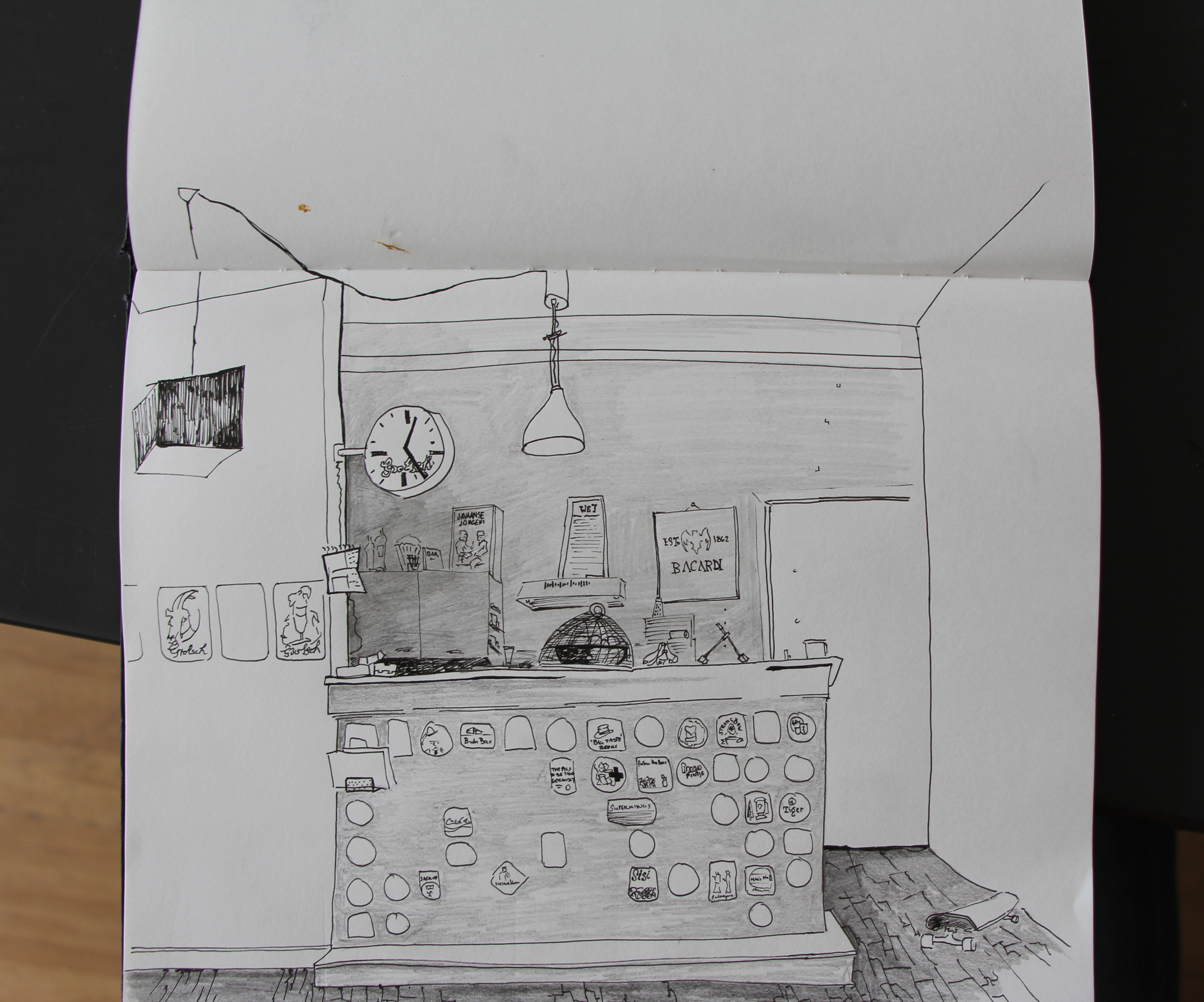
Here is a drawing of the apartment I did two days ago:

IMG_2489

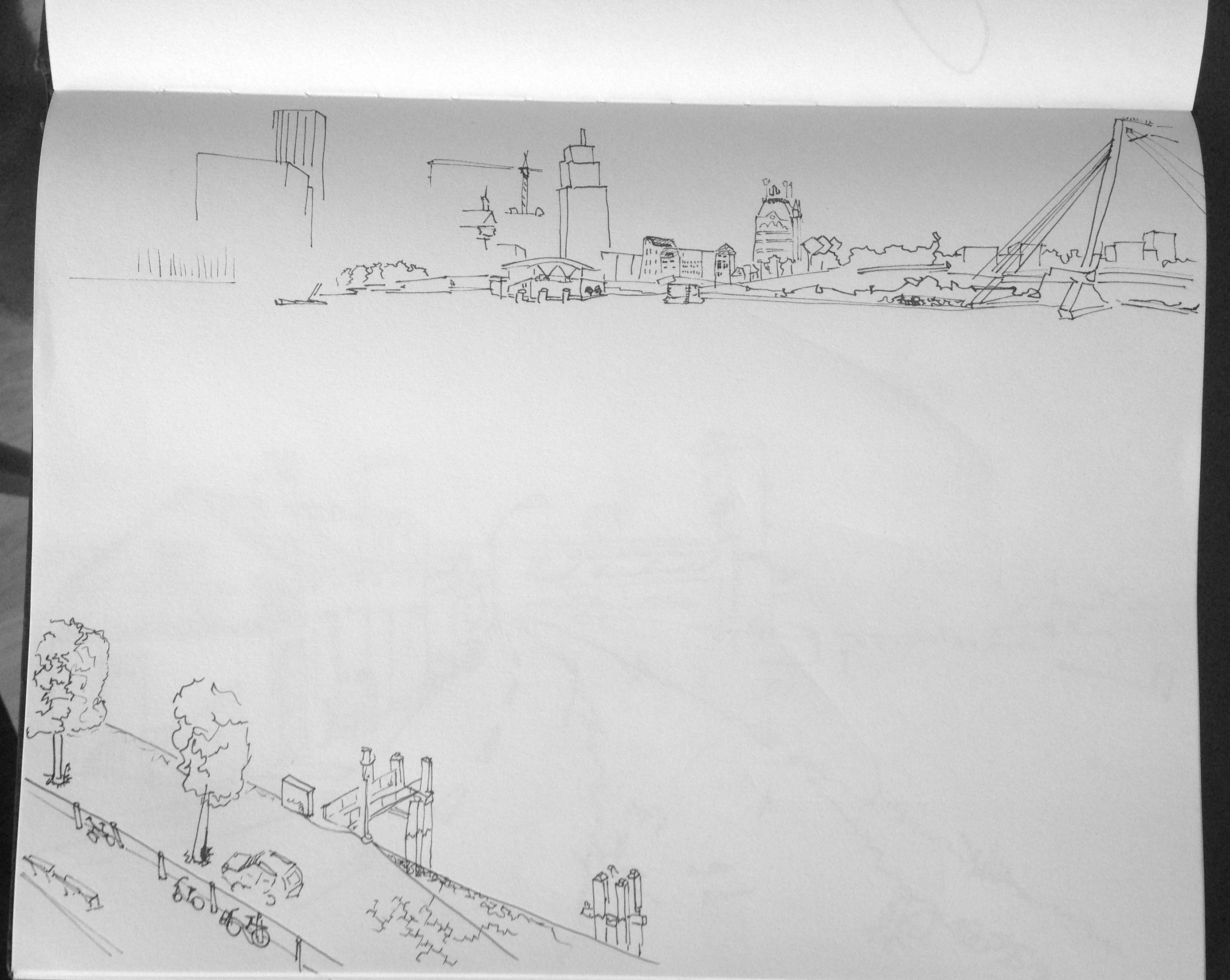
I’m working out a composition of a painting of the Rotterdam cityscape. Hopefully I’ll get that to you soon.

Tour de Holland-Zuid

I had one of the most rewarding days of my year up to this point on Friday. I took a train down to Zeeland, the southern most reaches of Holland, to explore the Delta Works. In particular I wanted to see the Oosterschelde Barrier, a 5 mile long storm surge barrier.

The trains have special carriages for those traveling with a bicycle. I hopped on and was greeted by a party of three first-year university students on the train. I met them as they were barking at me in Dutch. After looking back at one of the girls blankly, she realized that I wasn’t quite as intelligent as I look. I informed her I didn’t speak a lick of Dutch. However, she was in school to be an English teacher so our miscommunication got aligned speedily. She laughed and explained in a prefect British accent that she was simply just wondering where I was going.

I sat down at there booth and told them I was heading down to Middleburg. The group was quick to tell me that there isn’t much down in Middleburg besides German tourists, cows, and mussel farms. However, after explaining my fellowship and my quest to see the Oosterschelde, they had a change of heart and started to reveal the secrets about the nice beaches and the areas where I might find campsites.

I got into the station after a two hour train ride and hit it right to a tourist office to pick up a map of the area. The map was handy, labeled with attractions and campsites. It turned out to be a great guide. My plan was to head North towards the storm barrier and explore on bike then find a campsite around 8 o’clock so I could set up camp before it got dark.

The hinterlands of the Netherlands were as I expected: flat expanses of fields, cows, windmills, and quaint towns. Parts of the area I was biking through looked like parts of Long Island, like North Haven or Sag Harbor. Many of the towns had very nice motor boats and yachts docked there. The only difference was the Medieval churches and old fashioned buildings. The tell that I was in fact not in the playground of New York’s rich and famous was that the towns were very clearly over 600 years older.

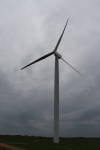
Clouds began to form overhead and it started to lightly drizzle, as I result I happened to be the only person on the bike paths that cut through the countryside. I had an especially erie experience biking through a farm of wind turbines. Finally, I could relate to Jack that first time he looked up at his bean-stalk. It was by far the closest I had ever gotten to the massive turbines. They cast off a hollow humming as the massive 50 ft blades whirled gracefully around.

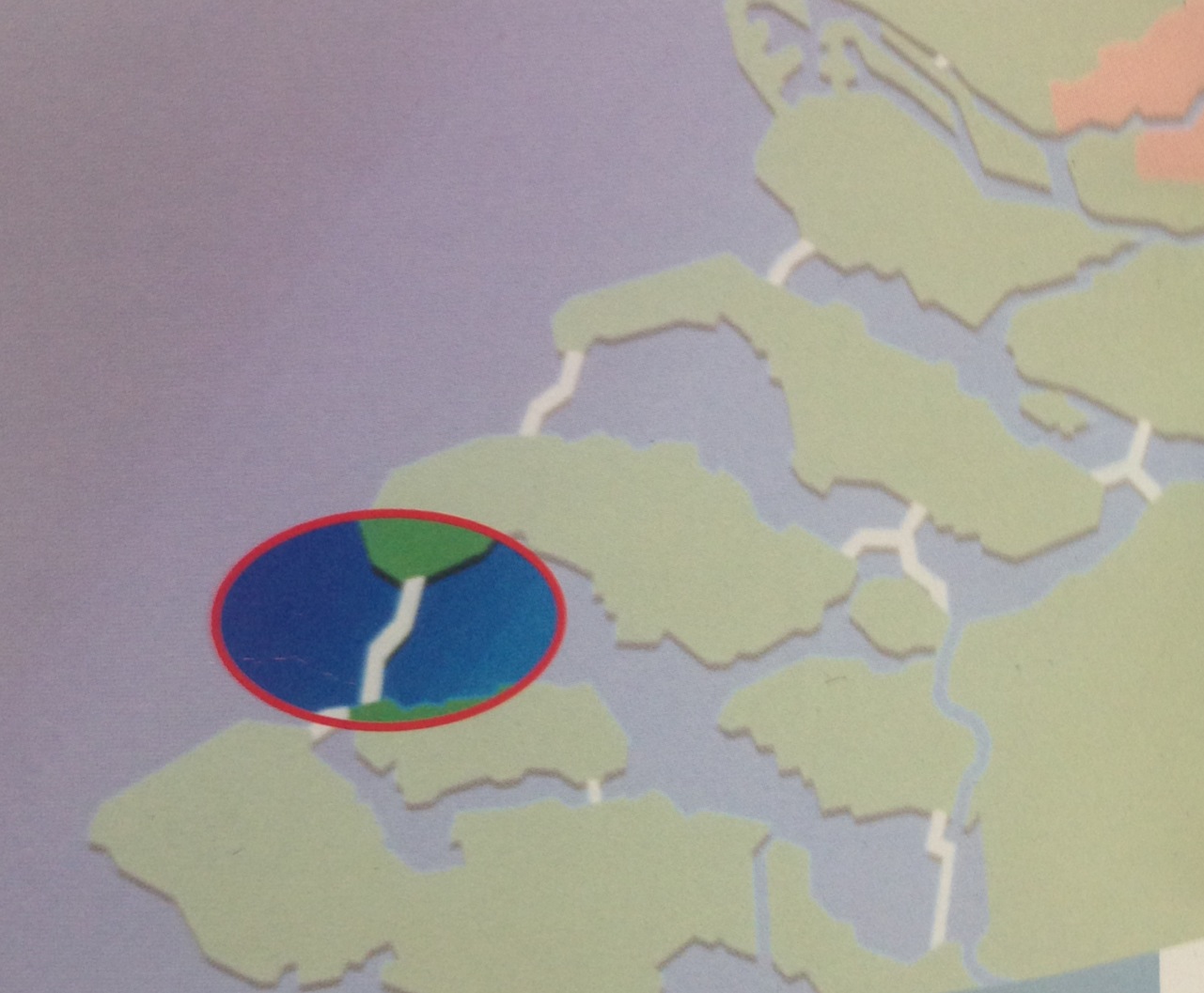
The Barrier was quite impressive, especially as a feat of engineering. Effectively, the dutch reduced the coastline by hundreds of miles by creating barriers across the inlets of the deltas of the Rhine and Maas rivers. In fact, they reduced the length of sea dikes in the region from over 700 km to just 25 km. The dams vastly improved Zeeland’s transportation network, too. The damns created highways right across the water, significantly reducing the travel time North. In addition, there is another row of barriers further inland which separates fresh water discharge from the rivers from the tidal brackish water.

photo

All these dams, dikes, and barriers were built as a reaction to floods that devastated the area in 1953. 1800 civilians drowned along with thousands of livestock. The government said never again. The Ministry of Water Management selected a committee to engineer solutions to prevent the area from flooding. Between 1953 and 1997, a whole series of water defenses were constructed.

During the four decades of construction there was a sea change with the emergence of stricter environmental policy. The pure economic benefit of having a floodless Zeeland began to be challenged by scientists who presented studies showing that dams do considerable damage to the wildlife of the region. Obviously completely damming up one of Europe’s major river delta’s would have severely hazardous effects on the ecological systems. Therefore around the 1970’s when the final, yet longest and most complex dam was about the be constructed, the planners installed a storm barrier instead to maintain the natural ebb and flow of the delta region.

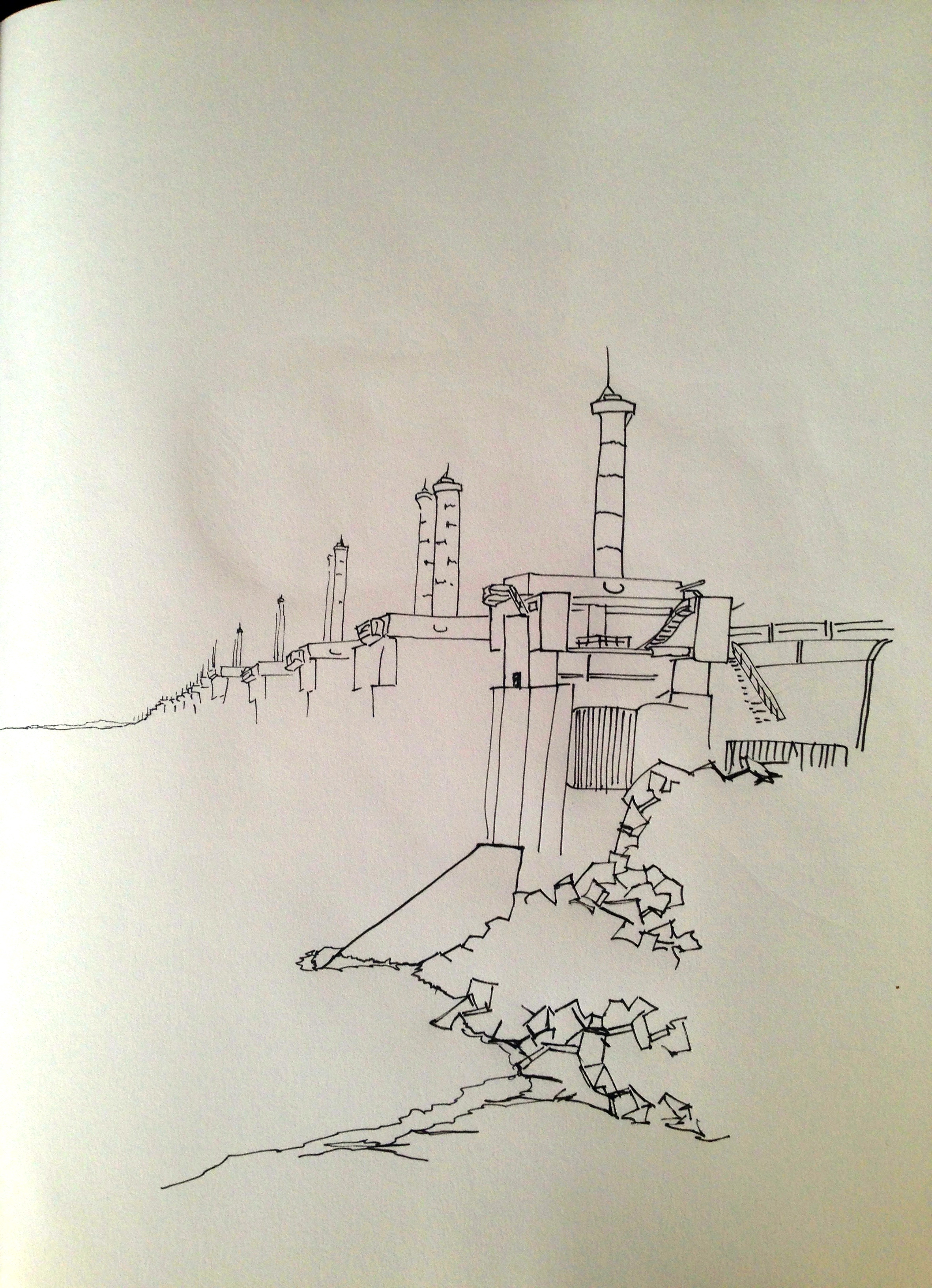
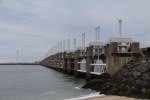
Oosterschelde Barrier

The Oosterschelde barrier has massive steel curtains that can be lowered when there are big storm swells or high spring tides (when the force of the moon and sun align to create bigger tides). It was very cool riding across the dam, elevated with a picturesque view of the North Sea. I saw silhoutes of oil tankers in the distance coming into harbor, a whole mess of rabbits, and fearless seagulls that seemed to do a lot of hands on testing on the flattening power of Vespas, cars, and bikes. I saw about 50 bird carcasses, recently smushed. Thole dam is also lined with wind turbines. Biking alone on top of this man made monstrosity was thrilling ride. I put on some tunes on the iPod and soaked up the landscape.

I carried on to find a campsite. I was told that the Netherlands has a very strict land management policy so unfortunately I couldn’t just plop down on the beach somewhere. I don’t want to be featured on next season’s ‘Locked up Abroad.’ Camping in Holland didn’t match up to what I had in mind. I’ve definitely been spoiled by beautiful, remote campsites on all my trips with the Bowdoin Outing Club so trying to sleep next to screaming children and rowdy German teenagers wasn’t the beauty sleep in the sand dunes of the North Sea that I had hoped for. The best parts of the camping were my waitress at a small pub that looked just like Blake Lively and a after-dinner hike to the beach to see this: (I invited Dutch Blake but she had to work until about midnight.)

I soaked up the final rays of the day and felt especially satisfied with myself. A day well spent exploring a new place.

I got up early on Saturday, biked around the area to small towns, farmers markets, through fields, and then hoped on the train back to Rotterdam just in time for Dinner.

Marco, the guy who is sub-letting his room to me for the month was back in the Apartment, briefly swinging by after his trip to Norway and before he headed to Prague. He cooked up a great dinner of Moule-Frits. Mussels with delicious mustard source and french fries. Marco, Berend and I put down about 2kg of Mussels. Feasting.

Here is a diary log of my weekend in selfies:

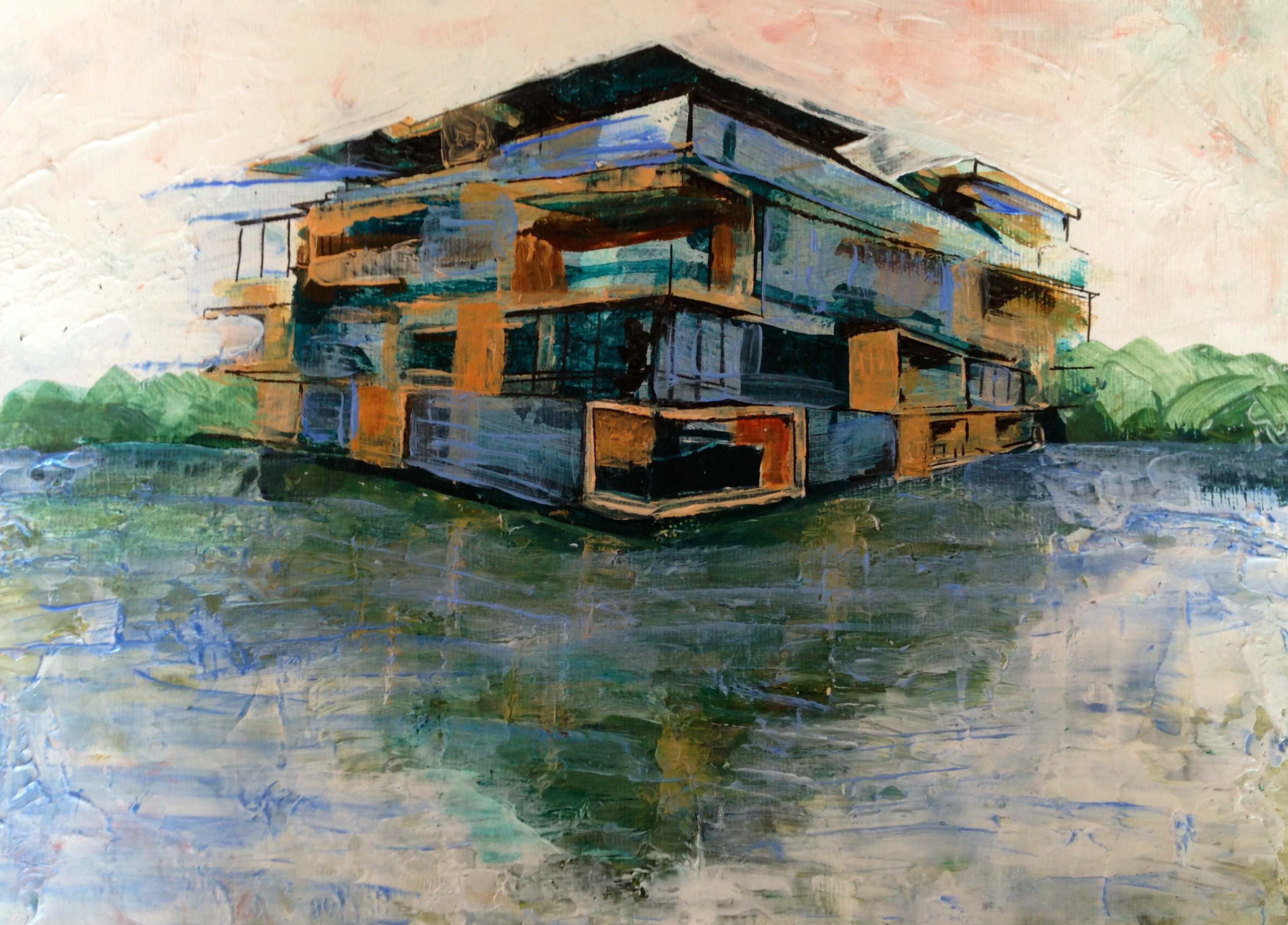
And finally a painting of an apartment building outside of Rotterdam:

IMG_3980This is a multi-unit apartment complex that floats on the water. The garage is underground and floods if there is a need to store excess storm runoff.

180* South

Yesterday I picked up a tent for 25 euros. It’s made for children and may or may not be waterproof.

In an hour or so I’m going to hop on a train to Middleburg, the capital of Zeeland, Holland’s southern-most province. Zeeland is where the majority of the delta works are located. The delta works are a series of dams, dikes, and storm barriers built between 1950 and 1997 to protect the low-lying polders of the region from the storm surges of the sea.

I’m going to bike around, inspect some of the bigger and more well-known delta works, find some beaches, and hope to find a campsite to sleep. Depending on how exciting it is down there, I may stay for the whole weekend or I may just return tomorrow.

Bike. Tent. Sleeping bag. Water. 2 Sandwiches. Play-dough.
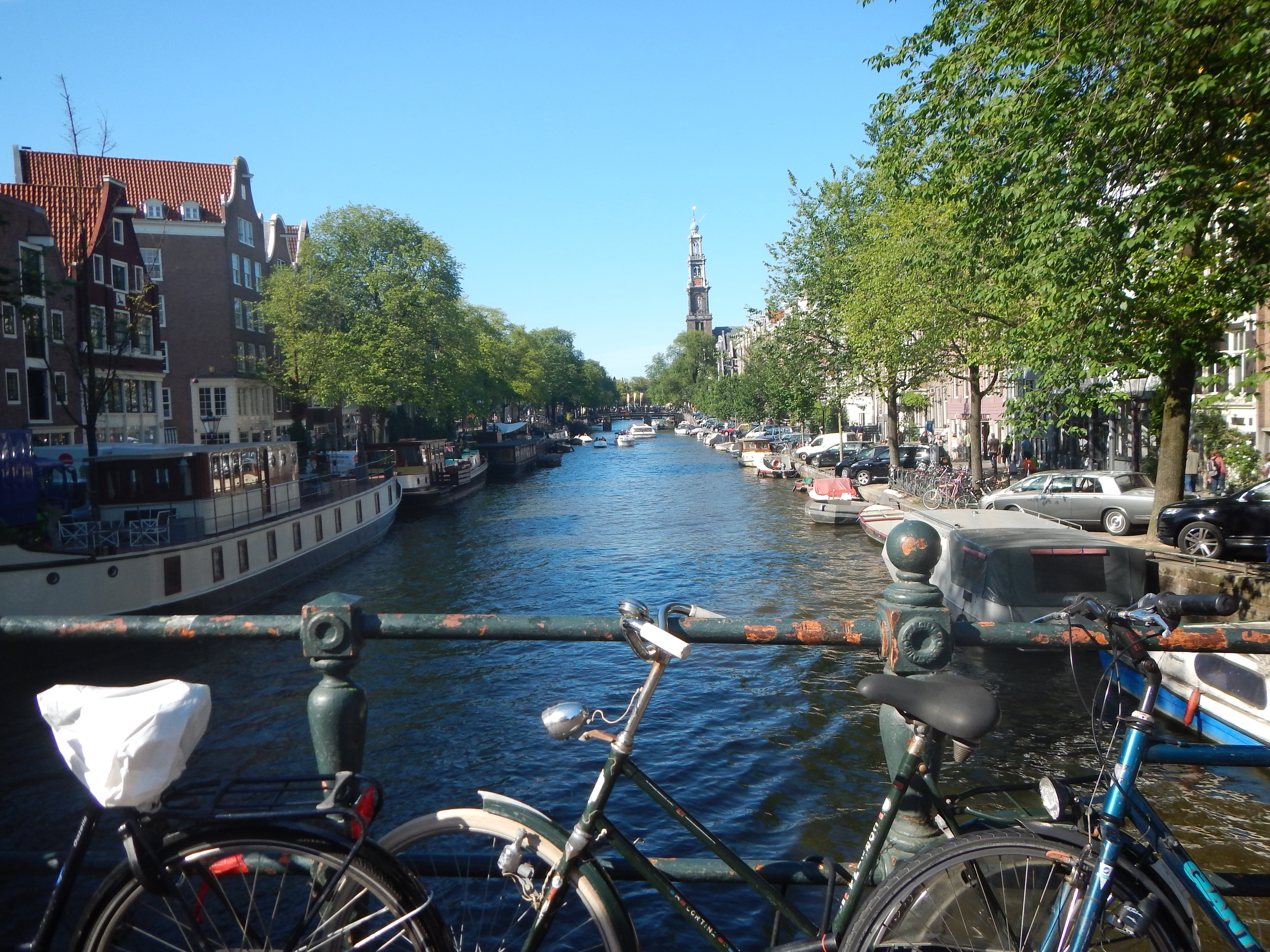
On Wednesday I took a day trip up to Amsterdam. The whole city is like Rotterdam on drugs. Both literally and figuratively. I didn’t do any of the major art museums or anything ‘touristy.’ I just walked around the city, got an awesome juice from an Italian Rastafarian who first gave me a shot glass of pure ginger juice because of the way it wakes your whole body up. He definitely assumed that I was stoned like most of the other Americans that stumble into his shop. (No mom, I wasn’t high.) But I ordered the daily special which was a juice made out of pumpkin, carrots, limes, ginger, and orange juice. Honestly pretty good, but I got a stomach ache an hour later. I don’t think the Rasta juice maker has ever cleaned his juicer. I definitely tasted other substances in there.

Amsterdam is really a beautiful city with all of its canals and old european architecture. The day trip was a great little preview that got me excited to make the move up there in September. It’s much more vibrant, lively place than Rotterdam. I get the sense that Rotterdam is to Amsterdam as Manchester, England is to London or Detroit is to Chicago. The port and industrial center is down here while the arts and culture is in Amsterdam.

Tristan, the hockey player took me out to a proper european club last night. There’s definitely culture down here too, though.

The main attraction of the Amsterdam visit was to go to a social squash event. Jono, a guy that I was connected to through a friend from Norwich, VT invited me to come play squash with this group of about 10 people. For 2 hours I played about 15 sets of squash with some pretty cool people, then was invited out for some Heineken after to replenish the nutrients lost. The last time I played squash, I got smacked in the face with the racquet and had to go to the hospital to get stitches. These guys were a little less aggressive on and off the court.

DSCN0257

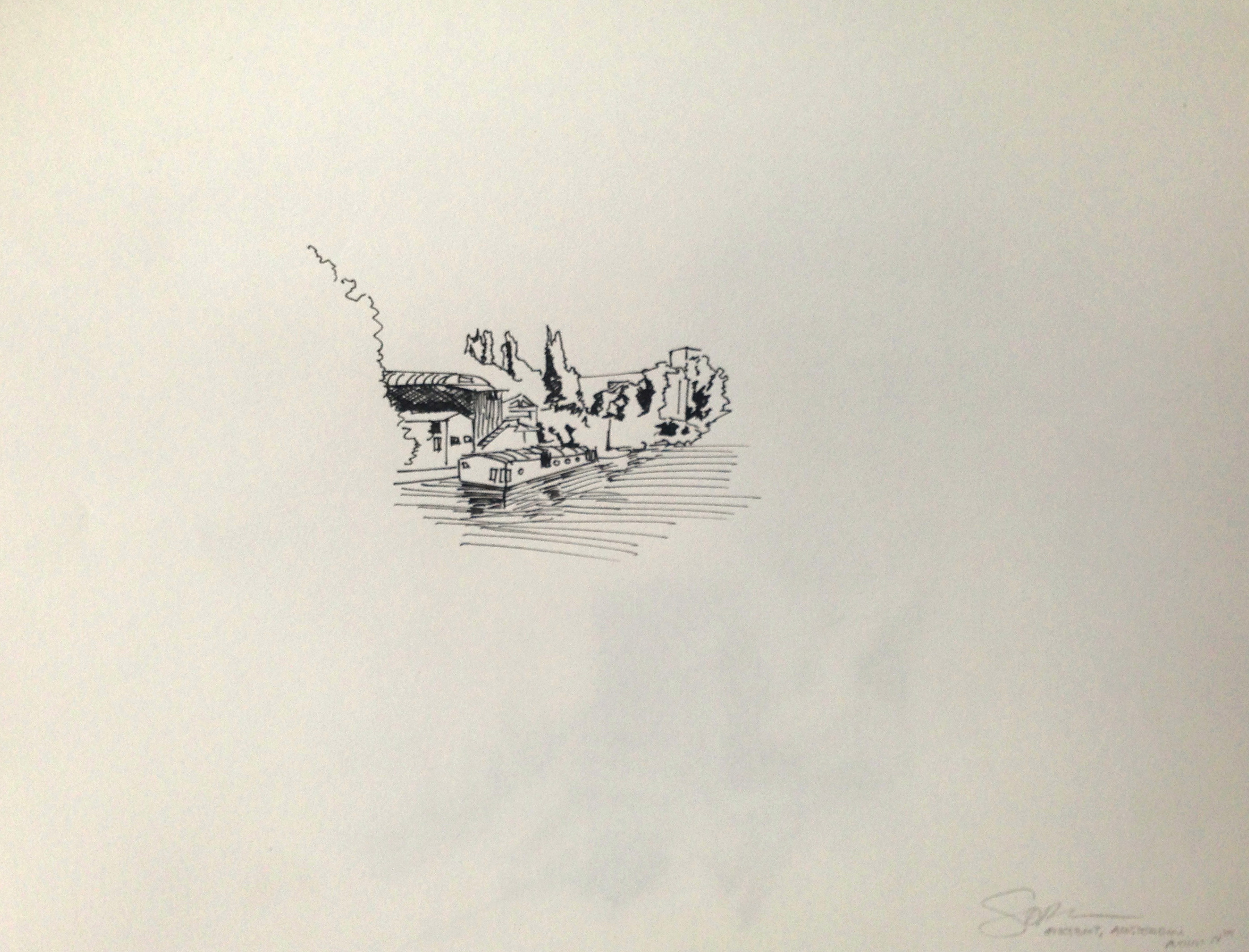
Houseboat in Amsterdam

Erasmus Rugby

I went out to practice with the Erasmus Rugby Club tonight. Erasmus is Rotterdam’s University. It’s a giant school with about 20,000 students.

Great workout; intense rugby. There are some really talented players from England, Ireland, and South America. It’s definitely up a level from Bowdoin Rugby but not quite as intense as Rugby in Chicago was last summer.

Tired. Can’t wait for bed!

The Maeslant Barrier

I woke to the sound of Big Boi’s Shine Blockas, the familiar yet mostly dreaded tune of my alarm clock. I put some clothes on, splashed some water on my face, packed up a day bag, and left the apartment to head towards Rotterdam Centraal. I purchased a ticket to Hoek van Holland, translated the Hook of Holland. It’s on the coast directly west of Rotterdam, but north of the port.

Rotterdam Centraal is a very elegantly designed modern train station. It just opened this year. There are fully automated ticket dispensers and plasma screens displaying the track number and departure times. The ‘tickers’ that my mom described tracking when she was backpacking through Europe at my age seem to be bygone. At the automated ticket screen, I got the machine to talk to me in english but unfortunately some things were very much lost in translation. For example, one question I was asked was “would you like to pay the regular fare or a discounted fare?” Is that a real question?

Discounted.

On the train I discovered that I answered incorrectly. My return ticket was confiscated by the train conductor because discount fares are reserved for people with special cards or disabilities. There was no way I could have known that, though. It was an honest mistake but the train conductor was less than impressed.

I was lucky to get a ride all the way out to Hoek van Holland. The conductor was quite adamant about kicking me off the train right then and there. I played the clueless American tourist card and got some solid defense from the man sitting across the aisle from me. A little native tongue was all that was needed to resolve the situation. It turned out that my guardian was a greenhouse panel salesman and had recently spent some time in Waterville, Maine consulting a farm on a sale. I apologized to him on behalf of all pleasant parts of Maine.

It felt very freeing getting outside of Rotterdam. The train ride was 40 minutes and only cost me 6 euros (should have cost more) but I got to a completely new place. My roommates tell me that every 10km you find a different dialect of dutch, that every region has its own vibe. I am definitely going to take advantage of the rail system here and explore the hinterlands of the Netherlands in the next 20 days.

Once I got the the Hoek, my destination was the Maeslant Barrier, a mobile flood gate that protects Rotterdam.

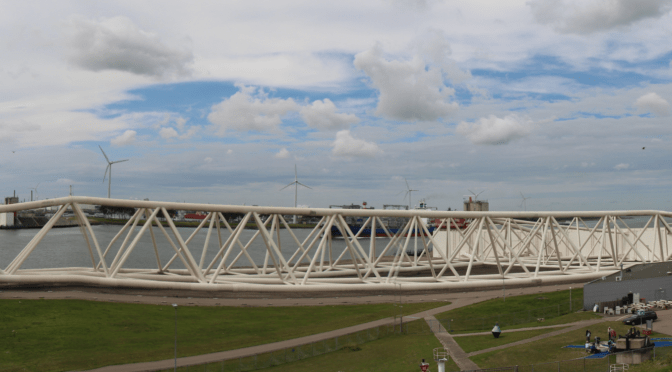
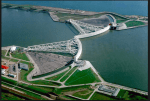
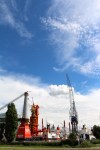
I only had to bike a few miles until the barrier came into eyesight, it’s such a dominant object in the landscape. The flood defense consists of two iron curtains that close off when there are storm surges and high spring tides. Although it’s measured that the gate only needs to be used in conditions that occur once every five years, the barrier has it’s own brain that knows when it’s time to close. Each wing of the gate are eiffel tower sized arms that attach to a ball (that is 10m in diameter) and socket joint (52,000 tons) that can shift the gate move in all logical directions. The wall of the barrier rests on a dry dock. When the gate needs to be closed, the dock floods and the massive curtains start to float. The two sides are pulled together to meet in the middle of the channel. Then the curtain is filled with water so the whole wall sinks into the foundation in the seabed. The defense was designed specifically to protect the port and the millions of people that live inland in Rotterdam and beyond, yet the barrier still allows for the movement of hundreds of cargo and shipping containers that pass through each day.

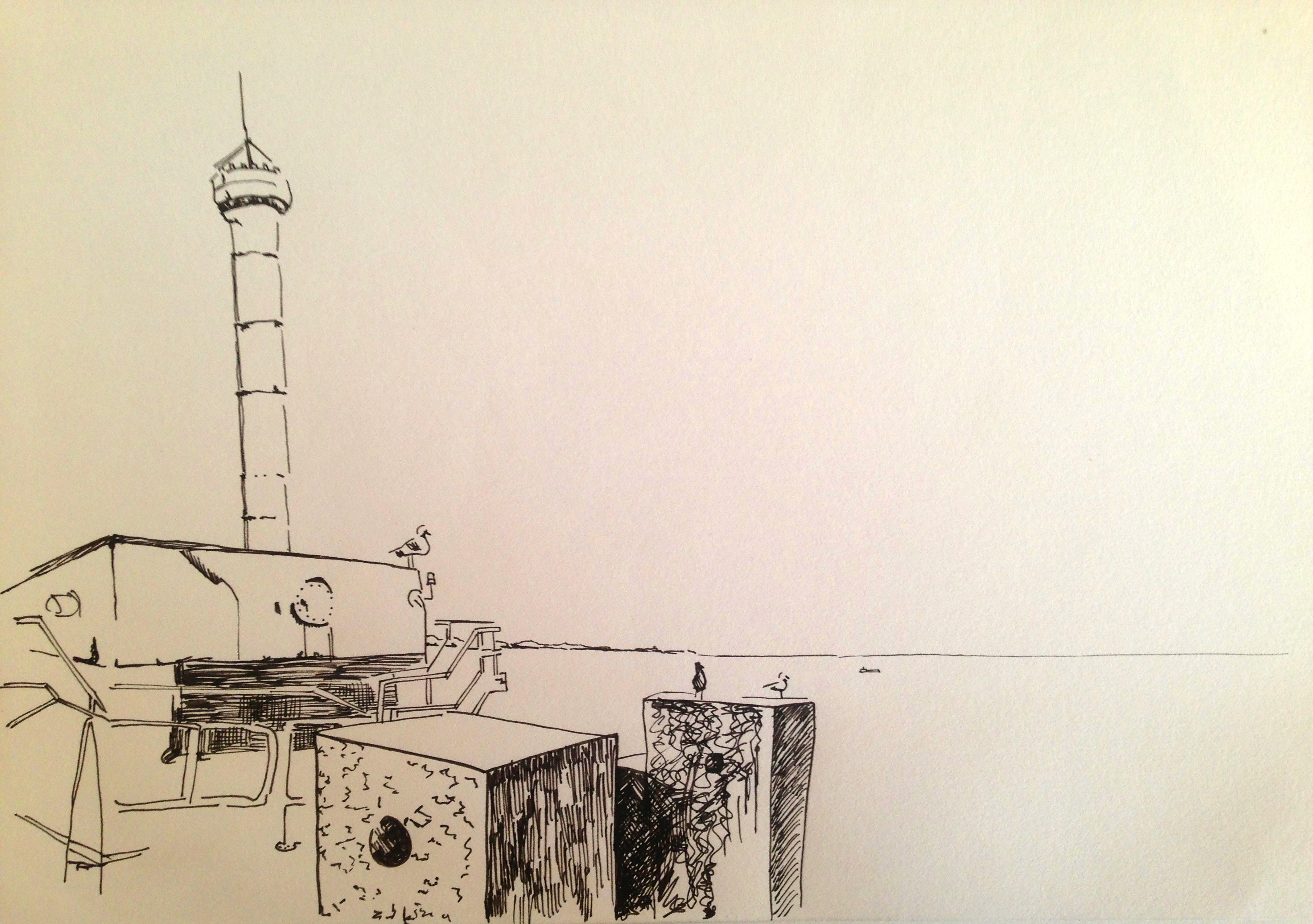
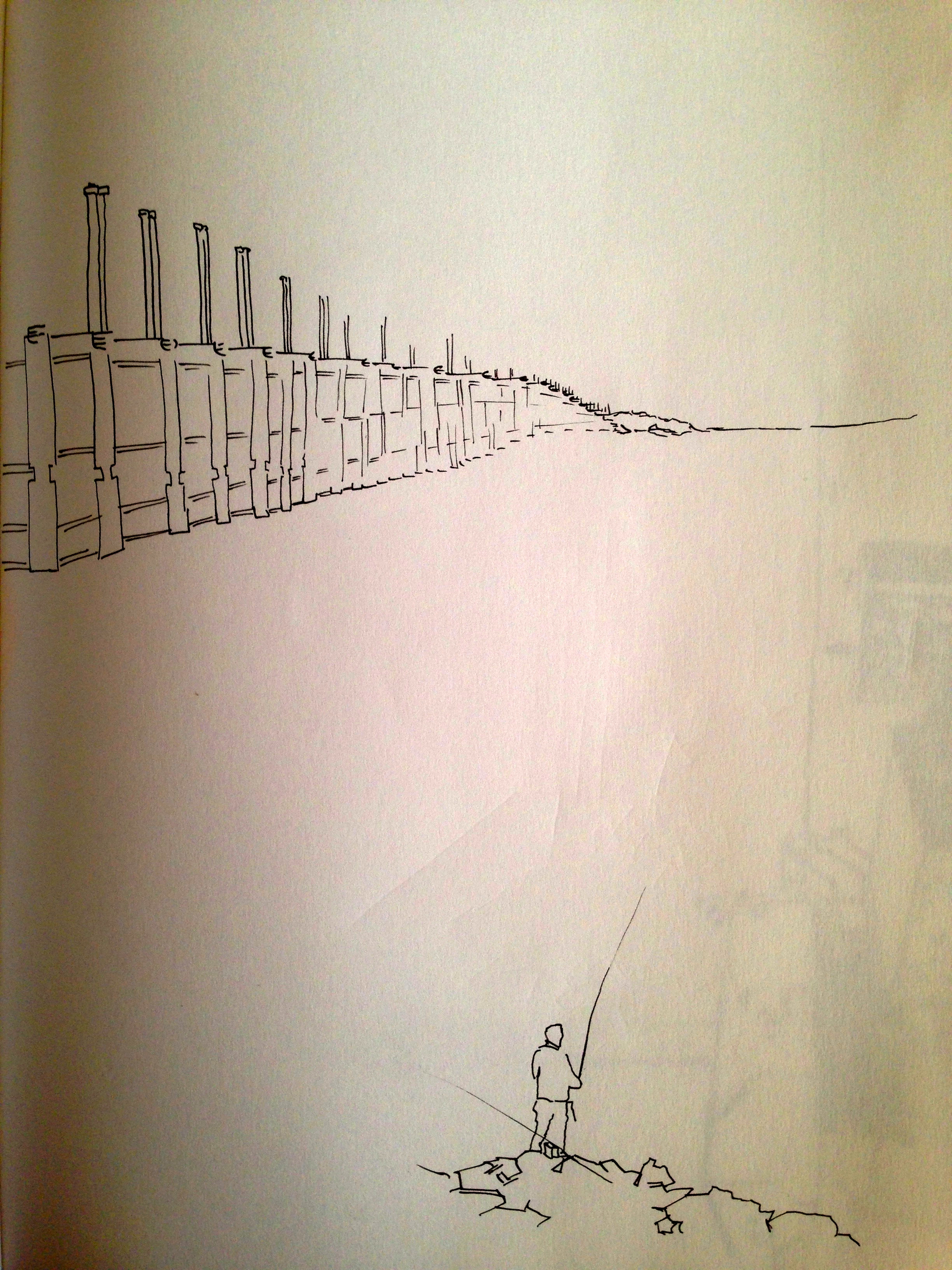
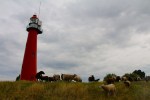
It was difficult to get a good photograph of the barrier because of the massive scale. It was also savagely hard to draw. I’ll assume it looks best from the air. I’ve included a google image here so you guys can match an image to my words, then I made a gallery with my own content…none of it is great.

Because my train ticket got confiscated, I decided to bike the 30km trip back to Rotterdam. The biking was great, the sun finally came out, I met some sheep, and got some exercise.

But then, about 7km outside of Rotterdam I got a brutally flat tire. Obviously.

I had a small hand-pump that came with the bike so I tried inflating it, but I knew my efforts would be fruitless. Something bigger was wrong. The tire went kaput almost instantaneously. I tried hitch-hiking…no luck. (Maybe it’s time to shave the scraggily beard). I then thought I could just hike it back in. The sun was shining and I had Muddy Waters on my iPod. It could have been worse…raining and a system glitch where only One Direction would play. I walked a mile or two, but then the roads got windy, I started to get some blisters, and there was a Metro stop right in front of me.

In order to ride the Metro you need a special card that you top up with funds (like the Oyster Card in London) so in order to ride a few miles, I had to pay 14 euros. I decided my blisters weren’t that bad and I started looking for a local bike shop. For how many bikes there are in the Netherlands it was surprisingly hard to find a bike store. I absolutely realized how much we take smartphones, map applications, and a constant flux of information for granted. I just walked, asked, got terrible directions, walked more, found nothing, and so on.

Eventually I turned the right corner and found a shop. I told the store owner my story and he said he could replace the tube in an hour. I got myself a vanilla milkshake and things started to look up. I went back to the bike store and started chatting with the guy in the repair shop. He was awesome. He’d done some hiking on the Lewis and Clarke trail in Montana so I told him all about the expedition and in exchange he gave me all the dirty details about the best bike paths to make my way to the Hague and Amsterdam later on at the end of the summer. We hit it off so well he didn’t charge me for the service, I only had to buy the new inner-tube.

I realized when I was back on the bike pushing the final stretch towards home that minor inconveniences that trip up the journey really aren’t so bad. It was actually quite fun discovering the sequence of events that would lead me to resolve the problem the problem at hand. The solution I found was something I could have never even imagined when I first realized the tire was pancake flat.

A flat tire in the middle of no where isn’t such a big deal. Of course, I had the time to fix it, there was no pressing emergency, and absolutely no urgency. But the problem, which at first made me super irritated and annoyed led me to a great vanilla milkshake, a more than pleasant conversation with a local bike repair man, and a test of my own ability problem solve.

The day was exhausting, but I got home to a sunny day on the balcony. I flopped down on a bean bag, cracked open a can of Grolsch, and I cannot even begin to describe how good that felt.

Image